
Last updated September 23, 2026
Free visual inspection and a written scope of work before any mitigation begins - photos, moisture readings, and drying logs go in your claim file
The scope we write is the scope we bill. Anything new gets shown to you, in writing, before we touch it.
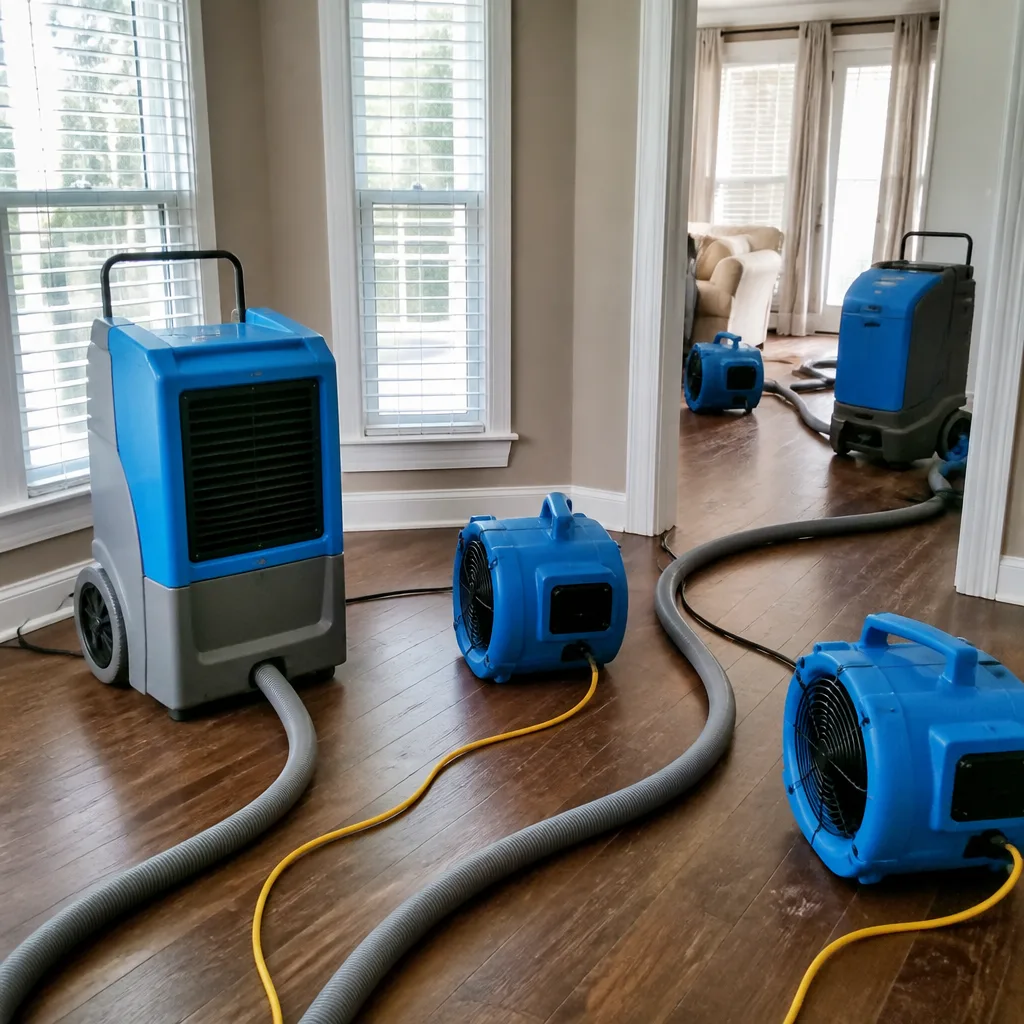

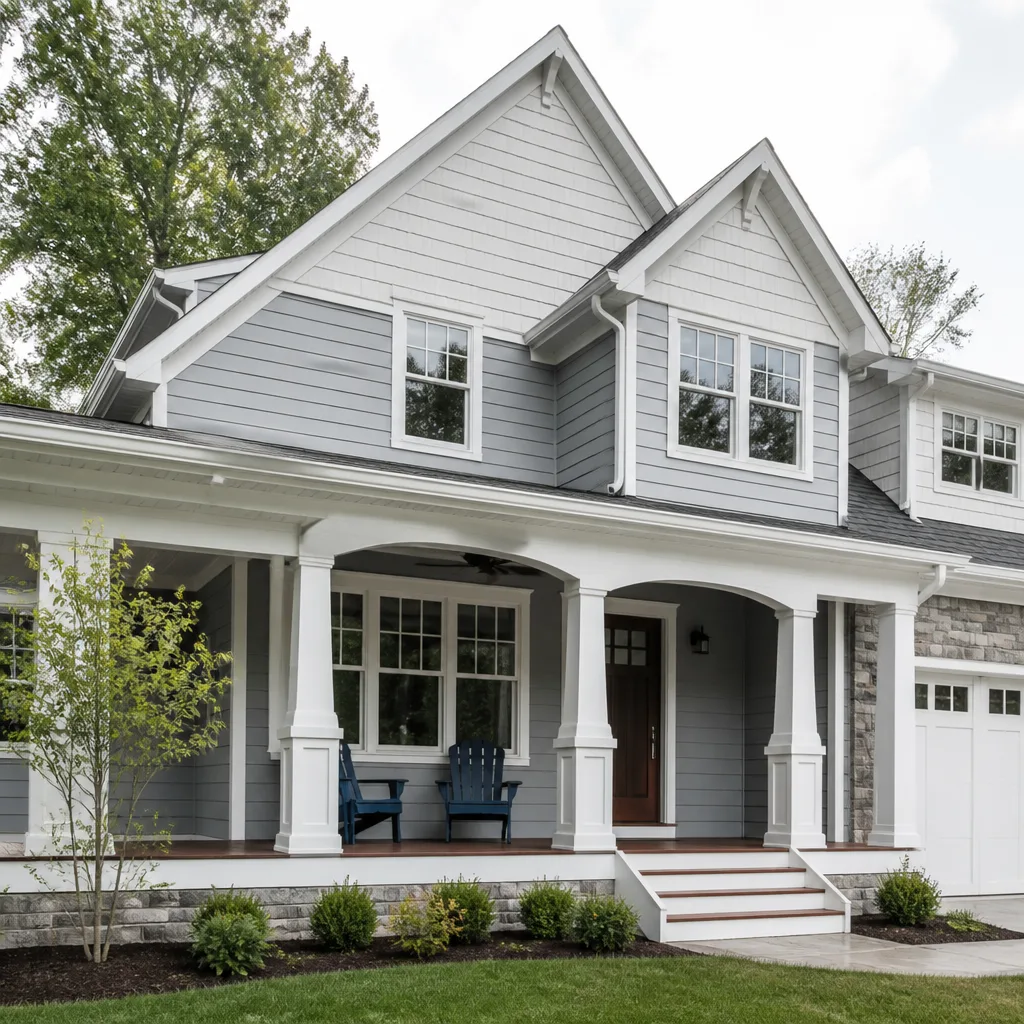
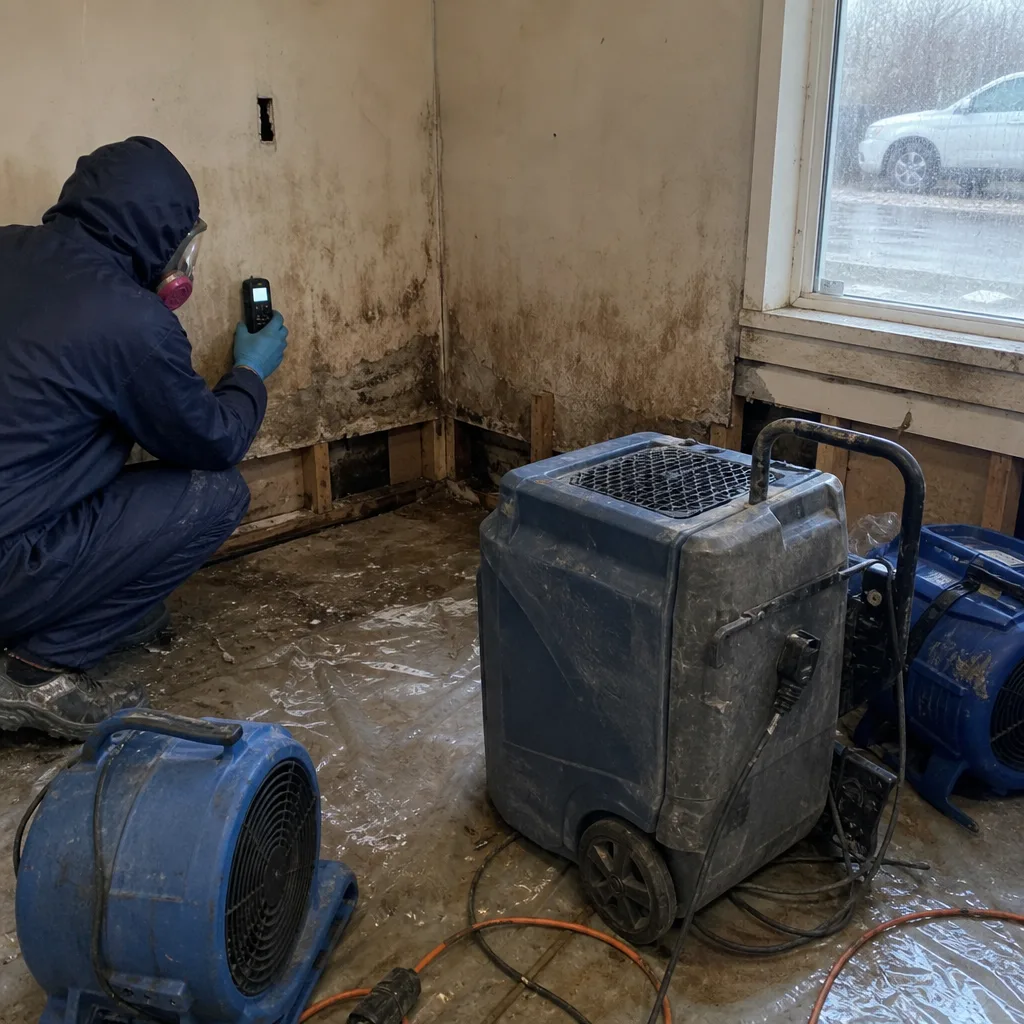 Before
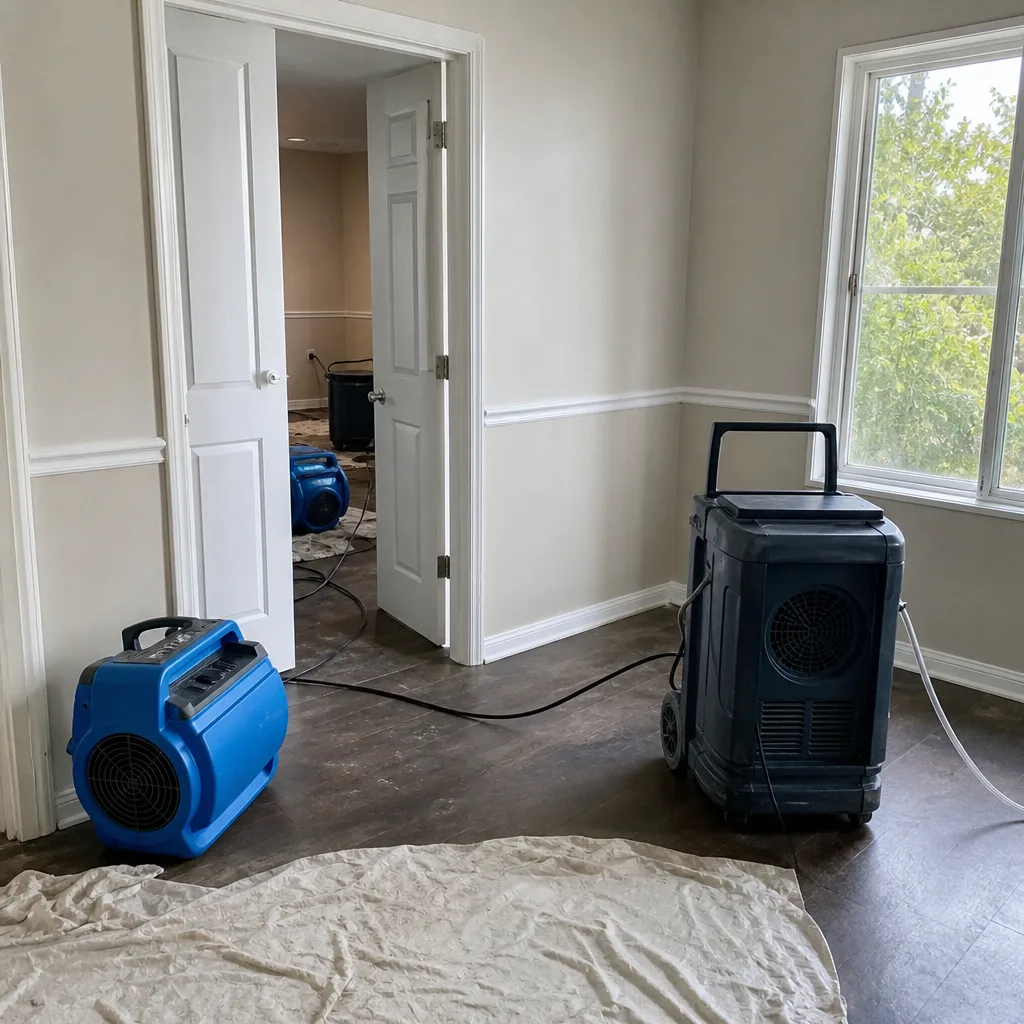 After
After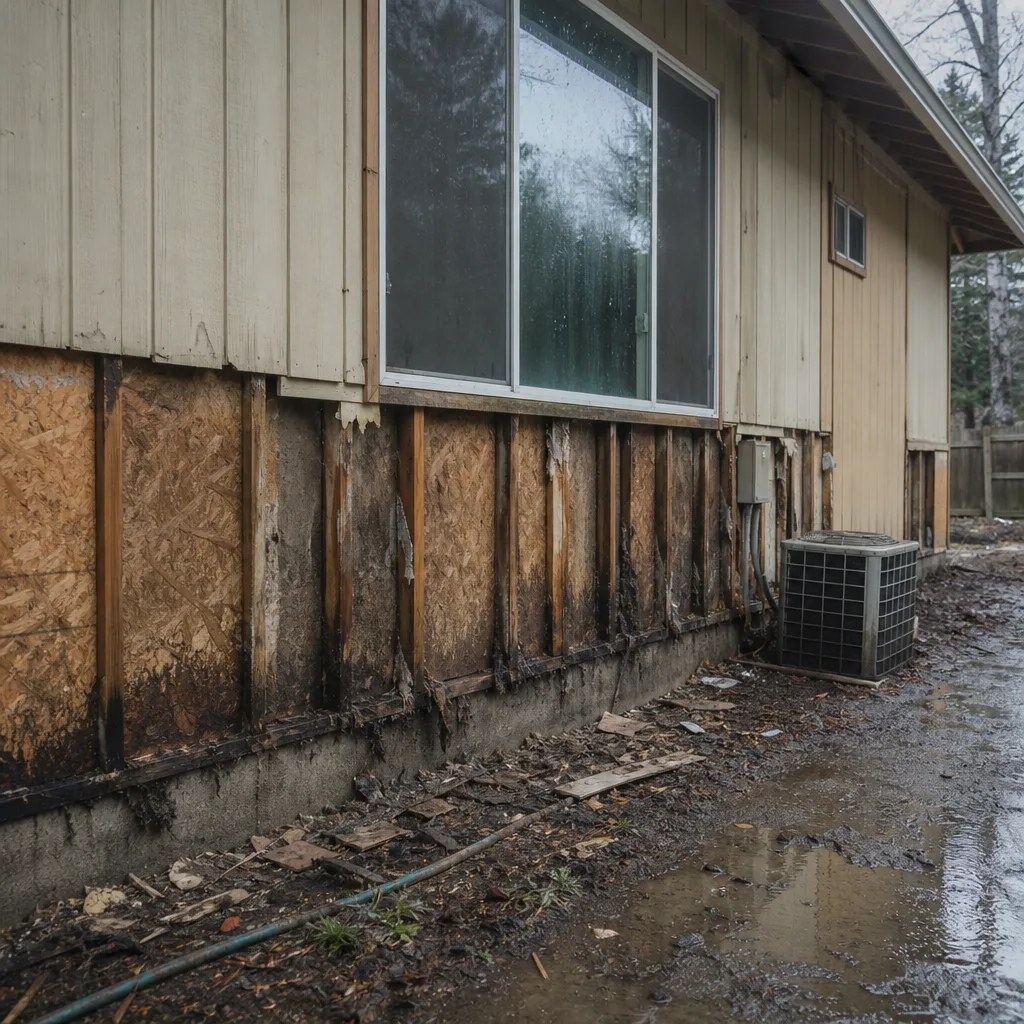 Before
 After
After Before
 After
AfterDamage Restoration Cost Breakdown: The Auburn Homeowner’s Reference for 2026
In 2025, the average water damage restoration invoice submitted to insurers in the Pacific Northwest required at least one supplement - meaning the original estimate missed something measurable - and in most cases, the homeowner was responsible for the gap between their deductible and the revised total. Auburn homeowners shopping for restoration services face a market where three bids for the same flooded basement can range from $4,200 to $11,800, not because contractors are dishonest, but because they’re pricing different scopes of work. This guide teaches you to read those line items, spot what’s missing, and protect yourself from the supplement bill that arrives after demolition starts. For Damage Restoration Warning Signs: A Auburn Homeowner’s Reference Guide, see our companion post.
Quick Answer
Water damage restoration in Auburn typically runs $3,500-$8,500 for a standard residential loss, with fire damage averaging $8,000-$25,000 and mold remediation $1,500-$6,500 depending on containment requirements. The critical variable isn’t the total dollar amount - it’s whether the estimate includes all five restoration phases (extraction, drying, demolition, antimicrobial treatment, and rebuild) or omits line items that become change orders later. A written price before work begins, with no scope-creep additions, is the only way to compare bids accurately.
Table of Contents
- How Xactimate Prices Restoration Work (And Why It Matters for Auburn Homeowners)
- Water Damage Cost by Contamination Category
- Line-Item Breakdown: The Five Phases of Restoration
- Line Items Most Commonly Omitted from Low Bids
- Fire and Smoke Damage Costs in Auburn
- Mold Remediation Pricing: Scope vs. Square Footage
- How Insurance Supplement Disputes Originate (And How to Prevent Them)
- What a Written Price Guarantee Actually Protects
BeforeAfterHow Xactimate Prices Restoration Work (And Why It Matters for Auburn Homeowners)
Most insurance adjusters in King and Pierce counties use Xactimate, the industry-standard pricing database updated quarterly with local labor and material costs. A contractor who doesn’t know how to read or write Xactimate estimates is speaking a different language from your adjuster, and that disconnect produces supplement disputes that delay your claim by weeks.
Xactimate breaks every restoration job into unit costs: price per square foot for water extraction, per linear foot for baseboard removal, per hour for dehumidifier rental, per application for antimicrobial treatment. In Auburn’s market, as of early 2026, these unit costs reflect our specific labor pool, fuel costs, and permit fees - not Seattle rates, not national averages. A contractor bidding from a template priced for Texas or California is already building a dispute into your claim.
Here’s what we see in Auburn specifically: Xactimate’s Pacific Northwest pricing tier separates the Seattle-Tacoma corridor from Eastern Washington, and Auburn sits in the higher-cost tier due to proximity to Seattle labor markets and King County permit requirements. A water extraction job priced at $1.85 per square foot in Spokane runs $2.40-$2.65 in Auburn. Demolition of wet drywall runs $2.80-$3.20 per square foot here, including haul-away fees that spike during winter months when road restrictions limit debris transport.
The documentation gap that costs homeowners their claims usually starts here. A contractor unfamiliar with Xactimate submits a “bid” in a format the adjuster can’t reconcile, the adjuster applies their own unit pricing, and the two numbers don’t match. The homeowner, caught in between, either pays the difference or waits while the contractor negotiates a supplement - often while moisture continues damaging structural materials.
At DryMark Restoration Auburn home, every estimate is written in Xactimate format from the first visit. Alicia Brennan founded the company in 2011 after working as a claims adjuster and watching this exact documentation gap destroy homeowner finances. Our estimates speak the same language as your adjuster’s software, which means the price we write is the price your insurer recognizes.
Water Damage Cost by Contamination Category
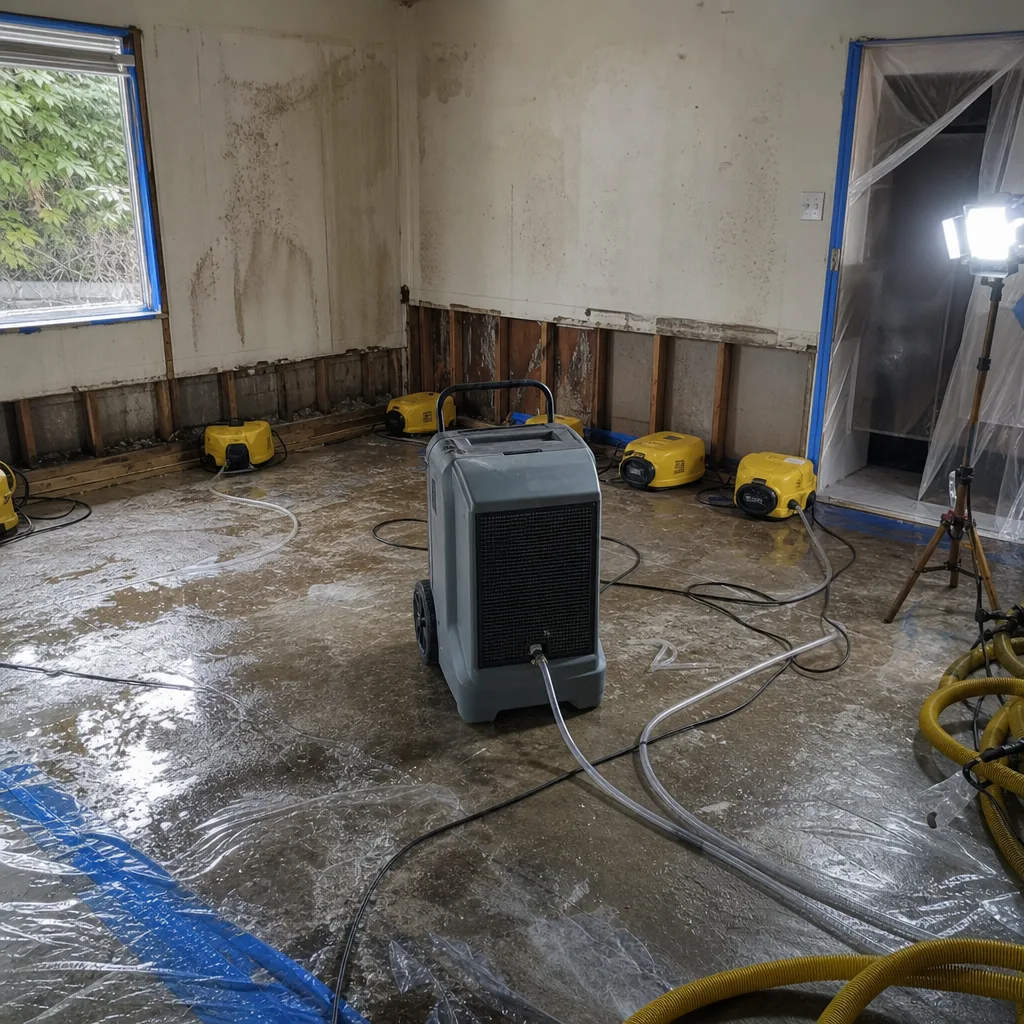
Water damage restoration pricing in Auburn varies dramatically based on contamination classification, and this is where low bids often collapse. The IICRC defines three categories, and each requires different protective equipment, disposal protocols, and drying timelines.
Category 1: Clean Water - Originates from a sanitary source: broken supply line, overflowing sink, rainwater intrusion. In Auburn, where older homes in the Lea Hill and Lake Tapps neighborhoods often have original galvanized supply lines, these failures are common in winter when thermal expansion stresses aging fittings. Category 1 extraction and drying typically runs $3,200-$5,800 for a 1,000-square-foot affected area, assuming no structural damage and standard 3-5 day drying with Phoenix or Dri-Eaz LGR dehumidifiers.
Category 2: Gray Water - Contains significant contamination: dishwasher discharge, washing machine overflow, sump pump failure. The cost jumps to $4,500-$7,800 for the same footprint because porous materials (carpet pad, lower drywall, subfloor) must be removed rather than dried in place. Auburn’s clay-heavy soils in the valley floor mean sump pump failures are seasonal, and we’ve documented cases where gray water sat in crawl spaces for 48+ hours before discovery, upgrading the loss to Category 3.
Category 3: Black Water - Grossly contaminated: sewage backup, flooding from rivers or streams, standing water that has supported microbial growth. This is where estimates diverge most. Category 3 work in Auburn runs $6,500-$12,000+ for equivalent square footage, with mandatory full demolition of porous materials, HEPA containment, negative air pressure systems, and third-party clearance testing. The White River flooding in January 2022 created dozens of Category 3 losses in low-lying Auburn neighborhoods, and homeowners who accepted low initial bids faced supplement bills averaging $4,200 for containment and testing that wasn’t in the original scope.
| Category | Source Examples | Typical Auburn Range (1,000 sq ft) | Key Cost Drivers |
|---|---|---|---|
| Category 1 | Supply line break, rainwater | $3,200-$5,800 | Drying time, equipment count |
| Category 2 | Appliance discharge, sump failure | $4,500-$7,800 | Material removal, antimicrobial treatment |
| Category 3 | Sewage, river flooding | $6,500-$12,000+ | Containment, disposal, clearance testing |
The classification itself is often disputed. A contractor eager to keep the bid low may classify Category 2 water as Category 1 to avoid removal requirements. An adjuster may challenge Category 3 classification to limit coverage. The documentation that protects you: dated photos of the water source, moisture readings from affected and adjacent materials, and written justification for the classification with reference to IICRC S500 standards.
Line-Item Breakdown: The Five Phases of Restoration
Every complete restoration estimate includes five phases. Missing any one creates a gap that becomes a change order or a supplement. Below are Auburn-specific ranges based on our 2026 pricing and Xactimate’s Pacific Northwest database.
Phase 1: Water Extraction and Emergency Services
This is the “stop the bleeding” phase: removing standing water, deploying emergency drying equipment, and establishing containment if needed. In Auburn, emergency response rates run $185-$295 per hour for a two-person crew with truck-mounted extraction equipment, with a minimum 2-hour charge for after-hours calls.
- Truck-mounted extraction (per square foot): $2.40-$2.85
- Portable extraction for confined spaces: $185-$220/hour crew rate
- Emergency tarping/board-up (if storm-related): $350-$650
- Initial moisture mapping and documentation: $285-$425
Phase 1 is where speed language belongs - on mitigation topics only. A water loss in Auburn’s rainy season, October through April, can double in affected area every 24 hours if extraction is delayed. Our live phone coverage, 24 hours a day, 7 days a week, means no voicemail trees while water is still moving.
Phase 2: Structural Drying
This is the longest phase and the most documentation-intensive. Proper drying requires daily moisture readings, psychrometric data (temperature, relative humidity, and vapor pressure differential), and equipment adjustments until materials reach established drying goals.
Psychrometric data sounds technical, but it’s simple: we measure how much moisture the air can hold at current temperature, then calculate how fast we can pull water from wet materials without damaging them. Vapor pressure differential is the engine - the difference between moisture in the material and moisture in the air. A negative differential means water is still evaporating; zero means equilibrium and drying is complete.
- LGR dehumidifier rental (per day): $85-$125 per unit
- Air mover rental (per day): $22-$32 per unit
- Injectidry hardwood floor drying system (per day): $145-$195
- Daily moisture monitoring and documentation: $165-$225 per visit
- Tertiary drying (specialized low-grain refrigerant or desiccant): $195-$285 per day
Tertiary drying refers to the final push when materials are close to goal but not there - often hardwood floors or plaster in Auburn’s pre-1980s housing stock. Standard dehumidifiers can’t achieve the low specific humidity required; we deploy desiccant systems or specialized LGR units. Contractors who don’t own this equipment or don’t understand when to use it either declare drying complete prematurely or rack up unnecessary rental days guessing.
Typical Phase 2 totals for Auburn residential jobs: $1,800-$4,200 depending on square footage, days required, and equipment type.
Phase 3: Demolition and Disposal
Not every loss requires demolition, but most do. The critical line items here are often buried or omitted.
- Wet drywall removal (per square foot): $2.80-$3.40
- Insulation removal and disposal (per square foot): $1.85-$2.65
- Baseboard/trim removal (per linear foot): $2.20-$3.10
- Subfloor removal (per square foot): $4.50-$6.80
- Contents manipulation (moving furniture/belongings): $185-$295 per room
- Debris disposal (per cubic yard): $65-$95, with winter fuel surcharges common
Contents manipulation is the line item most commonly “absorbed” into overhead by low bidders, then charged as a change order when the crew arrives and can’t access walls. In Auburn’s tighter 1950s-1970s rambler stock, particularly in the Pacific neighborhood and downtown corridor, rooms are small and furniture density is high. Moving a king bed, dressers, and closet contents to dry the bedroom walls is not optional work - it’s either in the estimate or it’s a surprise.
Phase 4: Antimicrobial Treatment and Cleaning
Application of EPA-registered antimicrobials, HEPA vacuuming, and surface cleaning. Required for all Category 2 and 3 losses, and for Category 1 losses where drying exceeds 48 hours.
- Antimicrobial application (per square foot): $0.85-$1.40
- HEPA air scrubber rental (per day): $45-$65
- HEPA vacuuming of affected surfaces: $285-$425 per area
- Odor treatment (thermal fogging or ozone): $385-$650
Phase 4 is where mold prevention happens, or doesn’t. Auburn’s marine climate means relative humidity above 60% for much of the year, and materials that don’t reach proper moisture content before antimicrobial application are primed for secondary damage. Our daily drying logs document when each area hit goal, with moisture readings recorded to the tenth of a percent.
Phase 5: Rebuild and Restoration
This is construction, not emergency mitigation. Never promise same-day service or dispatch times for rebuild work - it is scoped, scheduled, and priced in writing like a remodel.
- Drywall installation and finishing (per square foot): $3.20-$4.80
- Insulation replacement (per square foot): $2.10-$3.40
- Paint (per square foot, two coats): $1.85-$2.65
- Flooring replacement (varies widely by material): $4.50-$18.00+ per square foot
- Trim and baseboard replacement (per linear foot): $4.50-$7.50
Rebuild estimates require separate written scopes with material selections specified. Haven Standard, Clause 1 applies here too: written price before work begins, every time, with no exceptions. A contractor who starts demolition without a rebuild estimate in hand is building a supplement dispute into your future.
Line Items Most Commonly Omitted from Low Bids
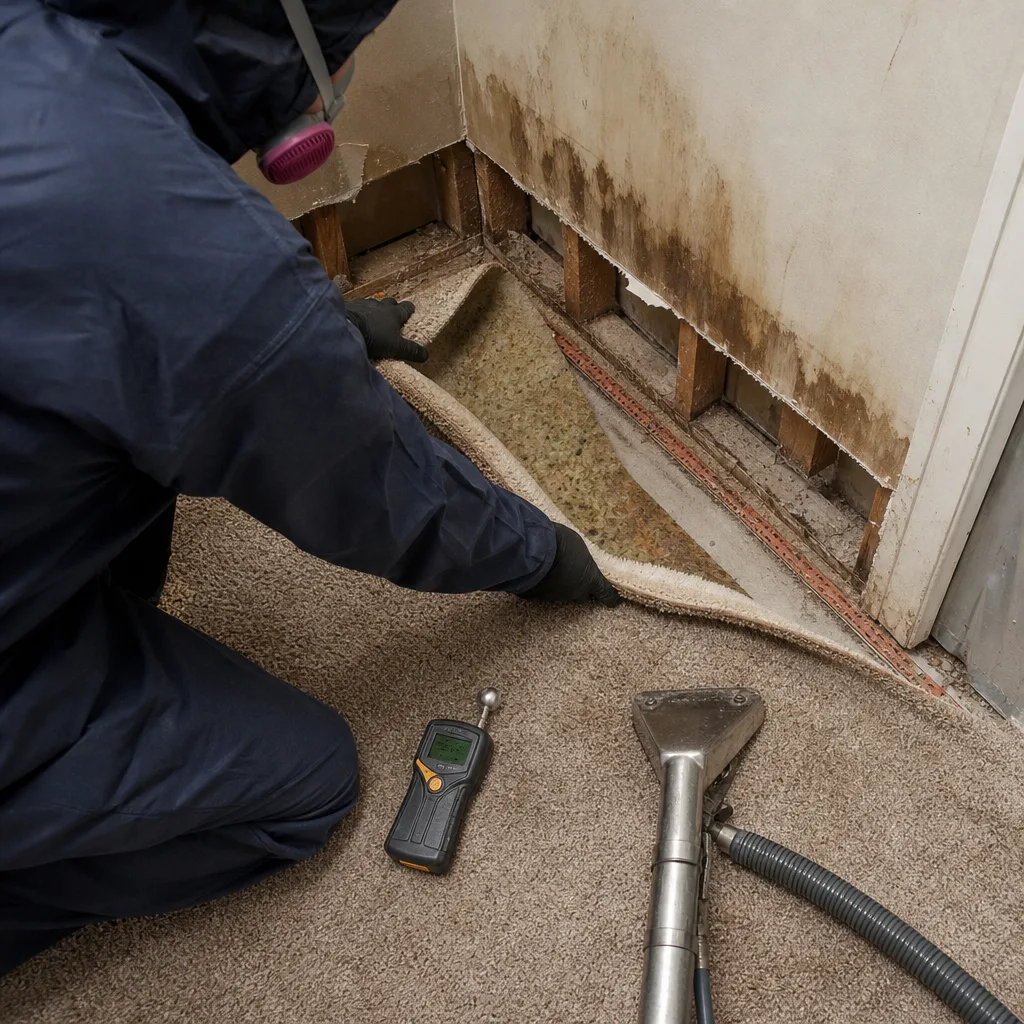
These omissions aren’t always intentional deception. Sometimes a contractor genuinely doesn’t know what’s required; sometimes they’re competing on headline price knowing they’ll recover margin later. Either way, the homeowner pays.
- Contents manipulation and storage. Every item in the affected area must be moved, documented, and either cleaned or stored. Low bids often assume empty rooms. In Auburn’s furnished homes, this adds $800-$2,400.
- Moisture monitoring and daily drying logs. Required by IICRC standards and necessary for insurance documentation. Some contractors “bundle” this into equipment rental, then don’t perform it. Without daily logs, your insurer can deny that drying was completed properly.
- Containment and negative air pressure. Mandatory for Category 2 and 3 losses, and for any mold remediation. Omission here isn’t just a cost issue - it’s a health and liability exposure. We’ve seen Category 2 losses in Auburn’s multi-family housing where inadequate containment spread contamination to adjacent units.
- Third-party clearance testing. For Category 3 losses and mold remediation, independent verification that contamination has been removed is the standard of care. Low bids call this “optional” or “if required by insurer.” It’s required by any standard that prioritizes occupant safety over bid competitiveness.
- Subfloor inspection and treatment. Water travels horizontally under flooring, especially in Auburn’s older homes with plank subfloors. A bid that prices drywall replacement but not subfloor moisture mapping will miss damage that manifests as mold or structural failure six months later.
- Permit and inspection fees. King County and the City of Auburn require permits for electrical, plumbing, and structural rebuild work. A contractor who doesn’t pull permits avoids the fee but leaves you with uninsurable work and potential code violations on resale.
- Dehumidifier and air mover quantities adequate for the space. The IICRC formula is specific: one air mover per 50-70 square feet of affected area, plus one for each wall offset. Low bids reduce equipment count to cut rental costs, extending drying time and increasing secondary damage risk. In Auburn’s cooler months, insufficient dehumidification means drying takes 2-3x longer than specified.
Fire and Smoke Damage Costs in Auburn
Fire and smoke damage restoration in Auburn follows a different cost structure than water damage, with less predictable line items because fire damage is more structurally variable. The 2025 average for residential fire restoration in Pierce and King counties was $12,400, but the range - $4,500 for a contained kitchen grease fire to $45,000+ for a structure-compromising electrical fire - makes averages misleading.
Fire restoration has three cost zones:
Emergency stabilization: Board-up, roof tarping, temporary electrical disconnection, water extraction from fire suppression. $1,800-$4,500 in Auburn, heavily dependent on after-hours response and roof access difficulty. Auburn’s hillside homes in Lakeland Hills and the Green River gorge area require specialized access equipment that adds 15-25% to stabilization costs.
Contents cleaning and structural remediation: HEPA vacuuming, dry ice or soda blasting, thermal deodorization, ozone treatment, and selective demolition of charred materials. $5,500-$18,000 depending on square footage, smoke penetration depth, and material types. Synthetic materials (vinyl flooring, certain insulation types) produce more toxic residues and require more intensive cleaning than natural materials.
Rebuild: Full reconstruction of damaged areas, often requiring structural engineering review for fire-compromised framing. Priced as construction, not emergency service, with written scopes and scheduled timelines.
Documentation is especially critical for fire claims. Insurance adjusters require pre-demolition photo records, inventory of damaged contents with replacement cost estimates, and written justification for every demolished material. Our photo record on every visit, included as standard, provides the evidence chain that prevents disputes.
One Auburn-specific factor: many homes in the city’s older neighborhoods, particularly near downtown and the original mill worker housing, have balloon framing and knob-and-tube wiring remnants. Fire in these structures travels differently than in modern platform framing, and restoration estimates that don’t account for hidden void spaces and outdated electrical will miss significant damage.
Mold Remediation Pricing: Scope vs. Square Footage
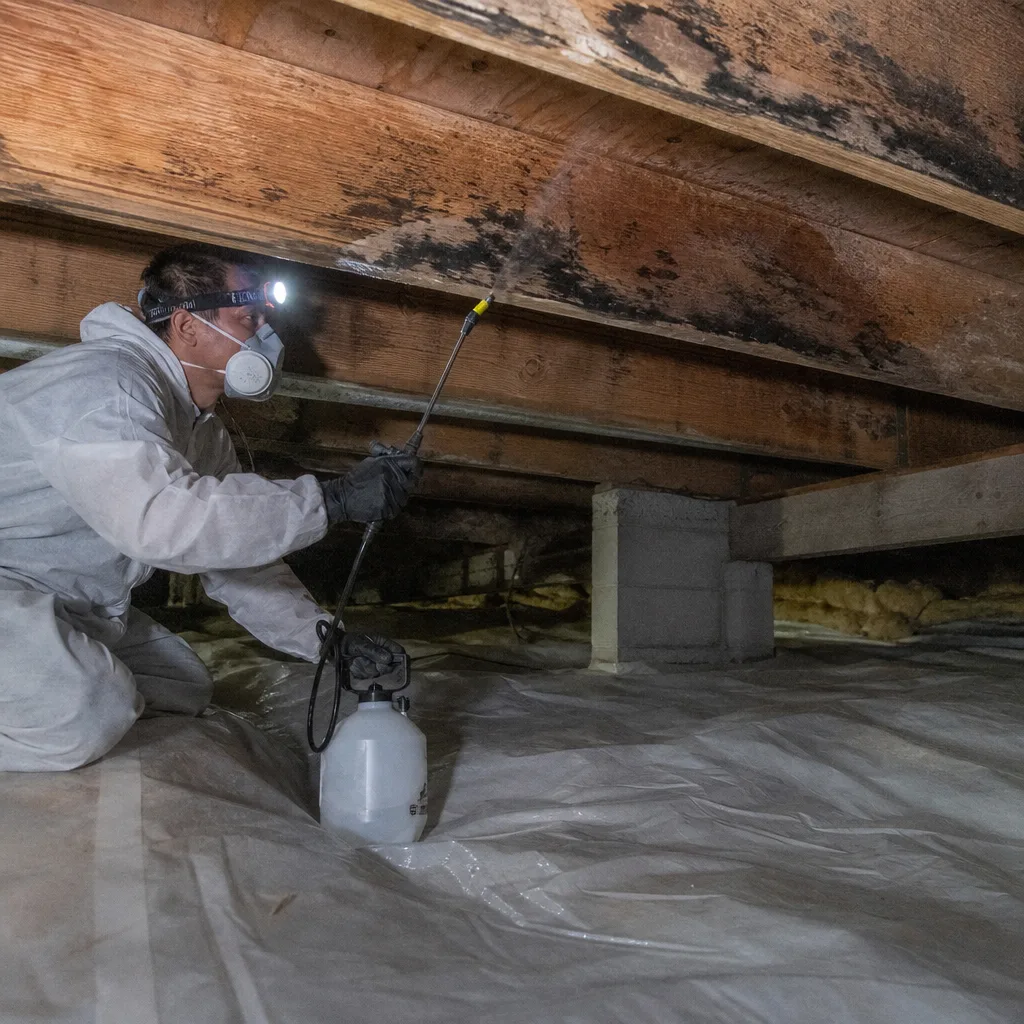
Mold remediation in Auburn is priced by containment complexity, not just affected area. A 50-square-foot bathroom with tile walls and an exhaust fan requires minimal containment; the same 50 square feet in a crawl space with HVAC duct penetration requires full negative air isolation and duct sealing.
Auburn’s climate creates specific mold risk patterns. The marine layer that settles in the Green River valley from October through March keeps crawl space relative humidity above 70% in unventilated homes. Spring temperature swings - 40°F mornings to 65°F afternoons in April - create condensation on cooler foundation walls. We’ve documented active mold growth in Auburn crawl spaces where the homeowner never saw water intrusion, only persistent dampness.
Basic mold remediation pricing in Auburn:
- Level I (small, contained area, no HVAC involvement): $1,500-$3,200
- Level II (moderate area, limited containment required): $3,500-$6,500
- Level III (large area or HVAC contamination, full containment): $6,500-$15,000+
The cost driver that low bids omit: post-remediation verification. IICRC S520 requires clearance sampling after Level II and III remediation, either air sampling or surface sampling depending on the original contamination. This runs $450-$850 in Auburn, and without it, you have no documentation that remediation was successful. Some contractors offer “visual clearance” - they look and declare it clean. That doesn’t satisfy insurers, landlords, or buyers in a real estate transaction.
Another common omission: HVAC cleaning and sealing. If mold originated in or penetrated ductwork, remediation without duct cleaning simply recontaminates the space when the system restarts. This adds $1,200-$2,800 to typical jobs but prevents recurrence that would require full remediation repetition.
How Insurance Supplement Disputes Originate (And How to Prevent Them)
A supplement is an estimate revision after work has begun, and it’s the single largest source of friction between homeowners, contractors, and insurers. In 2025, over 60% of Pacific Northwest restoration claims required at least one supplement, and the average supplement amount was 23% of the original estimate.
Supplements originate from four predictable causes:
- Undiscovered damage. Water travels to unseen spaces; fire weakens structural members not visible until demolition. The original estimate couldn’t include what wasn’t visible. The prevention: thorough initial moisture mapping and invasive inspection where indicators suggest hidden damage. We use thermal imaging and borescopes to look inside wall cavities before writing the estimate, documenting what we find with photos.
- Scope omissions. The contractor deliberately or unknowingly excluded required work. The prevention: line-item estimates that match IICRC standards, with each phase explicitly listed and priced. If a bid doesn’t show antimicrobial treatment as a separate line item, ask why - then get it in writing.
- Xactimate version discrepancies. Contractors using outdated pricing databases or non-standard formats produce estimates that adjusters can’t reconcile without manual line-item review. The prevention: estimates written in current Xactimate format, with unit costs that match the adjuster’s software.
- Code upgrade requirements. Demolition reveals that replacement materials must meet current code, not the code in force when the home was built. Electrical, insulation, and plumbing are the most common. The prevention: preliminary code research and contingency allowances in the original estimate, with documentation of what code requirements apply.
The homeowner’s protection against supplements is documentation before work starts. Our process: photo record on every visit, written scope with each line item priced, daily moisture logs with readings, and direct adjuster coordination with our documentation package. When the estimate is complete and defensible, supplements are reduced to genuinely unforeseeable conditions, not documentation failures.
We also offer a Free Second Opinion on any competitor’s written estimate. Bring us another contractor’s bid and we’ll review it for scope completeness and Xactimate accuracy at no charge. Often we find $2,000-$5,000 in omitted line items that would become supplements - or worse, uncovered work that leaves the home improperly restored. Browse more guides & resources on protecting your claim.
What a Written Price Guarantee Actually Protects
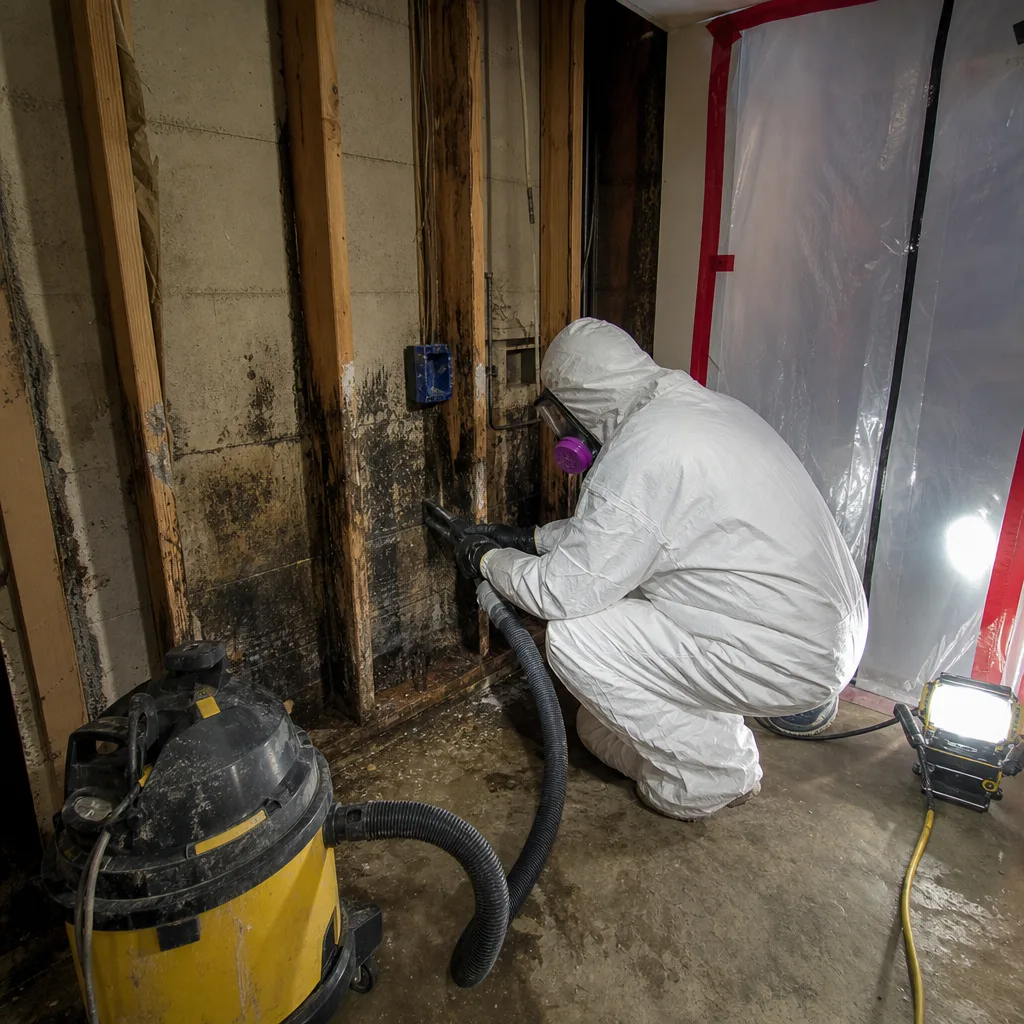
Haven Standard, Clause 1 states: written price before work begins, every time, with no exceptions. This is not a marketing phrase. It’s a signed guarantee that specifies exactly what is protected and what is not.
A written price guarantee protects you from scope-creep additions once the crew is inside your home. The price for the documented scope will not increase unless unforeseeable conditions are discovered - conditions that were genuinely not visible or detectable during initial inspection. Examples: water damage behind a tiled shower wall that showed no external indicators; fire damage to structural members concealed by finish materials; mold in a wall cavity with intact, un-stained drywall.
A written price guarantee does not protect you from: changes you request after work begins; code upgrades required by municipal inspection; discovery of pre-existing conditions unrelated to the current loss; or damage that occurred after the initial estimate was written but before work commenced. These are legitimate changes that require written change orders with your approval.
The distinction matters because some contractors use “guaranteed price” language loosely, then treat every supplement as an unforeseeable condition. Our guarantee specifies the inspection methods used (thermal imaging, moisture meters, borescopes where indicated), which establishes what was reasonably detectable. If we could have found it and didn’t, that’s on us. If we couldn’t have found it without demolition, that’s a legitimate change order with documentation.
For water damage restoration in Auburn, this guarantee is especially important because water migrates unpredictably in our soil conditions. The clay soils in the Green River valley slow drainage and extend moisture wicking into foundation materials. A contractor who guarantees a price without accounting for soil-specific drying behavior is either eating unexpected costs (and cutting corners elsewhere) or planning to supplement.
Common Mistakes to Avoid
- Comparing total dollar amounts without comparing scope coverage. A $4,200 bid that omits contents manipulation, antimicrobial treatment, and moisture monitoring will cost more than an $6,800 bid that includes them - it just won’t cost more until after you’ve signed.
- Accepting verbal estimates or “ballpark” pricing. Haven Standard, Clause 1 exists because verbal pricing is unenforceable and almost always underestimates. Every estimate must be in writing, with line items, before work begins.
- Ignoring contamination classification. A contractor who classifies Category 2 water as Category 1 to avoid removal requirements is saving money at the expense of your health and your home’s long-term integrity. Ask for written justification referencing IICRC S500.
- Not verifying that rebuild is included or separately scoped. Mitigation-only contractors leave you with a gutted room and no construction estimate. Confirm whether rebuild is in-scope or requires a separate contract, and get the rebuild price in writing before demolition starts.
- Choosing contractors without Xactimate familiarity. In Auburn’s insurance market, this is not optional. Estimates in non-standard formats create adjuster disputes that delay payment and may leave you covering costs your policy would have paid.
- Skipping the photo documentation requirement. A contractor who doesn’t photo-document every visit can’t prove what was done, what was found, or what condition the property was in. This documentation is your protection in any dispute - demand it as a standard deliverable, never an upsell.
- Not checking for permit requirements before rebuild. Auburn and King County require permits for electrical, plumbing, and structural work. Unpermitted work can void insurance coverage, create title issues on sale, and expose you to liability if future damage occurs.
When to Call a Professional
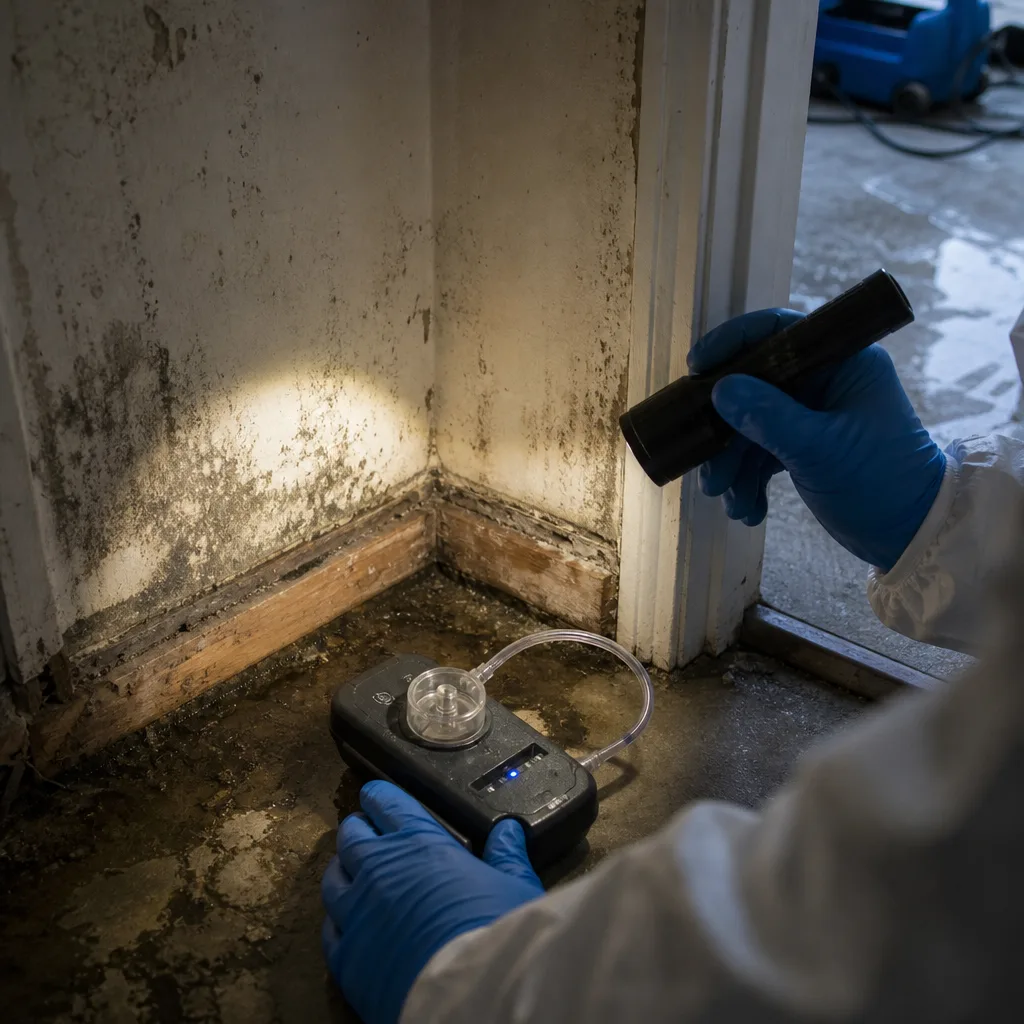
Call for professional assessment when: water has affected more than a single small area and is not fully contained; you smell musty odors or see visible mold growth; fire or smoke damage has affected multiple rooms or HVAC systems; sewage backup or flooding from outside sources has entered the structure; or your insurer has requested documentation you don’t have. In any of these scenarios, delaying assessment allows damage to compound and can void coverage if the insurer determines you failed to mitigate promptly.
DryMark Restoration Auburn offers free estimates in Auburn - call (253) 487-0371. Every estimate includes a written price before work begins, a photo record on every visit, and documentation to IICRC, RIA, and IFA standards. Our live person answers every call, 24 hours a day, 7 days a week, with no voicemail on emergency lines.
Frequently Asked Questions
Water damage restoration in Auburn typically ranges from $3,500 for a contained Category 1 loss to $8,500+ for a Category 2 or 3 loss affecting multiple rooms, with Category 3 sewage or flood losses running $6,500-$12,000 or more for equivalent square footage. The exact cost depends on contamination category, affected square footage, and whether all five restoration phases are included in the estimate. Call (253) 487-0371 for a written price before work begins - estimates are free.
Most homeowners insurance covers sudden and accidental water damage, fire damage, and storm damage, but coverage varies by policy and cause. The key factor is documentation: insurers pay claims with clear evidence of the damage, the restoration work performed, and the pricing methodology used. Estimates written in Xactimate format with daily moisture logs and photo documentation are paid more readily than informal bids. We coordinate directly with adjusters and provide the documentation package that supports full coverage. Call (253) 487-0371 to discuss your specific policy and loss.
Bids vary because contractors are often pricing different scopes of work. One bid may include extraction, drying, demolition, antimicrobial treatment, and rebuild; another may include only extraction and drying, with everything else as a change order. The lowest headline price is often the most expensive total project when supplements and uncovered work are included. Compare line items, not totals, and verify that each phase is explicitly priced.
For active water losses, speed matters - every hour of delay increases affected area and total cost. Our live person answers every call, 24 hours a day, 7 days a week, with no voicemail on emergency lines. Response time to Auburn locations typically ranges from 45 minutes to 90 minutes depending on traffic and current call volume. Call (253) 487-0371 for current availability.
Small, surface-only mold growth on non-porous materials in a contained area can sometimes be addressed with proper cleaning and moisture control. However, mold in porous materials (drywall, carpet, insulation), mold covering more than 10 square feet, or mold in HVAC systems requires professional remediation with containment and air filtration. In Auburn’s climate, where humidity supports rapid regrowth, incomplete remediation often results in recurrence within 6-12 months. We offer free assessments to determine the appropriate scope - call (253) 487-0371.
We coordinate directly with your adjuster, providing the documentation package - photo records, daily moisture logs, written scope in Xactimate format, and completion verification - that adjusters need to process claims efficiently. Our estimates are written in the same language as adjuster software, which reduces disputes and accelerates payment. You remain the policyholder and final decision-maker, but you don’t have to manage the documentation exchange.
The Bottom Line
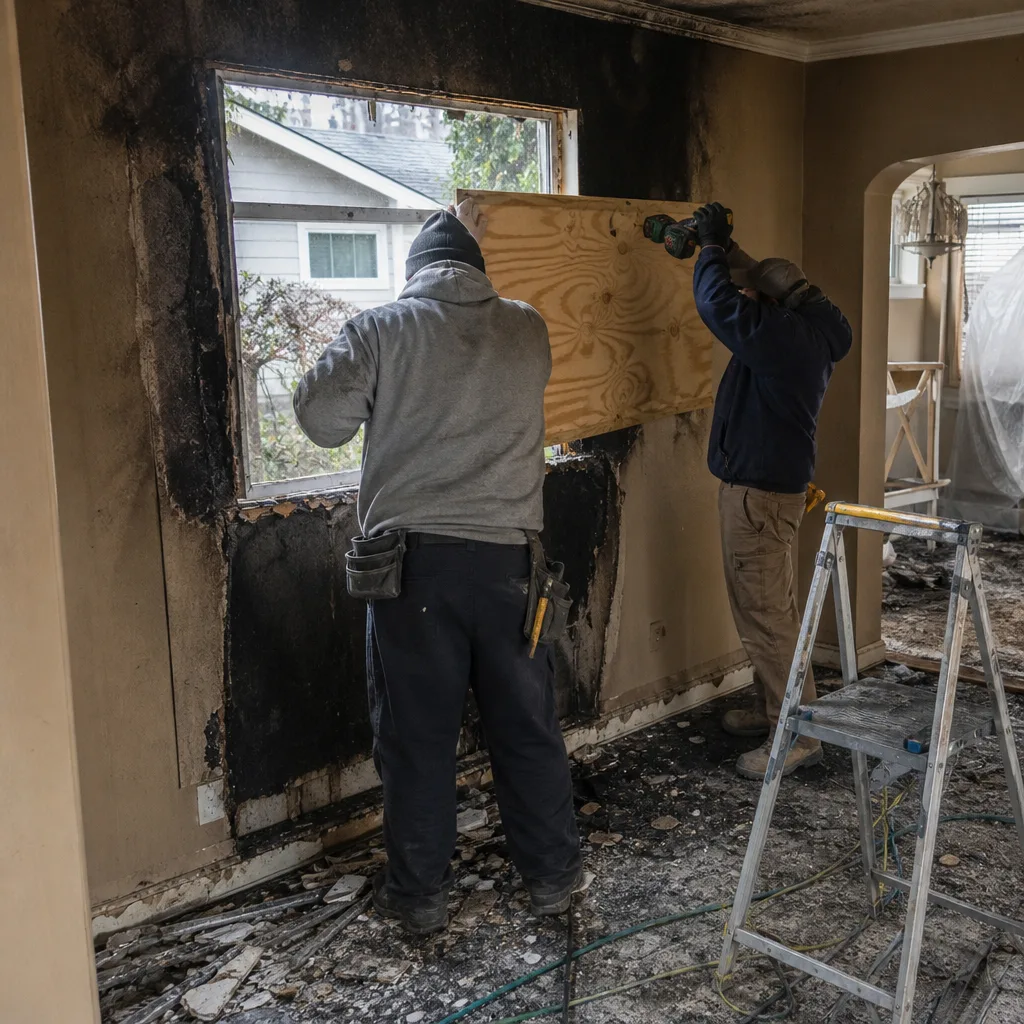
Restoration costs in Auburn are not mysterious, but they are easily distorted by bids that omit required work or use pricing formats insurers don’t recognize. The homeowner who evaluates estimates by scope coverage - checking that all five phases are explicitly priced, that contamination classification is justified, that documentation standards are specified, and that the estimate format matches adjuster software - avoids the supplement bill that arrives after demolition starts. A written price before work begins, with no scope-creep additions, is the only foundation for accurate comparison. Everything else is a gamble with your home and your claim.
Written by Alicia Brennan, Owner at DryMark Restoration Auburn, serving Auburn since 2011.