
Free visual inspection and a written scope of work before any mitigation begins - photos, moisture readings, and drying logs go in your claim file
The scope we write is the scope we bill. Anything new gets shown to you, in writing, before we touch it.

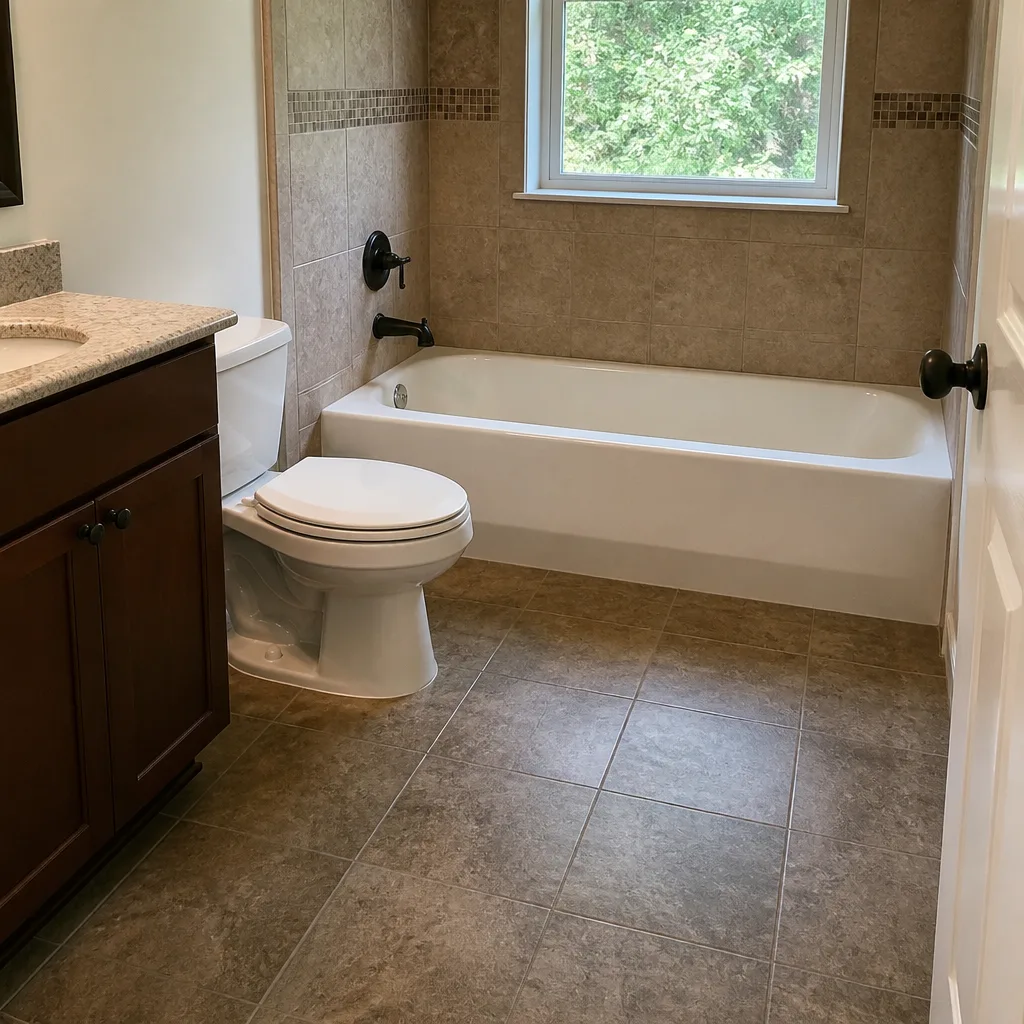
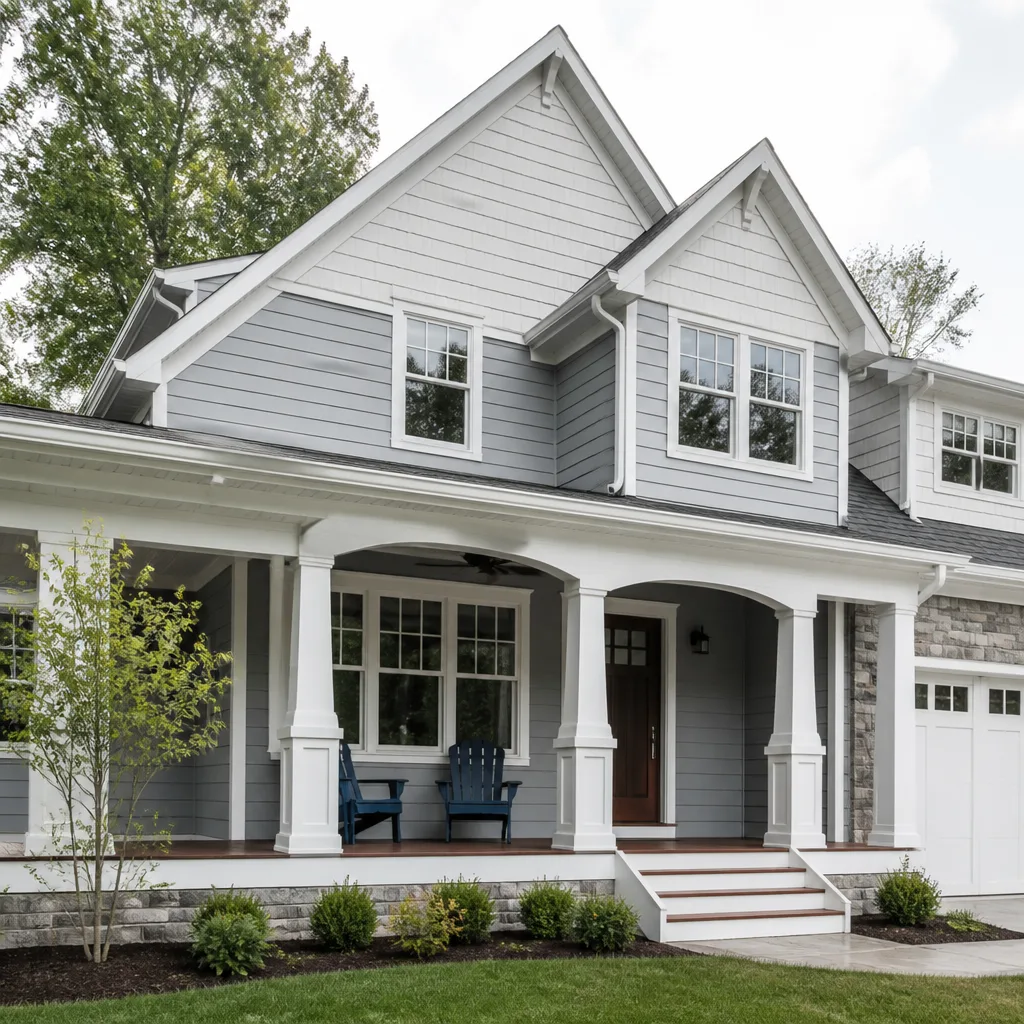
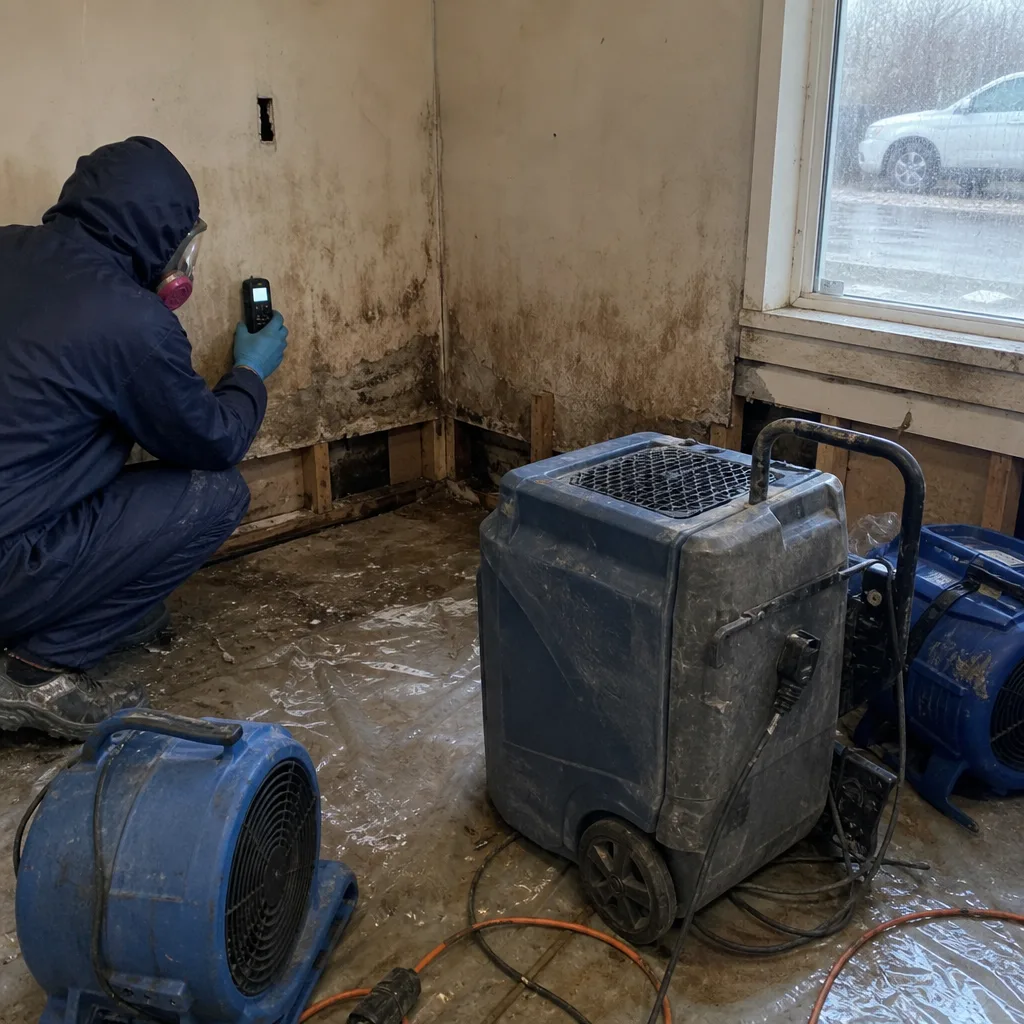 Before
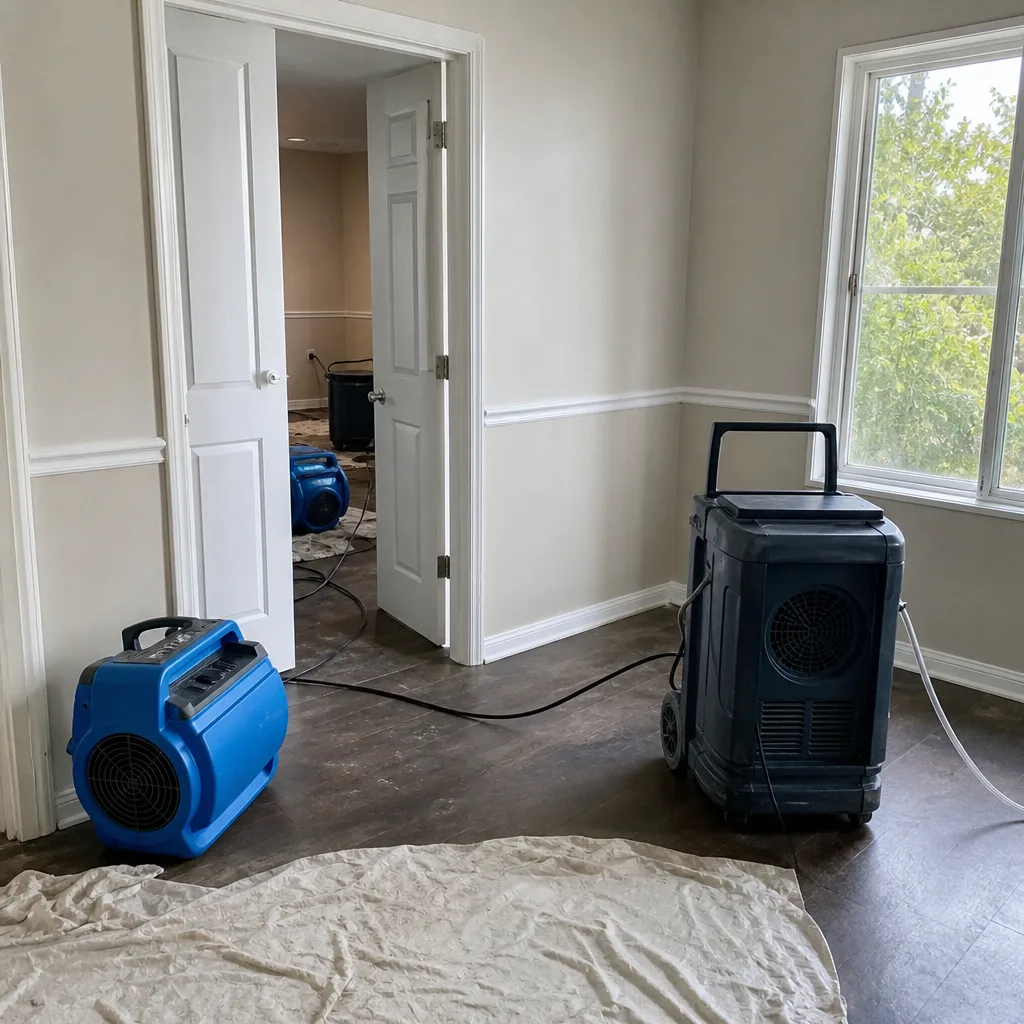 After
After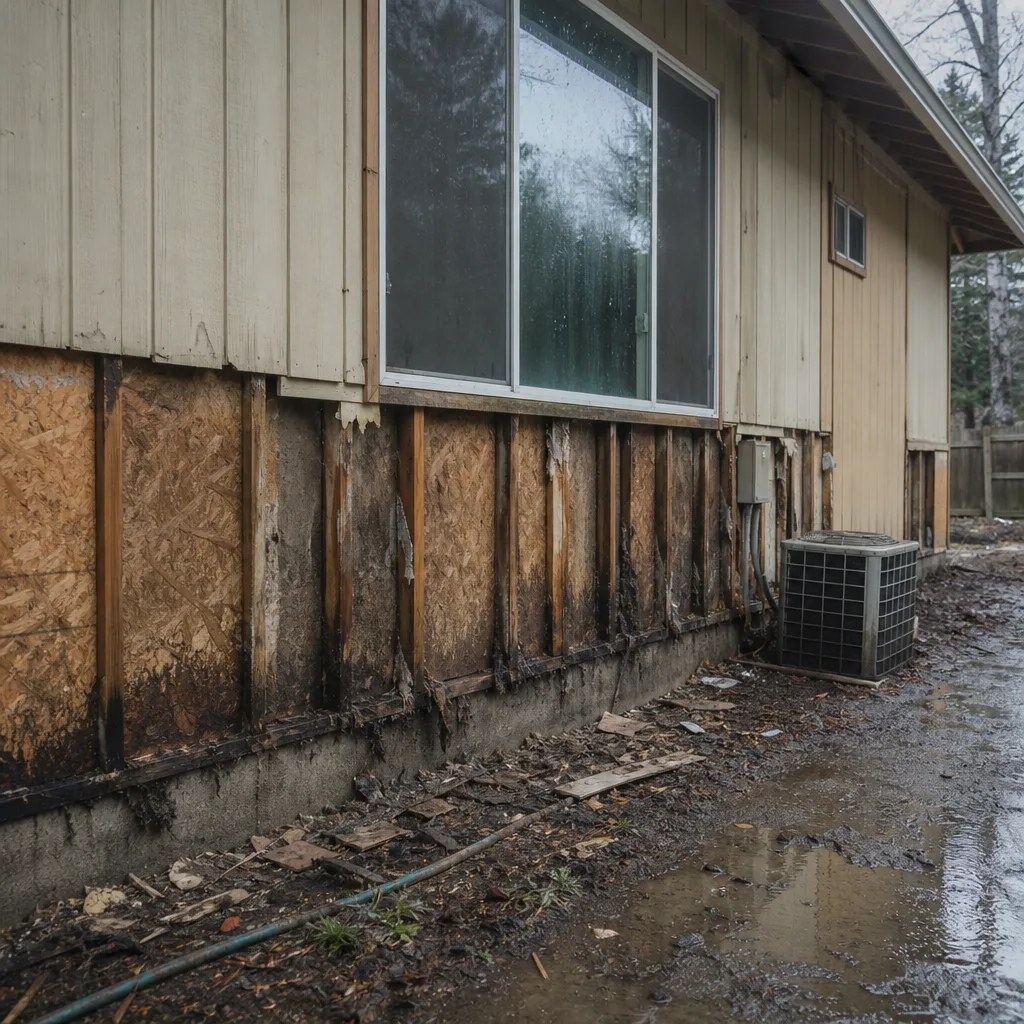 Before
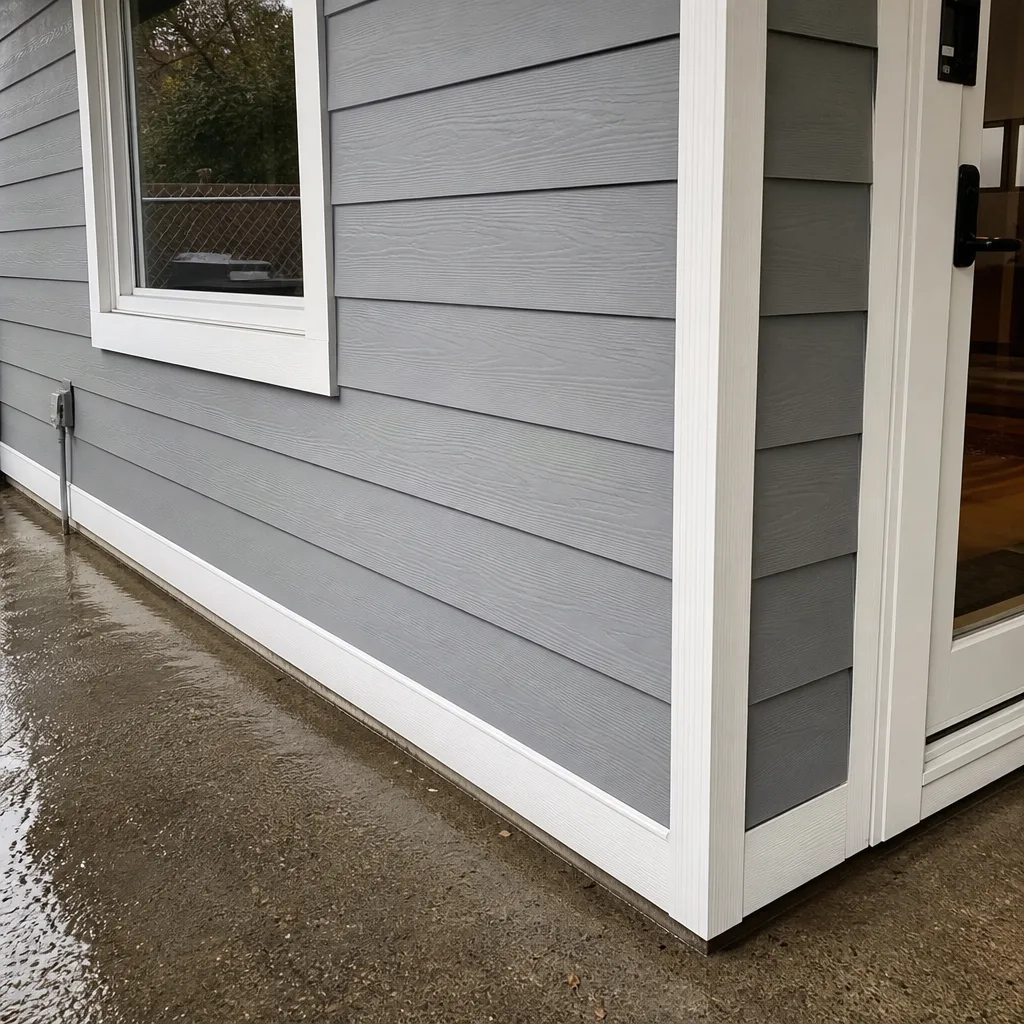 After
After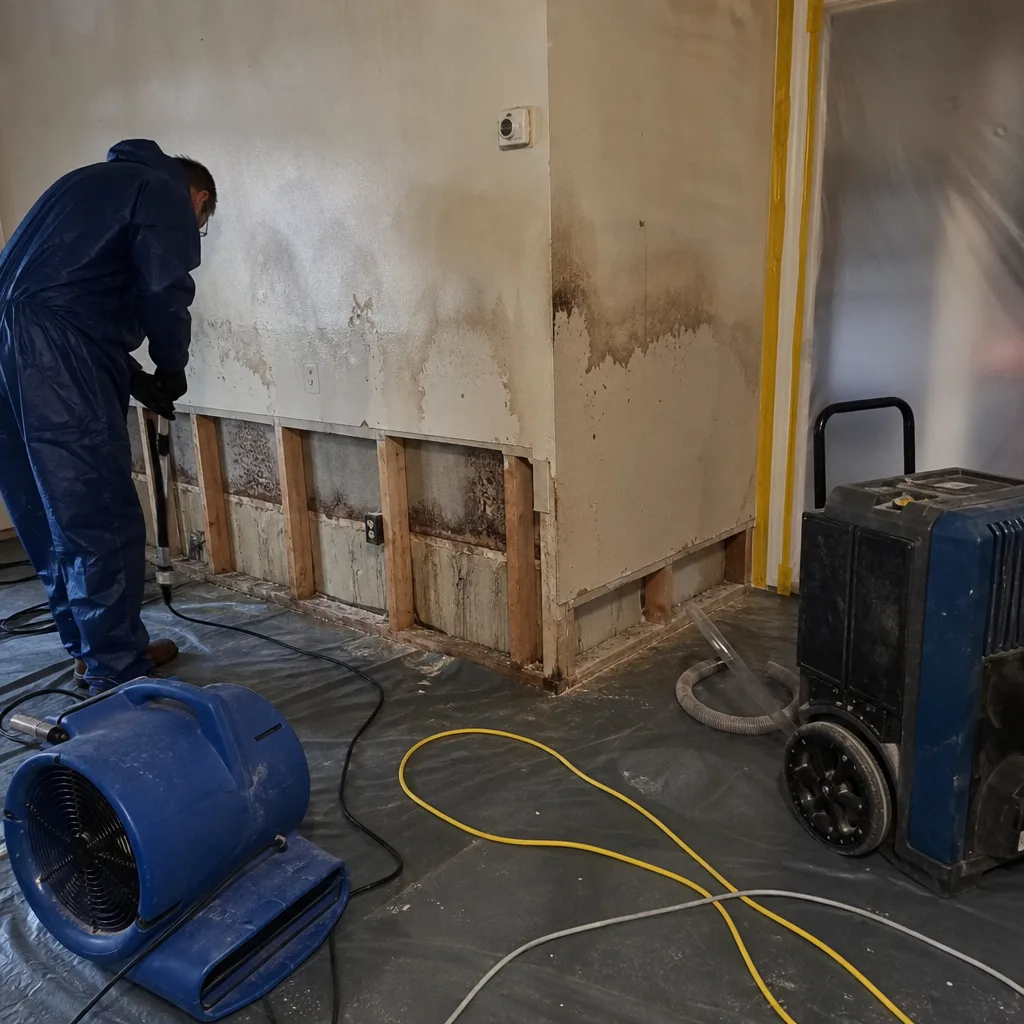 Before
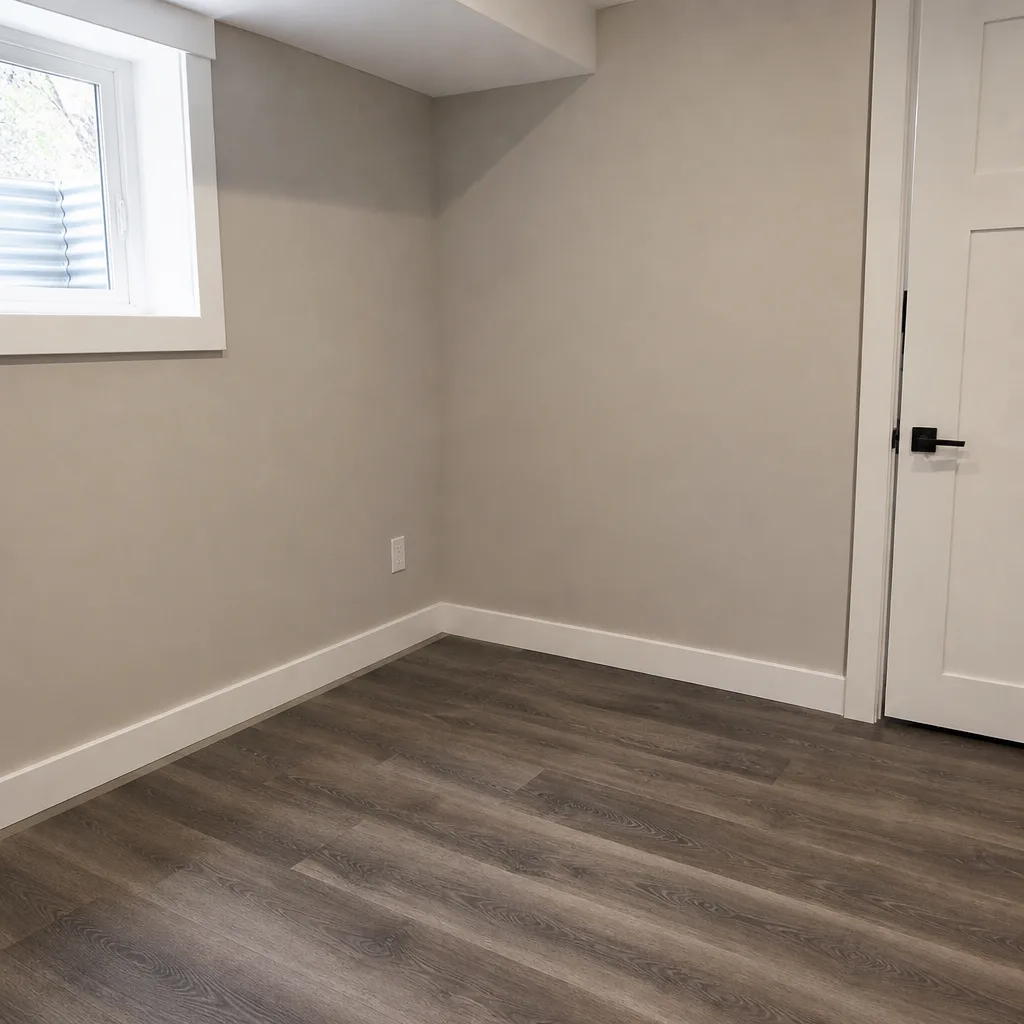 After
AfterTrusted Water Damage Restoration for Auburn Homeowners
Water damage restoration in Auburn typically costs $2,800-$7,500 for a standard residential drying job, with Emergency water extraction available within 60-90 minutes across the city and surrounding King County communities. At DryMark Restoration Auburn, we’ve restored more than 12,000 homes since 2011, every one with a written price before work started and a documented photo record when the crew left. Our live dispatch answers (253) 487-0371 24 hours a day, 7 days a week - no voicemail, no next-business-day callbacks while water is still wicking into drywall and subfloors.
Auburn’s position at the confluence of the Green and White Rivers, combined with its mix of pre-1980s ranch homes in Lea Hill and newer construction in Lakeland Hills, creates distinct water damage patterns we’ve documented across thousands of jobs. Older galvanized supply lines in the original Auburn neighborhoods fail at the threaded joints during freeze-thaw cycles. Newer PEX installations in Lakeland Hills develop pinhole leaks at crimp connections when foundation settling shifts wall framing. We’ve seen both patterns enough times to recognize them on sight, and we bring the right extraction and drying equipment for each.
What Our Water Damage Restoration Service Includes
Emergency Water Extraction
Emergency water extraction is the immediate removal of standing water from a structure using truck-mounted or portable extraction systems, typically deployed within 60-90 minutes of your call to our Auburn dispatch. You need this service when water is actively pooling on floors, saturating carpet, or covering hard surfaces - every hour of delay increases the Class of water damage and the square footage requiring demolition. Our crews arrive with water damage restoration in Auburn protocols already matched to your situation: truck-mounted units for flooded basements in Lea Hill, portable extraction wands for elevator buildings near Auburn Station, and weighted ride-on extractors for commercial carpet in downtown retail spaces.
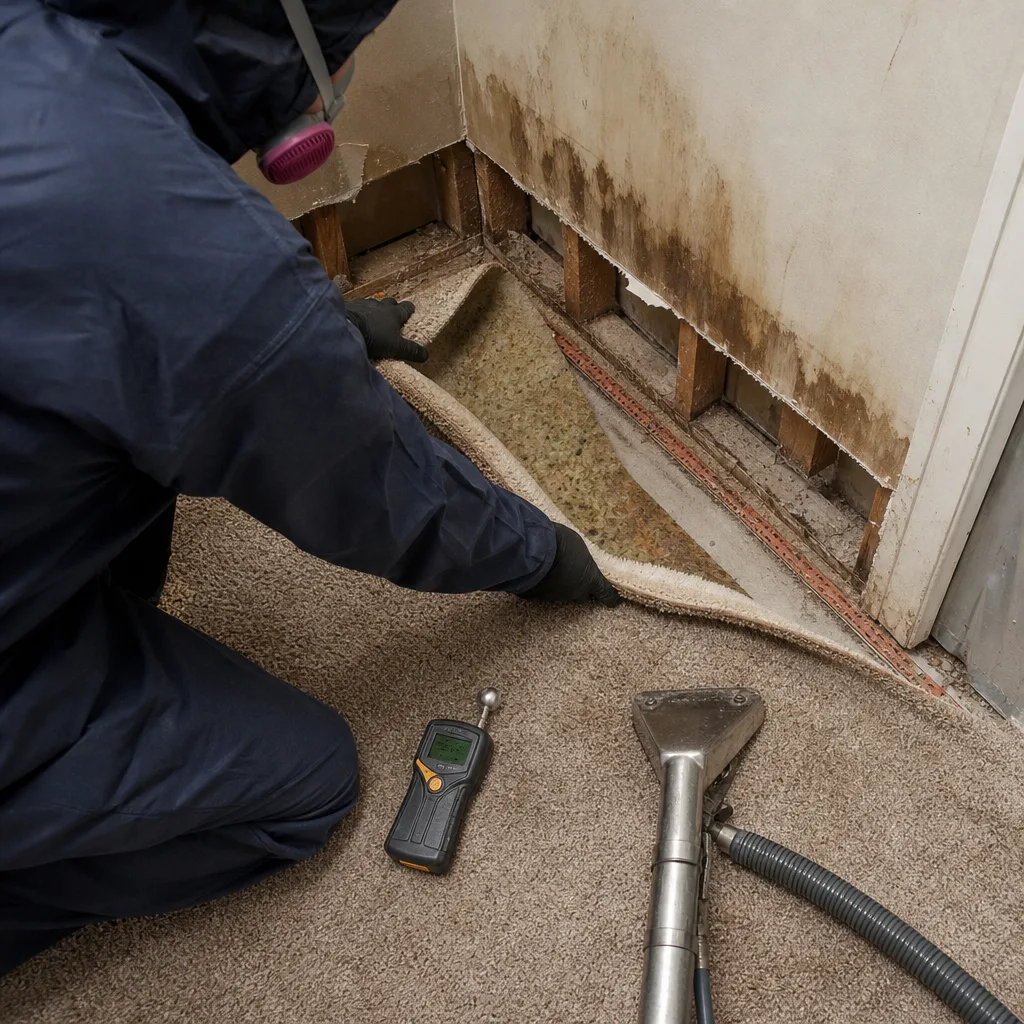
Structural Drying & Dehumidification
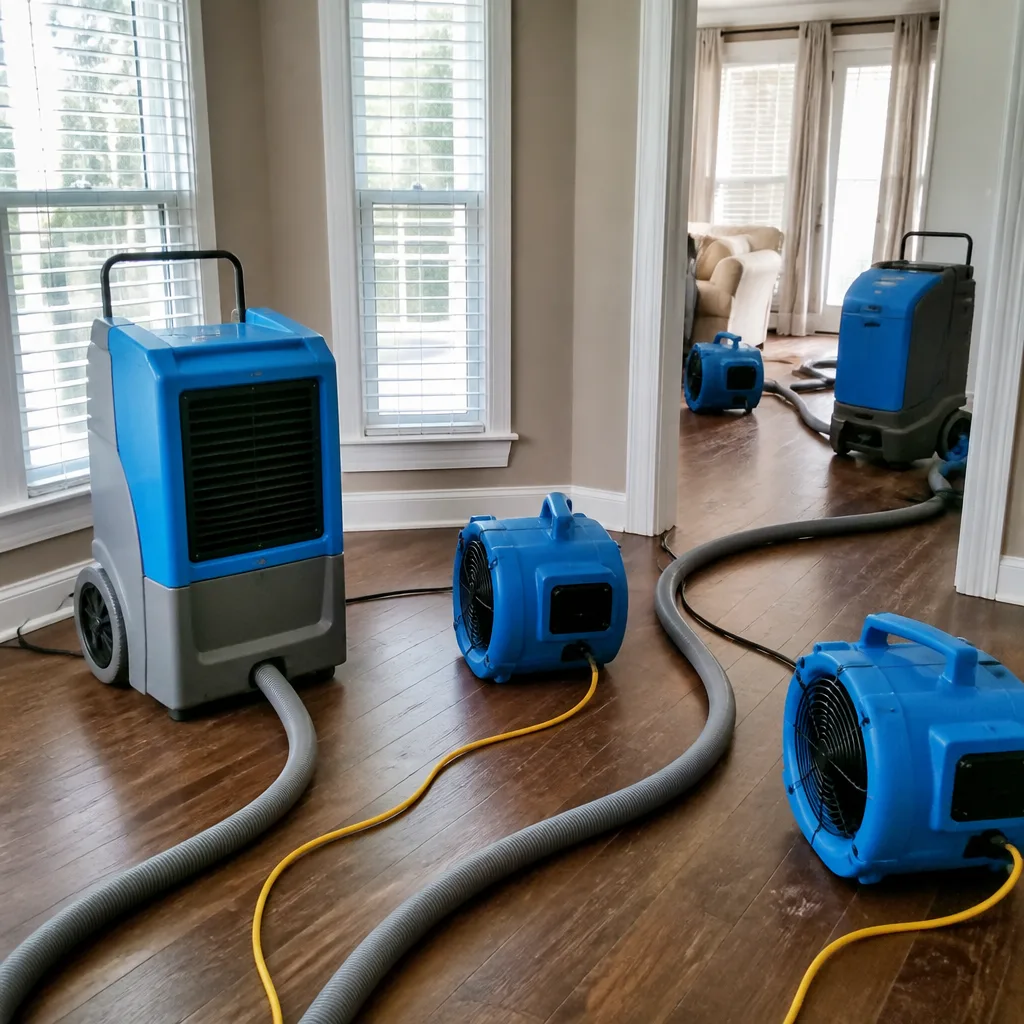
Structural drying is the controlled removal of moisture from building materials using air movement, dehumidification, and precise monitoring until wood moisture content returns to equilibrium - typically 10-12% for Pacific Northwest framing lumber. You need this when water has penetrated beyond surface materials into studs, subfloors, or concrete slabs, which occurs within 24-48 hours even from seemingly minor leaks. Our crews deploy Dri-Eaz and Phoenix LGR dehumidifiers sized to the affected cubic footage, with daily psychrometric readings logged to document vapor pressure differential and specific humidity reduction for your insurance file.
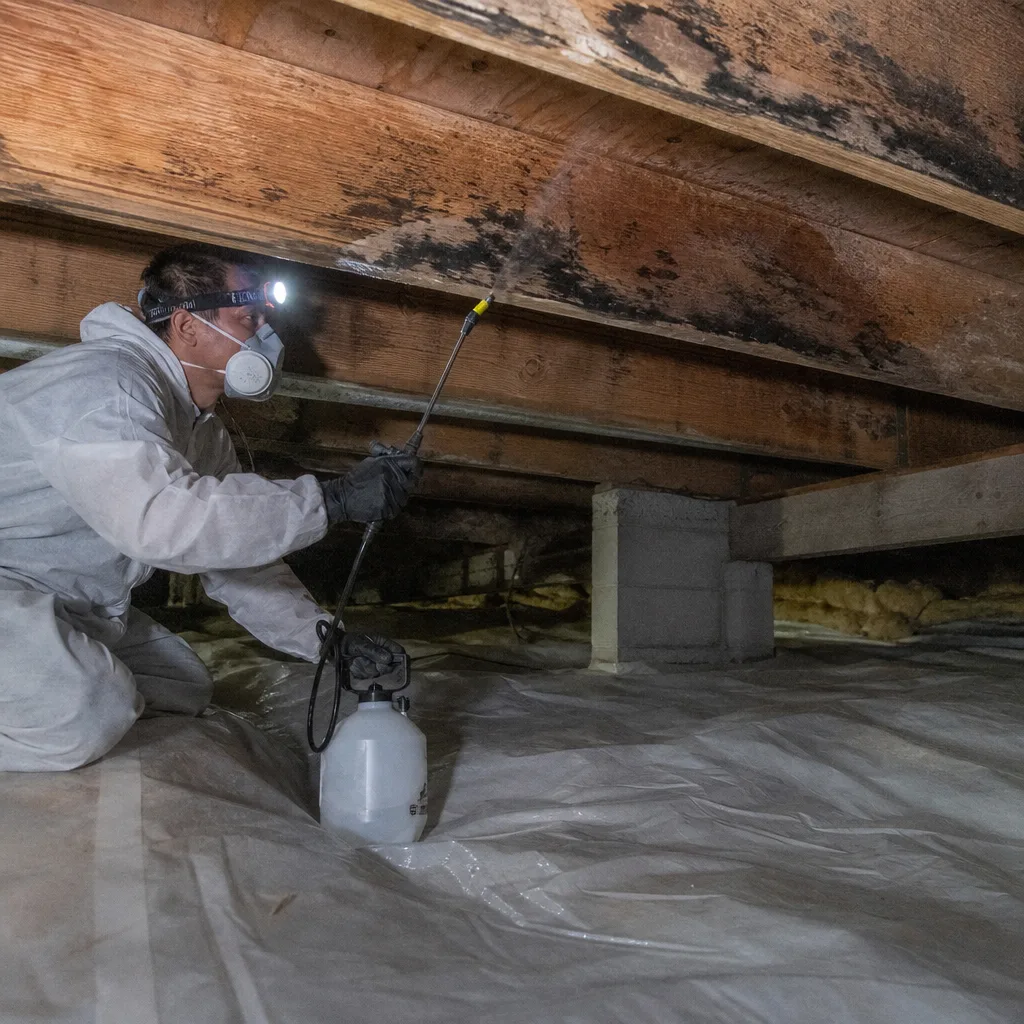
Flood Cleanup
Flood cleanup addresses Category 3 water intrusion from exterior sources - river flooding, storm surge, or overwhelmed municipal drainage - requiring specialized handling due to contaminants and regulatory disposal requirements. You need this when water originates outside the structure, carries visible sediment or odor, or has contacted soil or sewage systems, which is common in Auburn’s low-lying neighborhoods near the Green River during king tide events. Our crews document contamination classification with photo evidence, establish engineering controls per IICRC S500 standards, and coordinate disposal through King County-approved waste streams with manifest documentation for your claim.
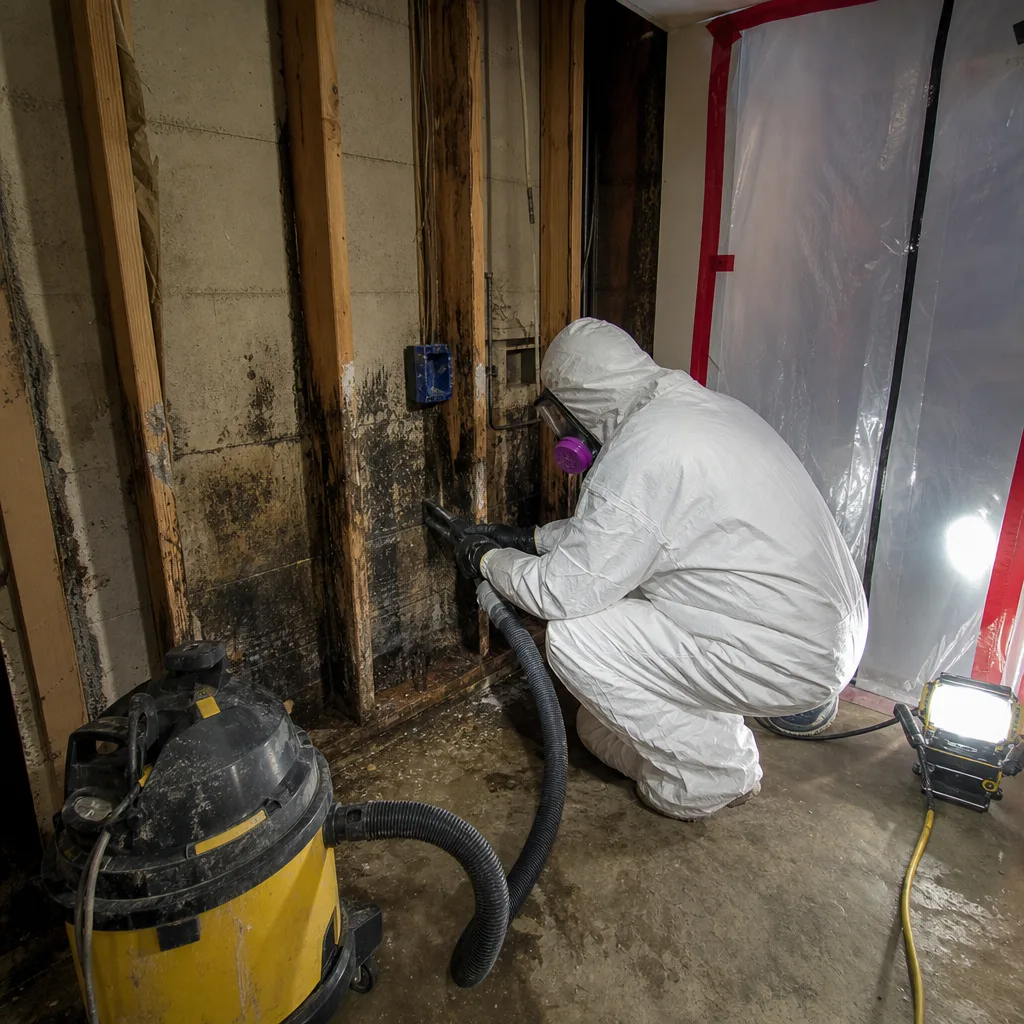
Burst Pipe Restoration
Burst pipe restoration encompasses extraction, drying, and often selective demolition following catastrophic failure of pressurized supply lines, which can release 50-100 gallons per hour in a typical Auburn home. You need this service when you’ve discovered standing water, heard pressurized spraying within walls, or found ice formation on exterior plumbing during Auburn’s occasional single-digit winter nights. Our crews locate the break point using thermal imaging, document the line type and failure mode for your adjuster, and provide a written scope addressing both the immediate water damage and the structural drying required before licensed plumbers can install permanent repairs.
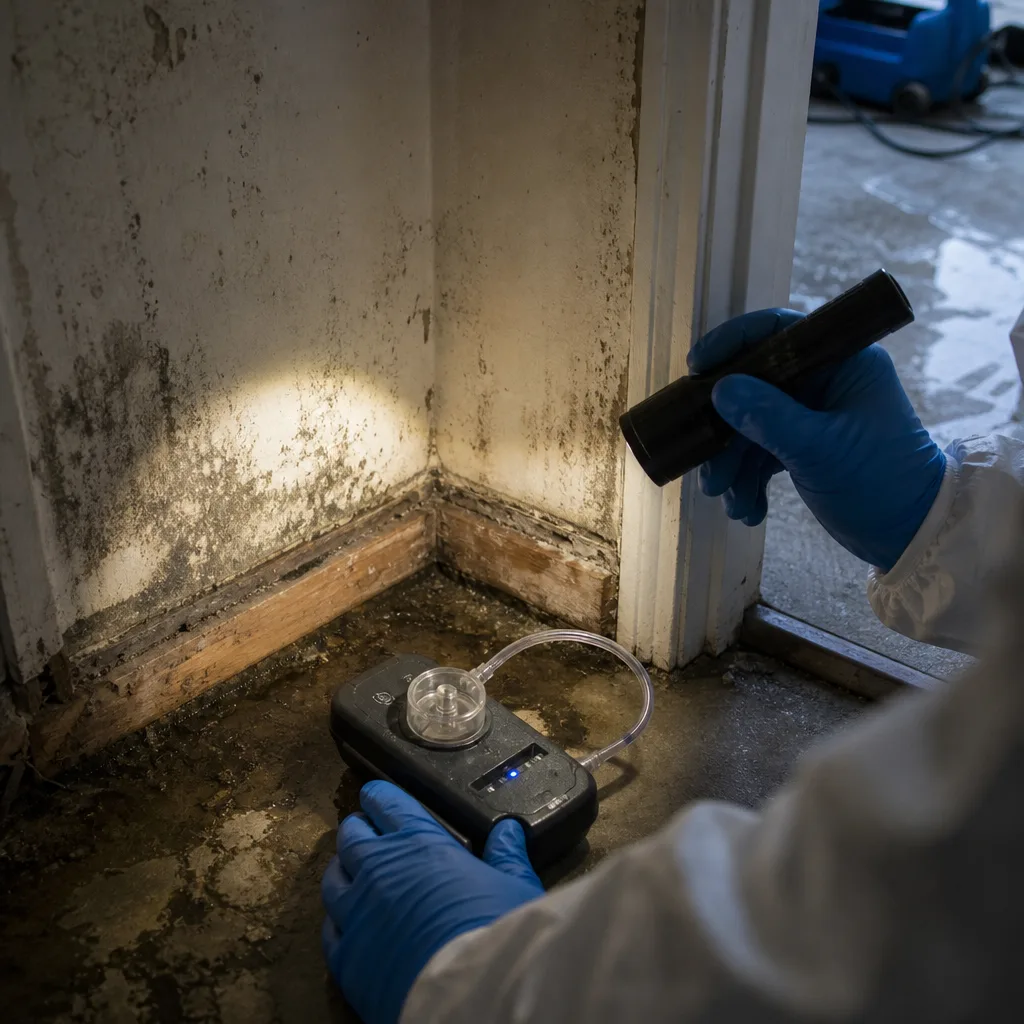
Basement Water Removal
Basement water removal addresses below-grade flooding from hydrostatic pressure, foundation seepage, or failed sump systems - a persistent issue in Auburn’s older neighborhoods where perimeter drains have degraded. You need this when you observe water entering at the slab-wall joint, efflorescence on block walls, or sump pump failure during heavy rain events, which are common in Lea Hill homes built on the area’s clay-heavy soils. Our crews assess drainage patterns, extract standing water with submersible pumps if necessary, and deploy low-grain refrigerant dehumidifiers with ducting configurations designed for the restricted airflow typical of Auburn basement footprints.
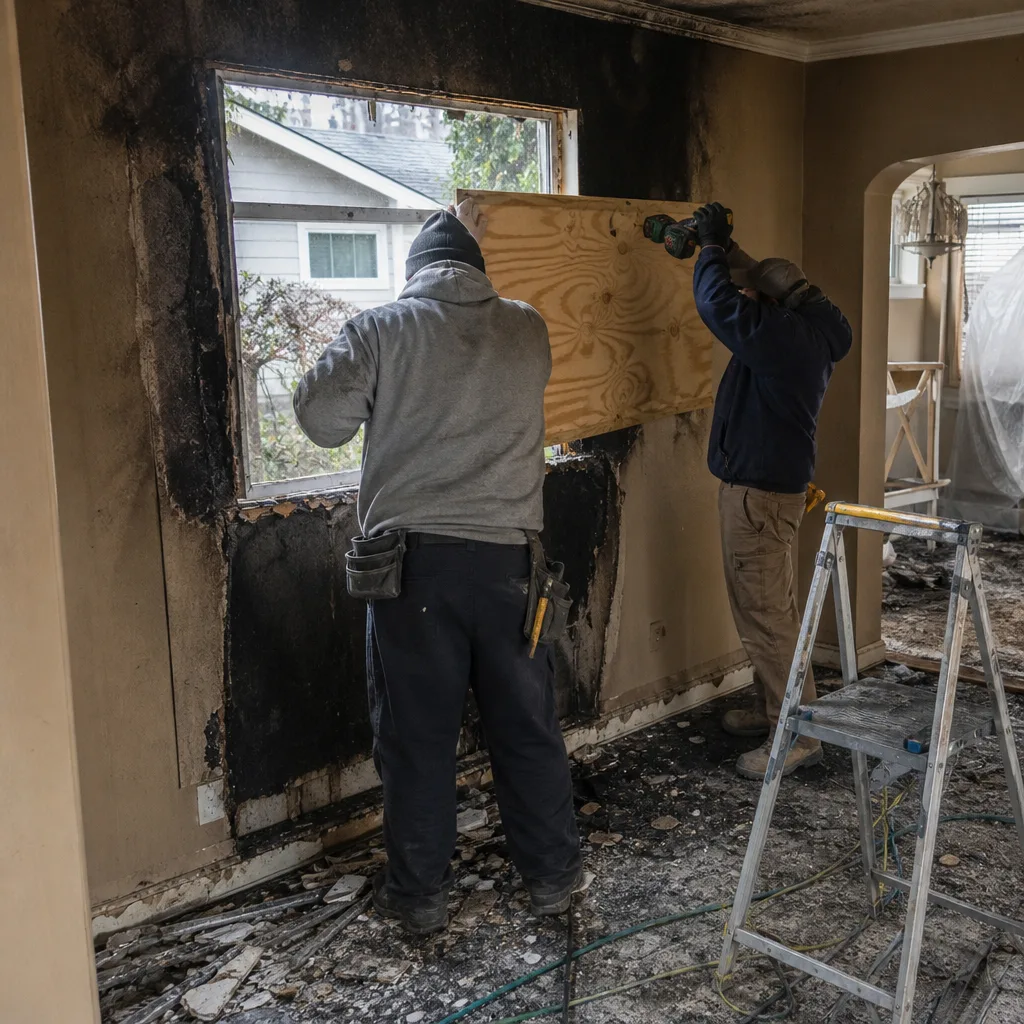
Ceiling & Roof Leak Water Damage
Ceiling & roof leak water damage restoration addresses the distinctive pattern of water traveling along framing members before exiting at the lowest point - often far from the actual breach. You need this when you observe staining, sagging, or active dripping from ceiling planes, particularly following Auburn’s wind-driven winter rains that exploit compromised flashing at valley intersections. Our crews trace the water path using moisture mapping, establish containment to protect living spaces below, and document the affected insulation type and depth - critical for scope accuracy when R-38 batts in Lakeland Hills tract homes require replacement versus blown cellulose in Lea Hill ranches.
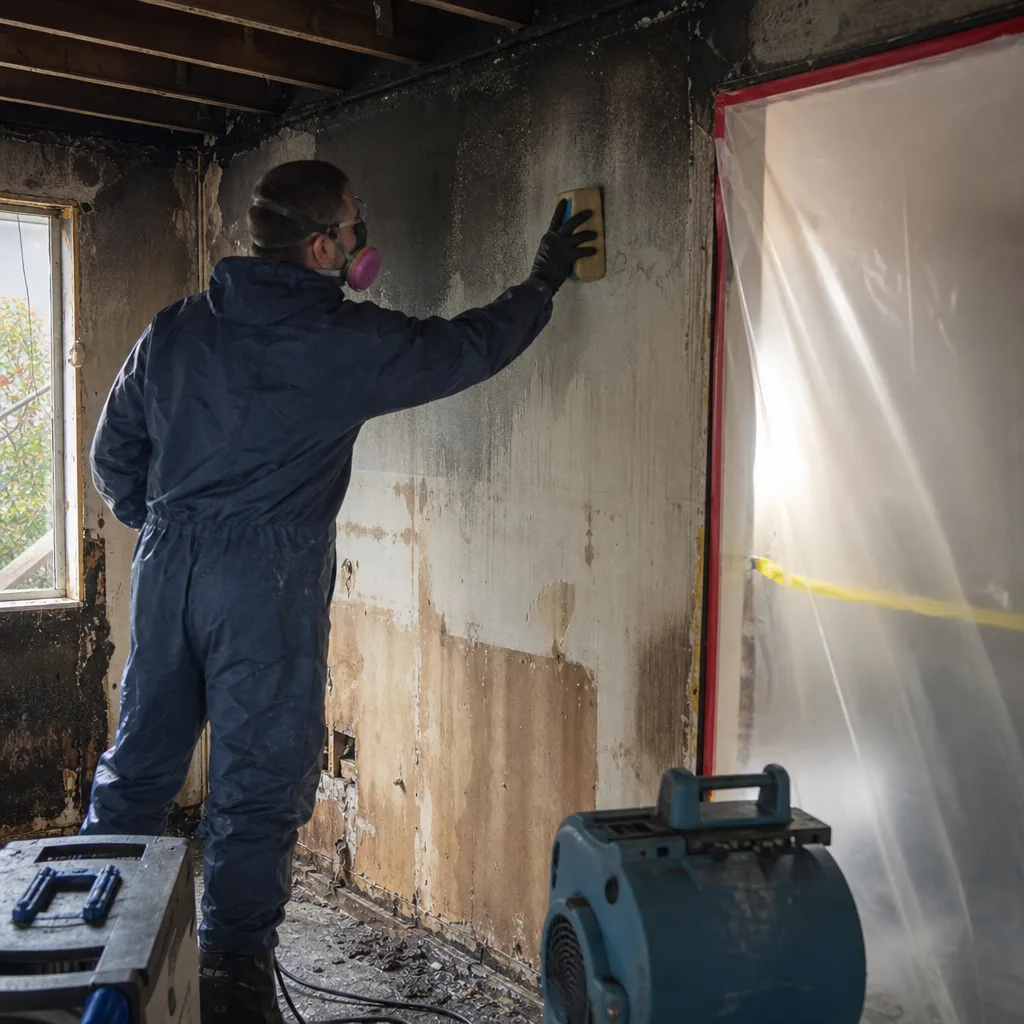
What happens when you call
- 1
A real person answersNo phone trees - you reach a local pro.
- 2
You get an upfront price rangeHonest numbers before anyone is dispatched.
- 3
A background-checked tech heads outLicensed & insured, dispatched right away.
- 4
You approve before work beginsNothing starts until you say go.
Brands We Service for Water Damage Restoration
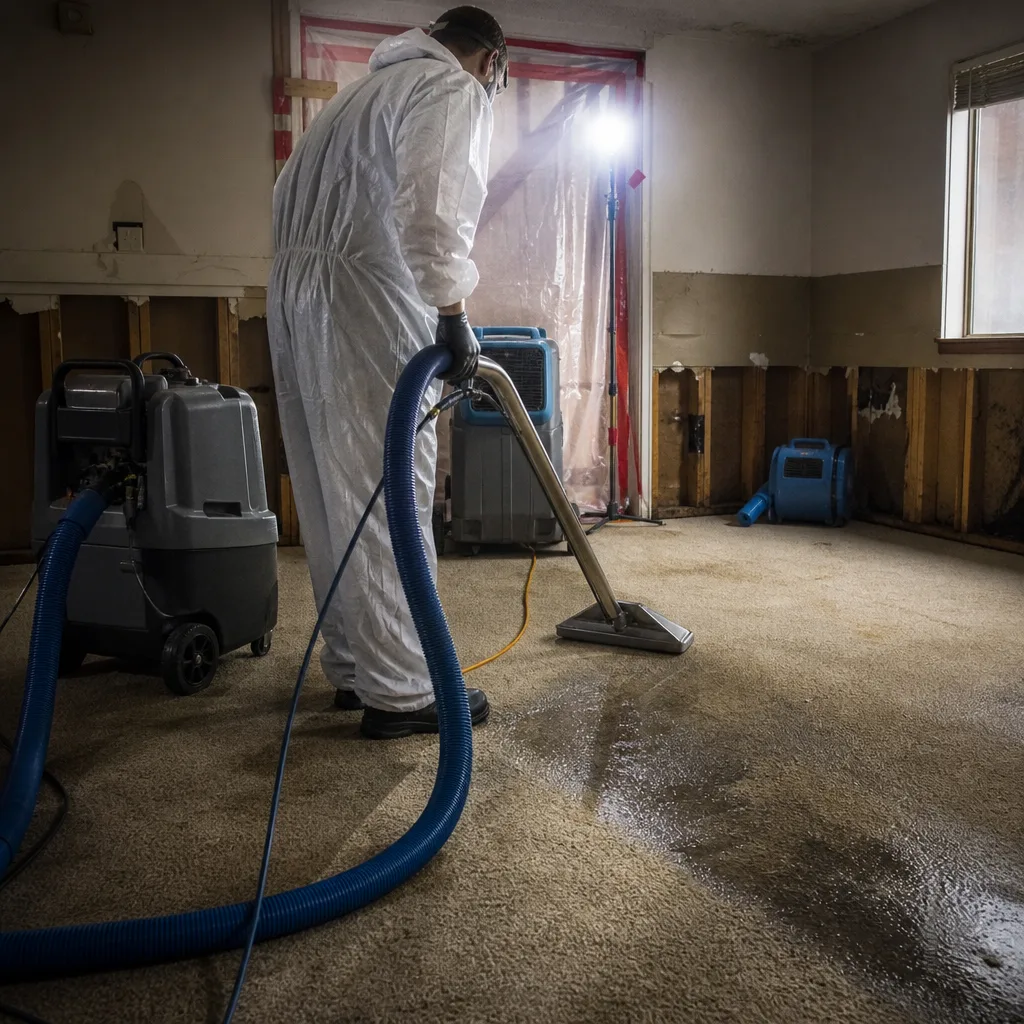
We’ve deployed and serviced Dri-Eaz LGR 7000XLi and Revolution dehumidifiers on hundreds of Auburn jobs, from single-room drying in downtown condos to whole-house deployments in Lakeland Hills after supply line failures. The Dri-Eaz product line’s grain depression performance at 80°F/60% RH conditions matches our documented drying curves for Pacific Northwest winter conditions, and we stock OEM condensate pumps and filtration media to maintain their specified air processing rates without delay.
Our crews also work extensively with Phoenix 200 MAX and 200 HT dehumidifiers, particularly on commercial water losses in Auburn’s industrial corridor along West Valley Highway where larger cubic footage demands higher pint-per-day capacity. We’ve found the Phoenix line’s ducting versatility essential for water damage restoration in Kent and Auburn multi-family buildings where centralized drying requires positive-pressure distribution. Whether your property requires Dri-Eaz, Phoenix, or any other professional-grade drying system, we specify and document equipment selection based on psychrometric calculations, not inventory convenience.
BeforeAfterSigns You Need Water Damage Restoration Right Now
- Visible pooling or standing water on any floor surface. Standing water migrates laterally at approximately 1 foot per hour on level surfaces, and vertical wicking into drywall begins within minutes. In Auburn’s older homes with original oak strip flooring, this migration pattern often hides beneath area rugs until subfloor saturation has already triggered cupping.
- Discoloration, staining, or bubbling on ceiling or wall surfaces. These symptoms indicate water has traveled through concealed cavities and is now degrading finish materials from behind. We’ve documented cases in Lakeland Hills where a second-story shower drain leak produced first-floor ceiling staining 14 feet from the actual source.
- Persistent musty odor, particularly after recent rain or plumbing use. Odor without visible water often signals active mold colonization in concealed spaces - in Auburn’s climate, Aspergillus and Penicillium species can establish visible growth on cellulose materials within 48-72 hours of moisture intrusion.
- Sudden increase in water bill without corresponding usage change. A supply line leak downstream of the meter can release thousands of gallons monthly; we’ve traced $400+ monthly bill spikes to slab leaks in Auburn’s 1970s-era ranch homes where copper lines failed at 90-degree bends.
- Sagging drywall, soft spots in flooring, or door frames that no longer latch properly. These indicate structural moisture content has exceeded material tolerances - drywall loses structural integrity above 1% moisture content by weight, and solid wood door jambs swell measurably when moisture content exceeds 16%.
Our Water Damage Restoration Process - Step by Step
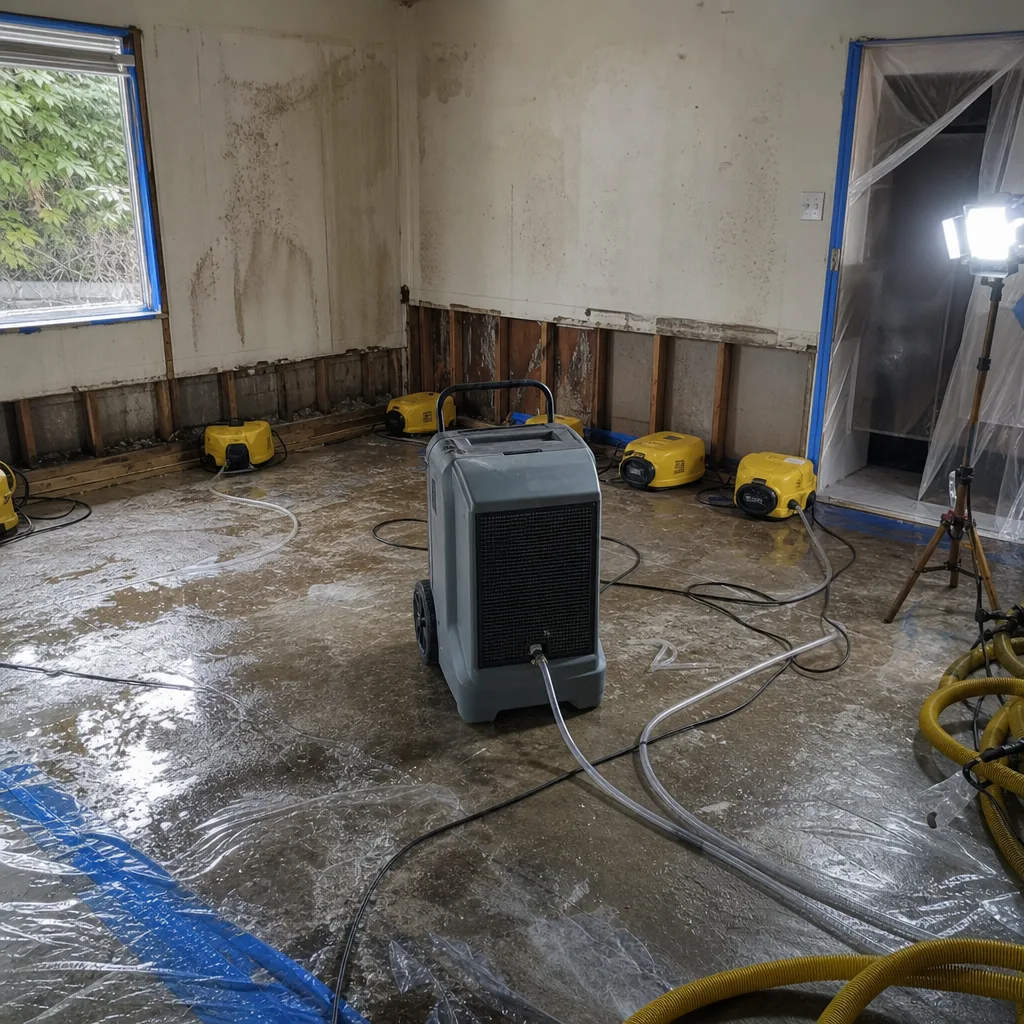
- 1
Emergency response and damage assessment. Our dispatcher gathers loss details to pre-stage appropriate equipment, and our crew arrives with extraction tools, moisture detection instruments, and documentation tablets. We photograph the loss scene before moving anything, establish the water category and class per IICRC S500, and present a written price before any work begins - Haven Standard, Clause 1.
- 2
Water extraction and containment. Using truck-mounted or portable extraction equipment matched to your structure type, we remove all standing water and apply weighted extraction to carpet and pad if salvage conditions exist. We establish containment barriers to isolate unaffected areas, preventing cross-contamination and documenting the protected square footage for scope accuracy.
- 3
Moisture mapping and equipment placement. Our technicians record baseline moisture readings with pin and pinless meters at multiple depths and elevations, creating a spatial map of affected materials. We then calculate dehumidifier capacity requirements using psychrometric formulas - not rules of thumb - and position Dri-Eaz or Phoenix equipment with airflow patterns documented in your file.
- 4
Drying monitoring and daily documentation. Every 24 hours, we record specific humidity, temperature, and moisture content readings at established monitoring points, adjusting equipment as the drying curve progresses. These daily drying logs, with timestamped photos, form the documentation backbone that transforms restoration invoices into payable insurance claims.
- 5
Verification of dry standard and final documentation. We declare drying complete only when moisture readings match or fall below the dry standard established for your structure’s materials and regional equilibrium - typically 10-12% for framing lumber in Auburn’s climate. You receive the complete photo record, drying log, and written scope, plus our 365-Day Done Right Promise under The Haven Standard.
How Much Does Water Damage Restoration Cost in Auburn?
A typical emergency water extraction and Class 1 drying job in Auburn runs $2,800-$4,200 for a single affected room with no material demolition required. Class 2 losses involving wet carpet and pad in multiple rooms typically range $4,500-$6,800, including extraction, dehumidification, and selective removal of non-salvageable materials. Class 3 losses with water intrusion from above - ceiling collapse, upper-floor supply line failures - generally fall between $6,200-$10,500 due to the extended drying time and broader affected area. Category 3 flood cleanup with contamination protocols starts around $5,500 and scales with square footage and required engineering controls.
Several factors move these ranges. The water category - clean, gray, or black - determines PPE requirements, disposal costs, and antimicrobial treatment scope. The affected square footage and building materials - hardwood versus laminate, plaster versus drywall, concrete slab versus crawl space - directly affect equipment count and drying duration. Accessibility issues in Auburn’s hillside homes or multi-story townhomes near the SuperMall add labor hours for equipment transport and monitoring.
How to avoid overpaying: demand a written price before work starts, verify the scope addresses only affected materials, and request daily documentation rather than a single “dry” pronouncement. Our Free Second Opinion on any competitor’s written estimate lets you compare scope line items directly - no charge, no obligation. Every DryMark Restoration Auburn estimate includes the extraction phase, dehumidifier rental through drying completion, daily monitoring visits, and the documented photo record as standard deliverables, never upsells.
Water Damage Restoration Near Auburn - Our Service Area
Our Auburn crews typically arrive within 60-90 minutes across the city proper, from the historic downtown core to the Lakeland Hills perimeter, and within 90-120 minutes to adjacent communities. We maintain active response protocols for water damage restoration in Lake Morton-Berrydale, Kent, Sumner, Federal Way, Milton, Des Moines, Puyallup, Maple Valley, SeaTac, Renton, and Tacoma - each with equipment pre-staged for the common water damage patterns in that area’s housing stock. Response time to outlying areas varies with traffic conditions on State Route 18 and Interstate 5, which our dispatch monitors in real time during emergency calls.
Serving Auburn, WA - Our Local Coverage Area
We’re based in the Auburn area and know this community well. Use the map below to see our service coverage - if you’re nearby, we can almost certainly help.
Frequently Asked Questions - Water Damage Restoration in Auburn
Water damage restoration is the professional process of extracting water, drying structural materials, and documenting the return to pre-loss condition according to industry standards. It encompasses emergency extraction, controlled dehumidification, selective demolition of non-salvageable materials, and verification that moisture content has reached equilibrium - all documented with photo evidence and daily drying logs for insurance coordination. At DryMark Restoration Auburn, every restoration follows IICRC S500 protocols and concludes with our written 365-Day Done Right Promise under The Haven Standard.
Most residential drying projects in Auburn reach completion in 3-5 days, with Category 1 clean water losses on the shorter end and Category 3 contaminated losses requiring 7-10 days or longer. The timeline depends on water category, affected material porosity, ambient weather conditions, and whether structural repairs must follow drying - hardwood flooring in Lea Hill homes, for example, often requires acclimation before refinishing. We provide a written timeline with our initial scope and update it daily based on actual moisture readings, not estimates.
Standard residential water damage restoration in Auburn ranges from $2,800 for limited Class 1 losses to $10,500+ for extensive Class 3 contamination, with most falling in the $4,500-$7,500 range. The final price depends on water category, affected square footage, material types requiring demolition, and whether contents manipulation is needed - all itemized in our written scope before work begins, per Haven Standard, Clause 1. Call (253) 487-0371 for a written estimate at no charge; our Free Second Opinion also reviews competitor quotes if you’ve already received one.
Yes - we deploy Dri-Eaz and Phoenix professional-grade dehumidifiers as standard equipment on every water damage job, with technicians trained on their specific operation and maintenance requirements. We also service these units in the field with OEM parts to maintain manufacturer-specified grain depression performance, and we document equipment serial numbers and runtime hours in your drying log for warranty and insurance purposes. If your property has existing Dri-Eaz, Phoenix, XPOWER, or B-Air equipment from prior work, we can integrate with or supplement that inventory as appropriate.
Yes - our emergency dispatch operates 24 hours a day, 7 days a week, with a live person answering every call to (253) 487-0371, no voicemail trees or next-business-day callbacks. We maintain 60-90 minute response times across Auburn for active water losses, because water migration doesn’t pause overnight or on weekends. The crew that arrives will be uniformed, background-checked, and licensed, with identification and license number available on request.
Every water damage restoration carries our 365-Day Done Right Promise: if any dried area shows evidence of incomplete drying, material degradation, or mold recurrence within one year, we return to make it right at no additional cost. This is a written warranty under The Haven Standard, not a verbal assurance, and it’s stamped on every job file along with the documented photo record and drying log. The warranty applies to our drying and documentation work; structural repairs by third-party contractors carry their own warranties.
If safe to do so, shut off the water source at the main valve or fixture stop, turn off electrical power to affected areas at the breaker panel, and remove small valuables and electronics from the water-damaged space. Do not enter standing water if electrical outlets are submerged, do not attempt to lift wet carpet yourself - it’s surprisingly heavy and can cause injury - and do not operate fans on Category 2 or 3 water without professional assessment, as this can aerosolize contaminants. Our crew will handle all extraction, documentation, and equipment placement when they arrive; your primary preparation is ensuring safe access and having your insurance policy number available if you’ll be filing a claim.
Schedule Your Water Damage Restoration Service in Auburn Today
Call (253) 487-0371 now for a written estimate at no charge, with emergency crews available 24 hours a day across Auburn and surrounding King County communities. Every job starts with a documented assessment, a written price before work begins, and a photo record that continues through completion - the documentation standard that turns restoration invoices into payable claims. Ask about our Free Second Opinion if you’ve received another estimate and want line-item clarity before deciding.
Written by Alicia Brennan, Owner at Back to Dry Restoration, serving Auburn since 2011.