
Free visual inspection and a written scope of work before any mitigation begins - photos, moisture readings, and drying logs go in your claim file
The scope we write is the scope we bill. Anything new gets shown to you, in writing, before we touch it.
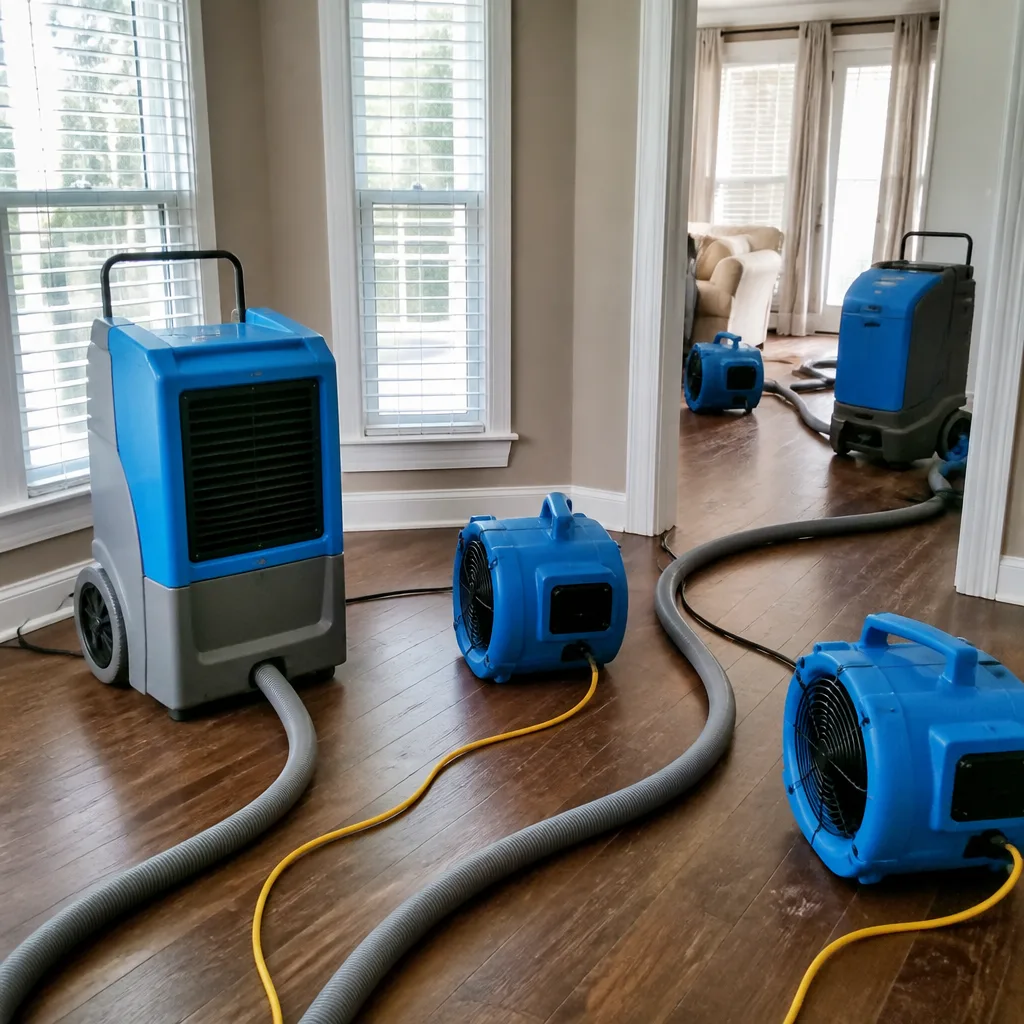

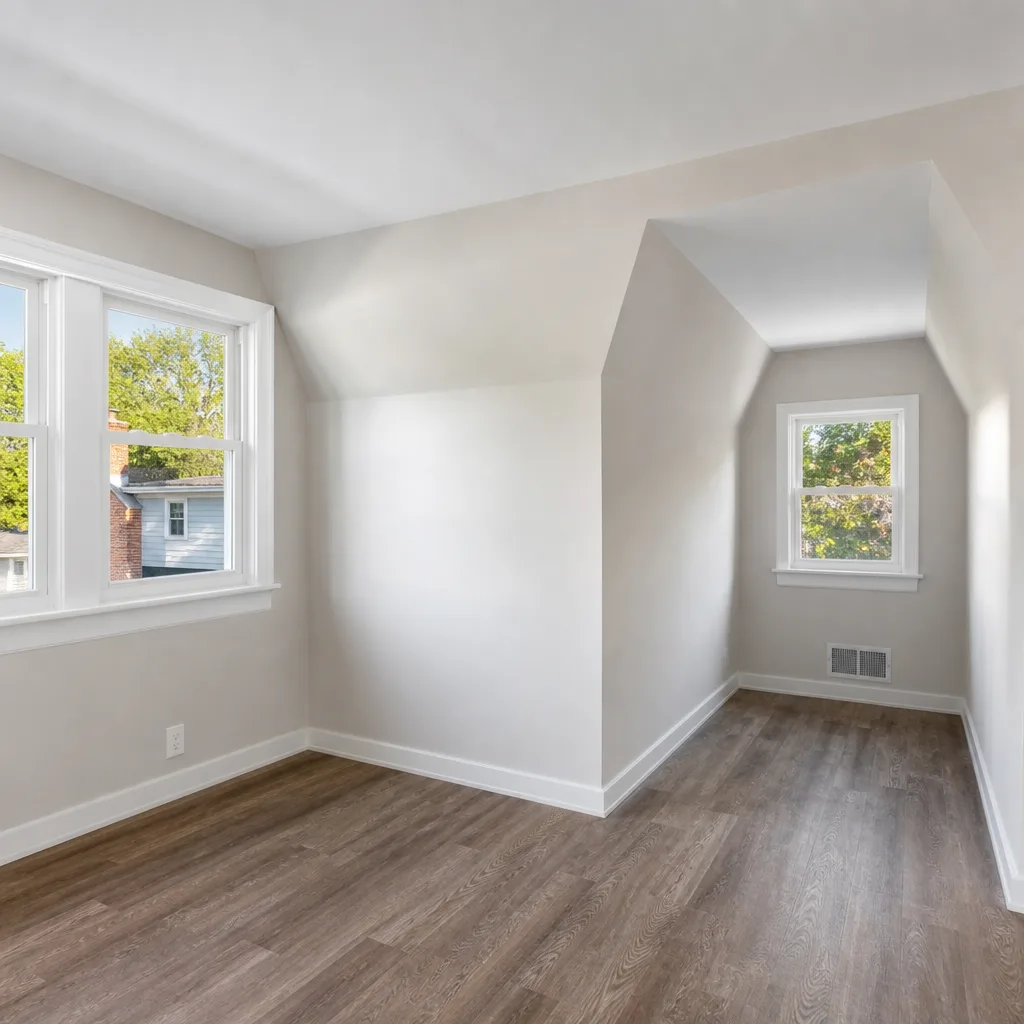
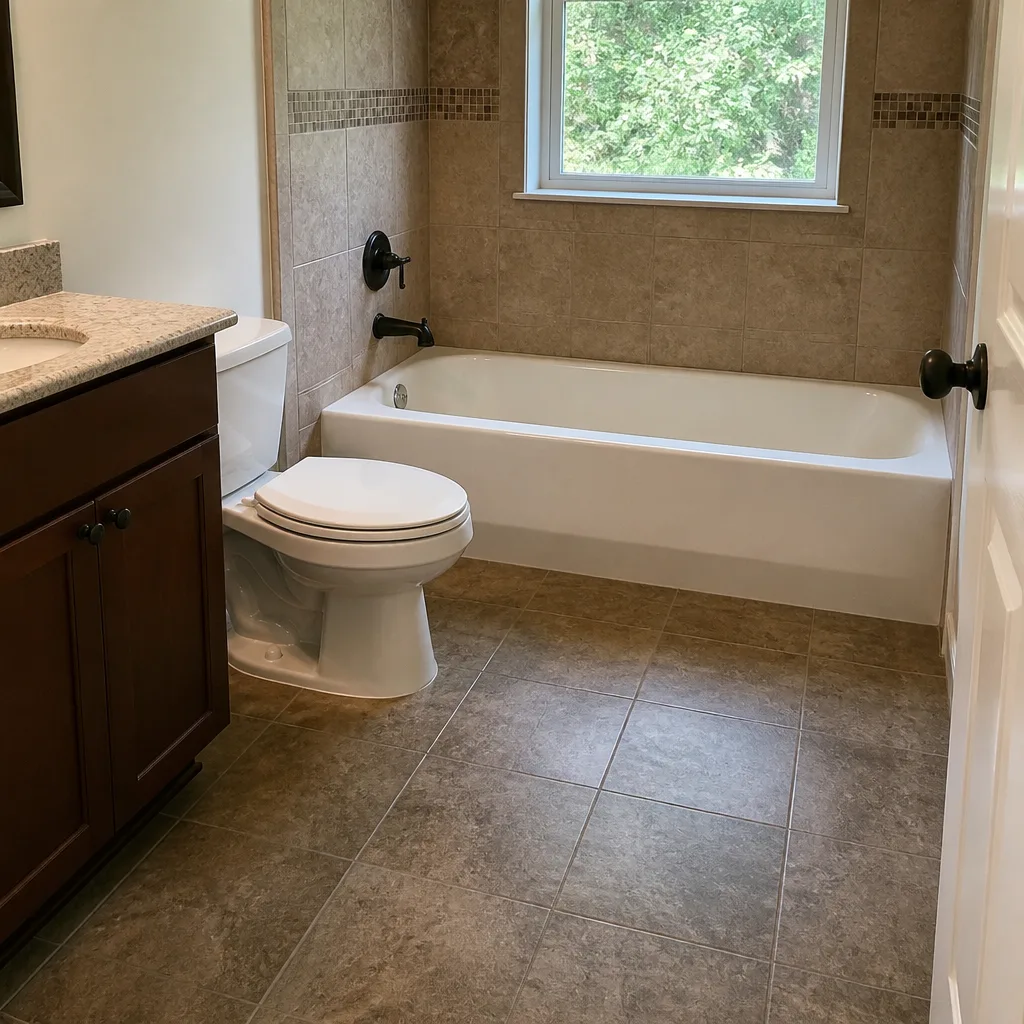
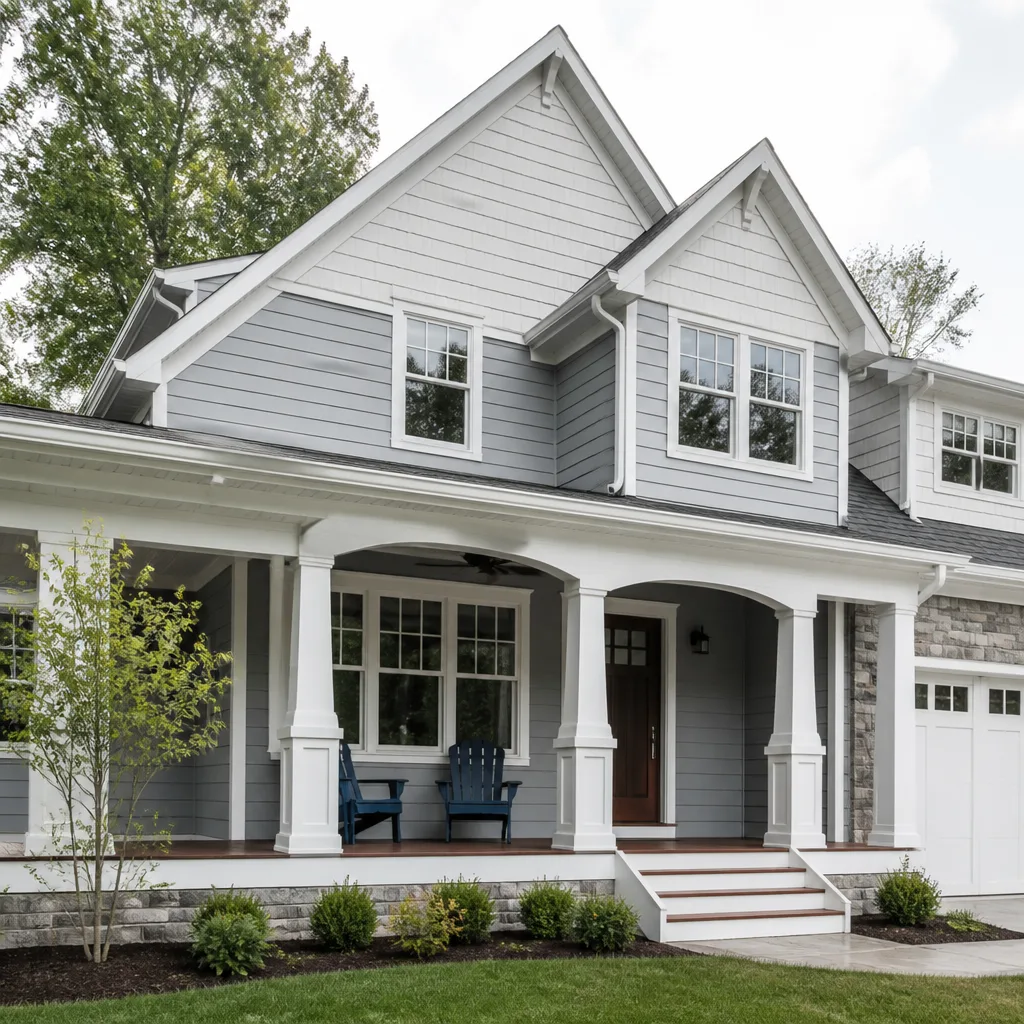
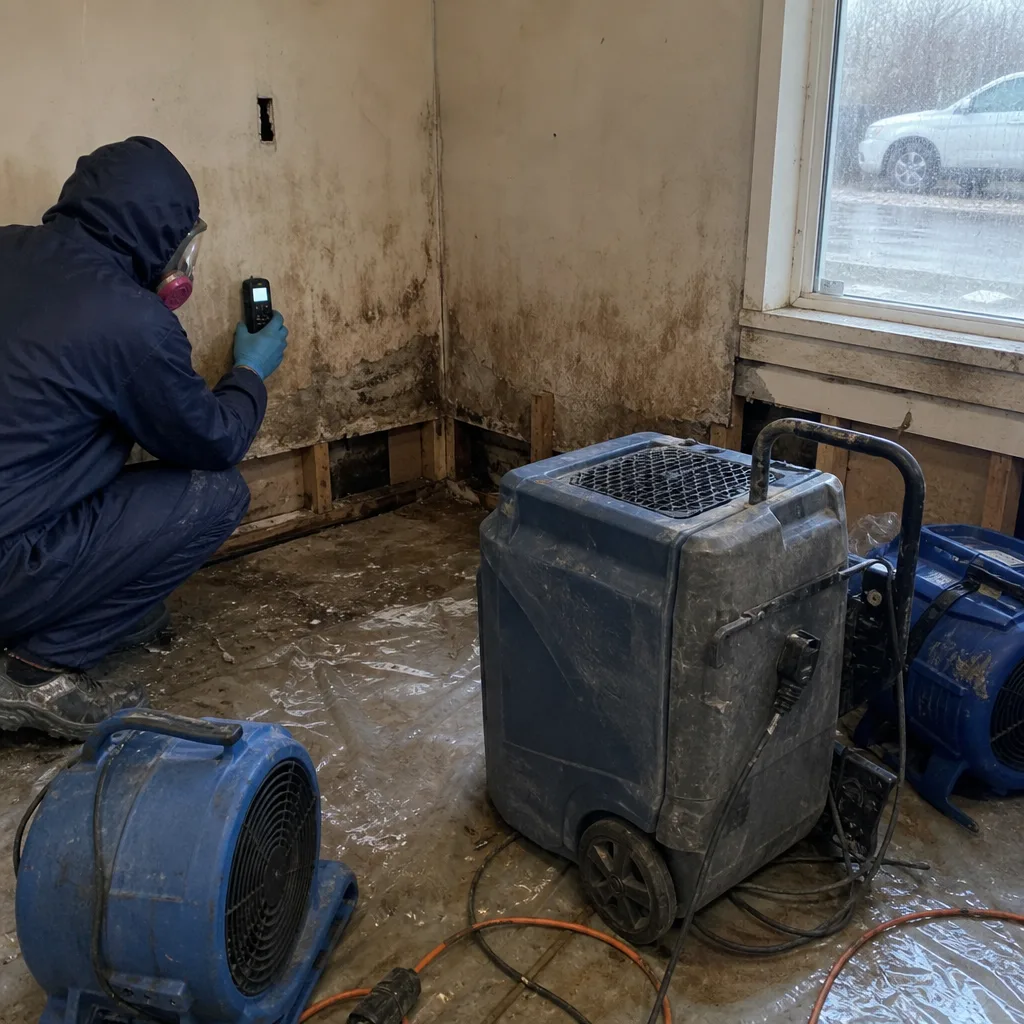 Before
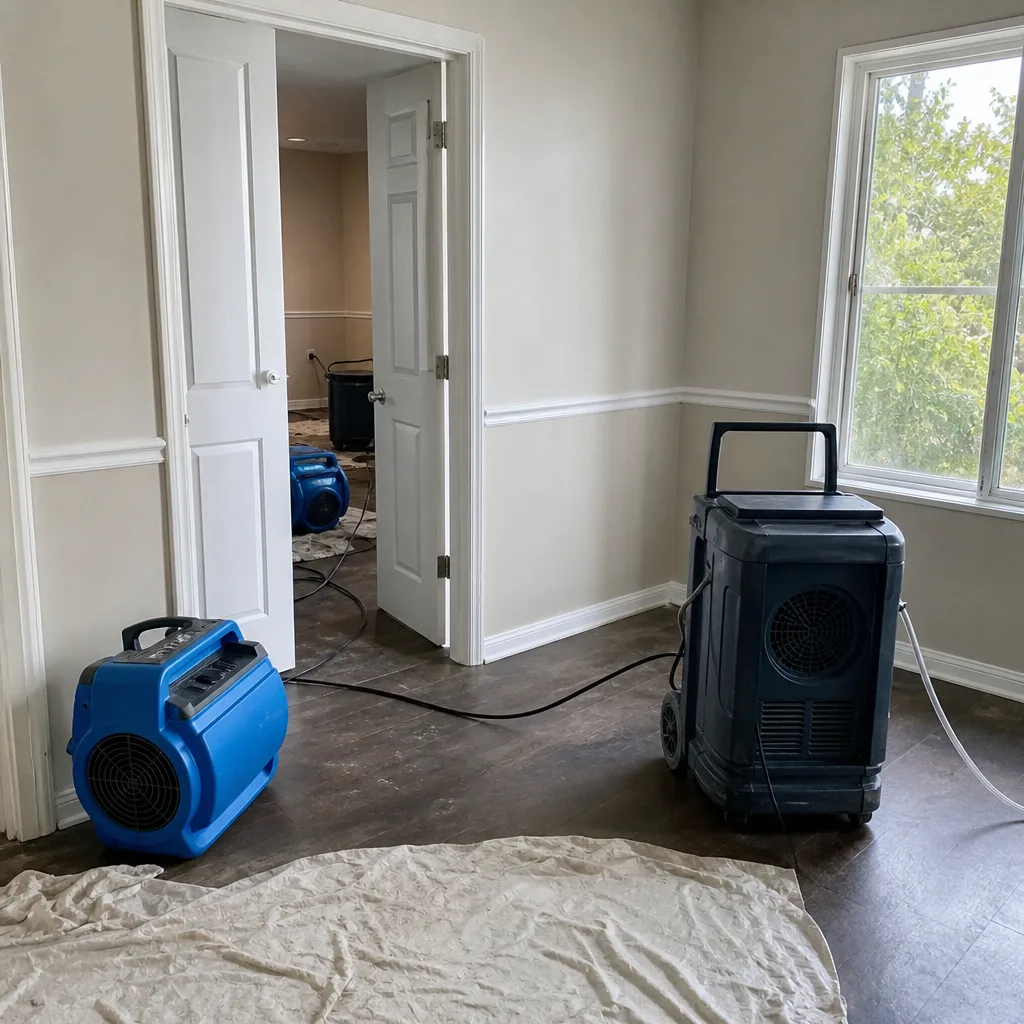 After
After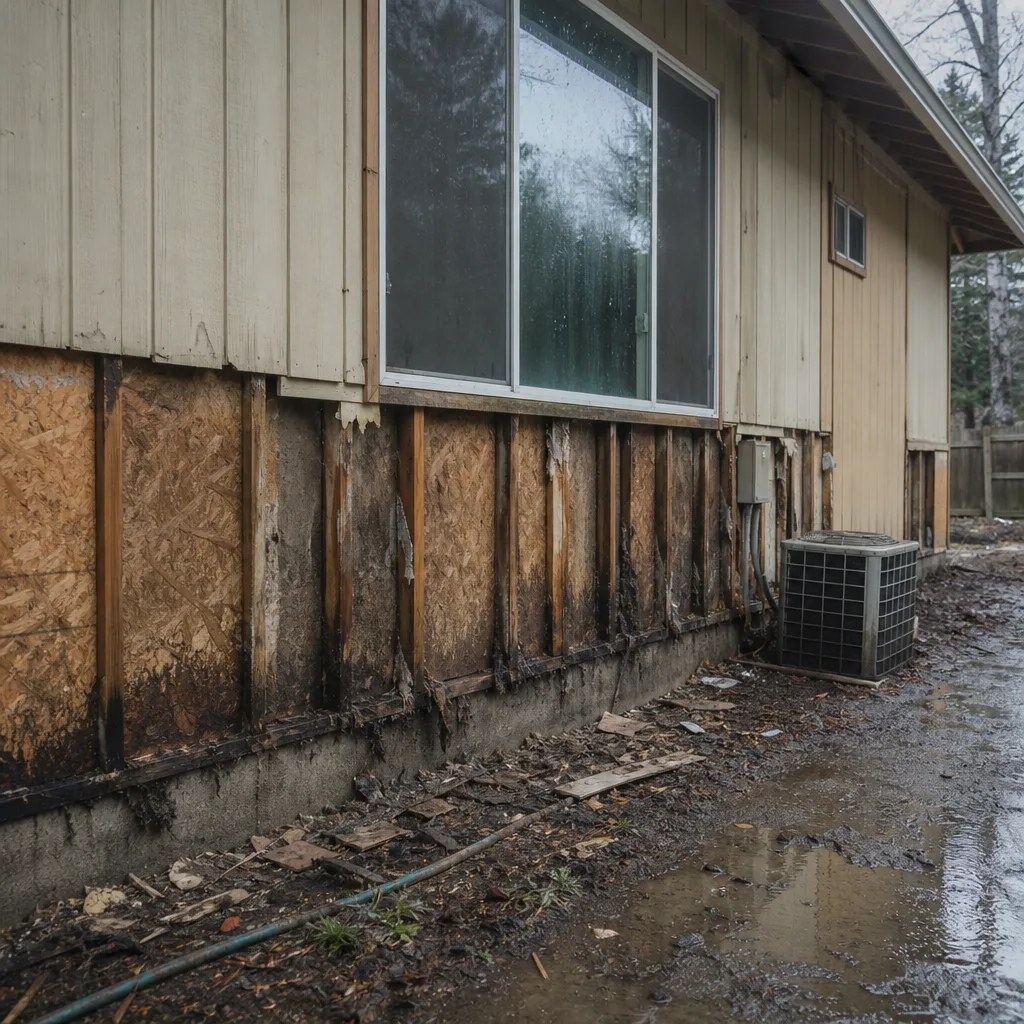 Before
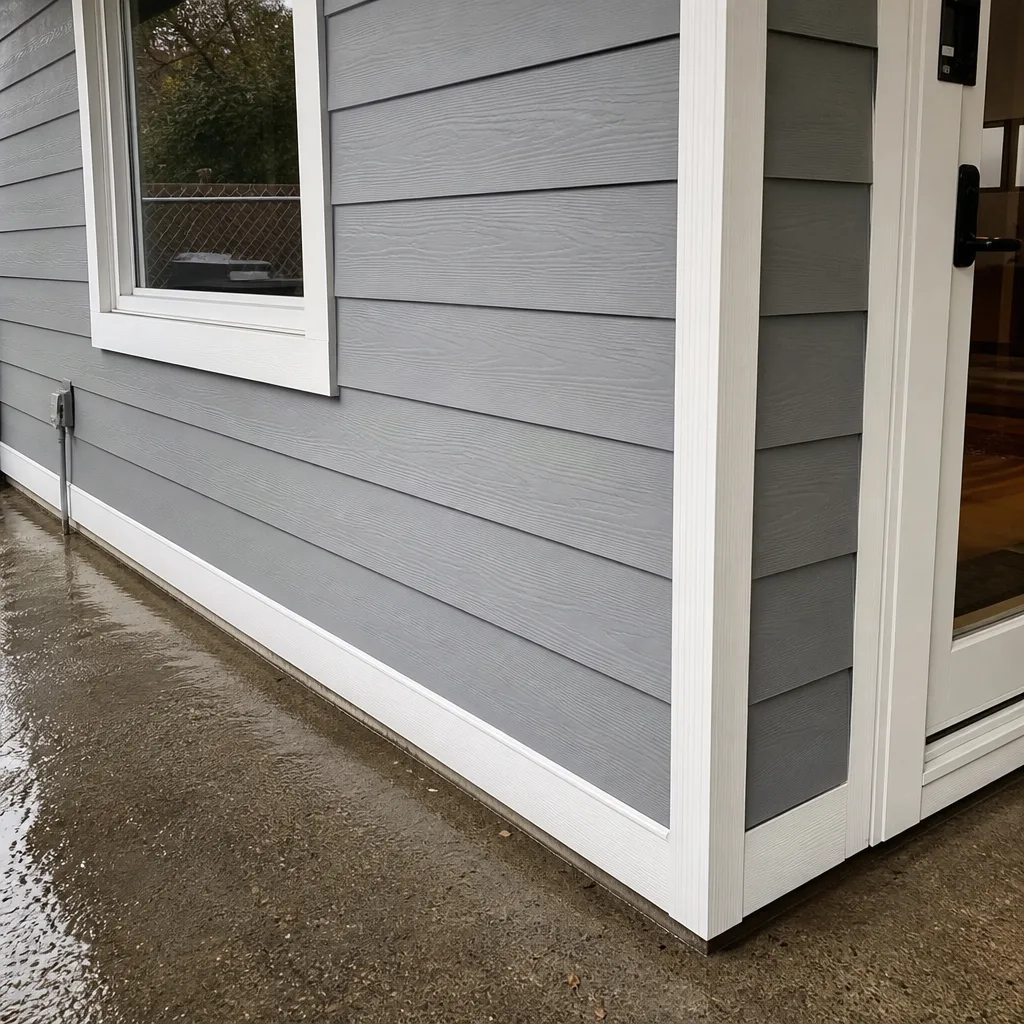 After
After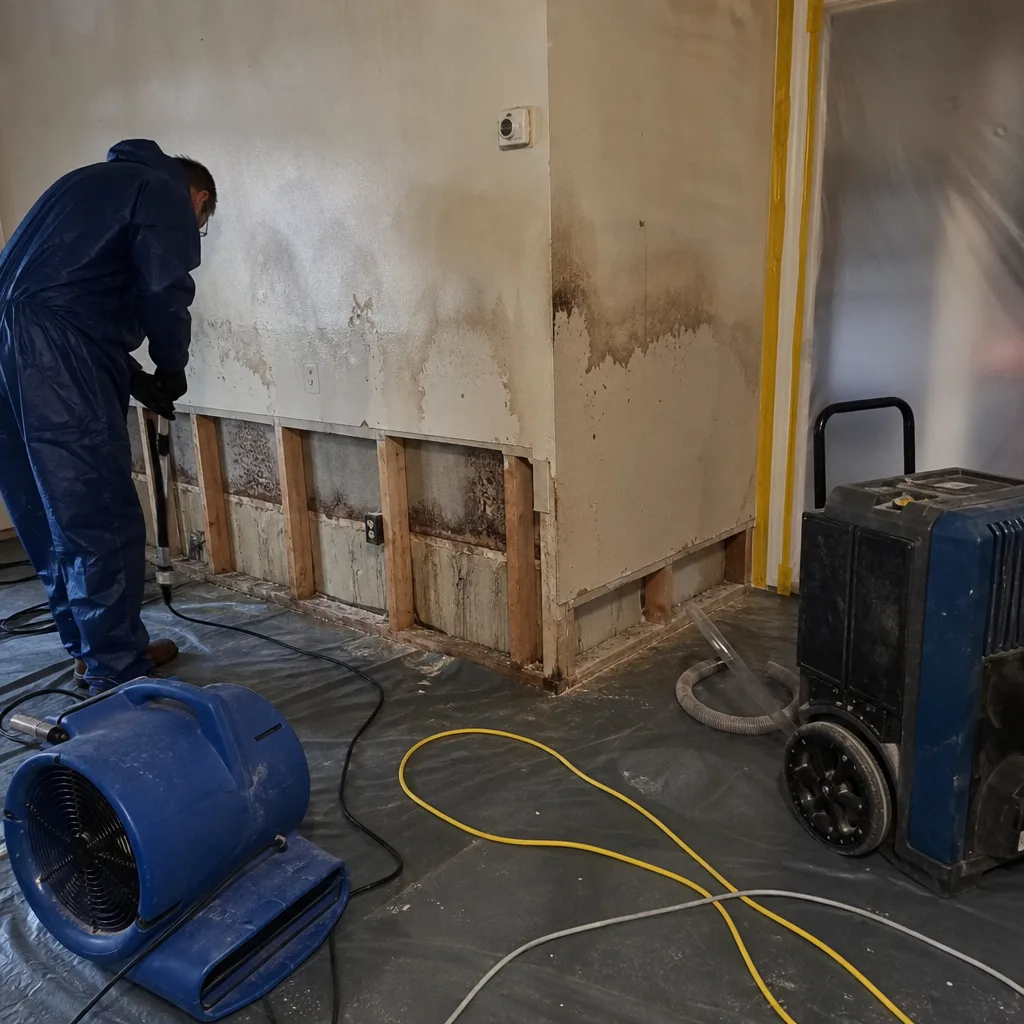 Before
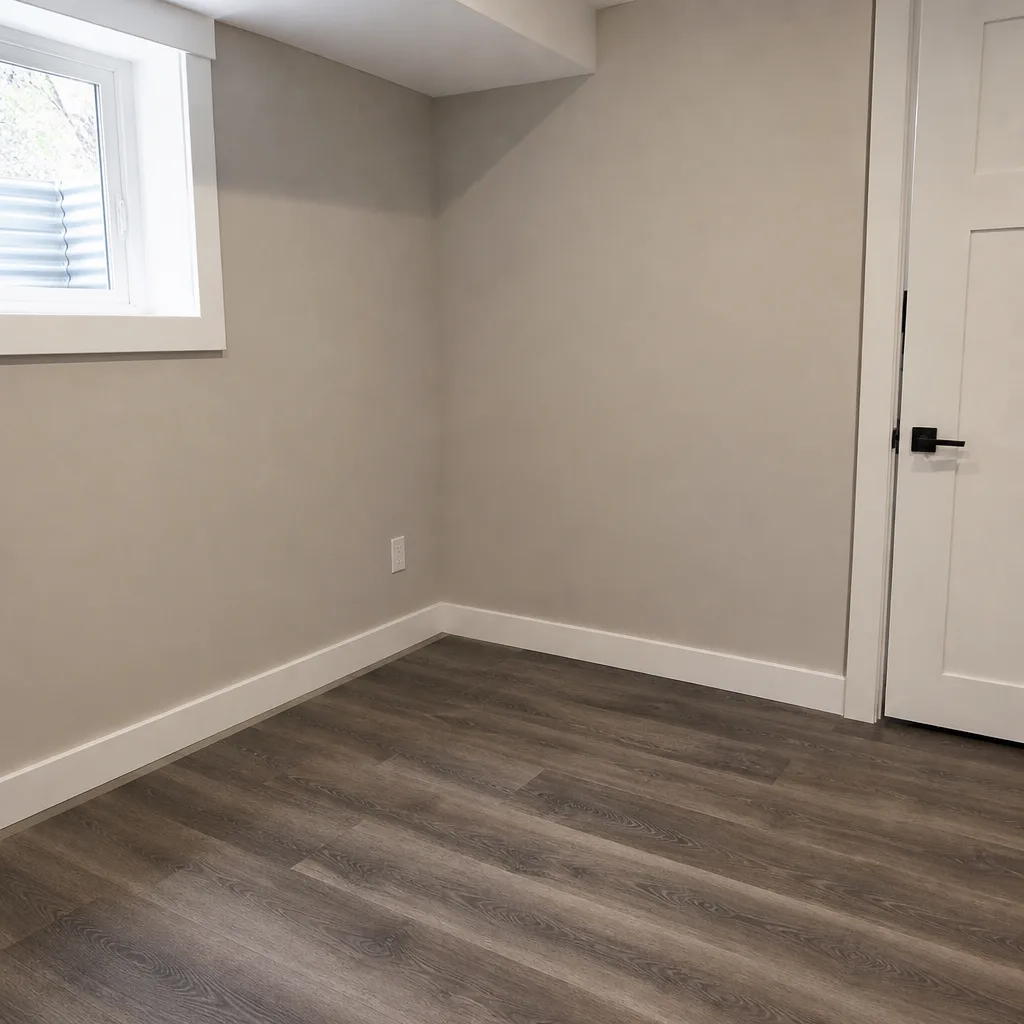 After
After24/7 Emergency Mold Remediation in Puyallup
Mold remediation in Puyallup typically costs $1,800-$6,500 depending on affected square footage and whether the colonization has reached wall cavities or remains surface-level. Most inspections can be scheduled same-day, and crews dispatched to the Puyallup area respond within 45 minutes for active moisture emergencies. Call (253) 487-0371 now - a live person answers every call, 24 hours a day, 7 days a week, with no voicemail trees while water keeps moving.
The first hour matters because mold colonies in Puyallup’s chronic wet-season climate - October through May - can begin producing spores within 24 to 48 hours of moisture intrusion. We offer a free visual inspection to map the damage, measure moisture content with calibrated meters, and deliver a written scope before any work begins. Haven Standard, Clause 1: the price is fixed before the first containment barrier goes up.
Understanding Mold Remediation Severity in Puyallup Properties
Mold severity in Puyallup falls into three practical categories that determine containment strategy, equipment deployment, and whether occupants can remain in place. Category 1 contamination covers surface growth on non-porous materials - tile, sealed concrete, metal framing - typically remediated with HEPA vacuuming and antimicrobial application inside a localized containment zone. Category 2 involves porous materials like drywall, carpet padding, or insulation with visible colonization, requiring removal of affected substrates and negative-air pressure maintained by HEPA-scrubbed air filtration devices. Category 3, often called black mold remediation, indicates extensive colonization of structural elements, HVAC contamination, or toxigenic species like Stachybotrys chartarum; this demands full-room containment, air scrubbing at 4-6 air changes per hour, and third-party clearance testing before reconstruction.
Puyallup’s housing stock complicates every category. Early-1900s Craftsman bungalows near downtown and the Hilltop neighborhood use balloon framing with no firestopping, so mold wicks vertically through wall cavities for two stories before surfacing. The 1970s-90s tract homes spreading toward South Hill and along Meridian rely on T1-11 panel siding with minimal or failed vapor barriers, trapping moisture in the OSB sheathing. Our crews document each material classification by trade name - plaster and lath versus gypsum wallboard versus T1-11 with integrated structural sheathing - then explain in the written scope what gets removed, what gets dried in place, and why.
Why Puyallup Property Owners Choose DryMark Restoration Auburn
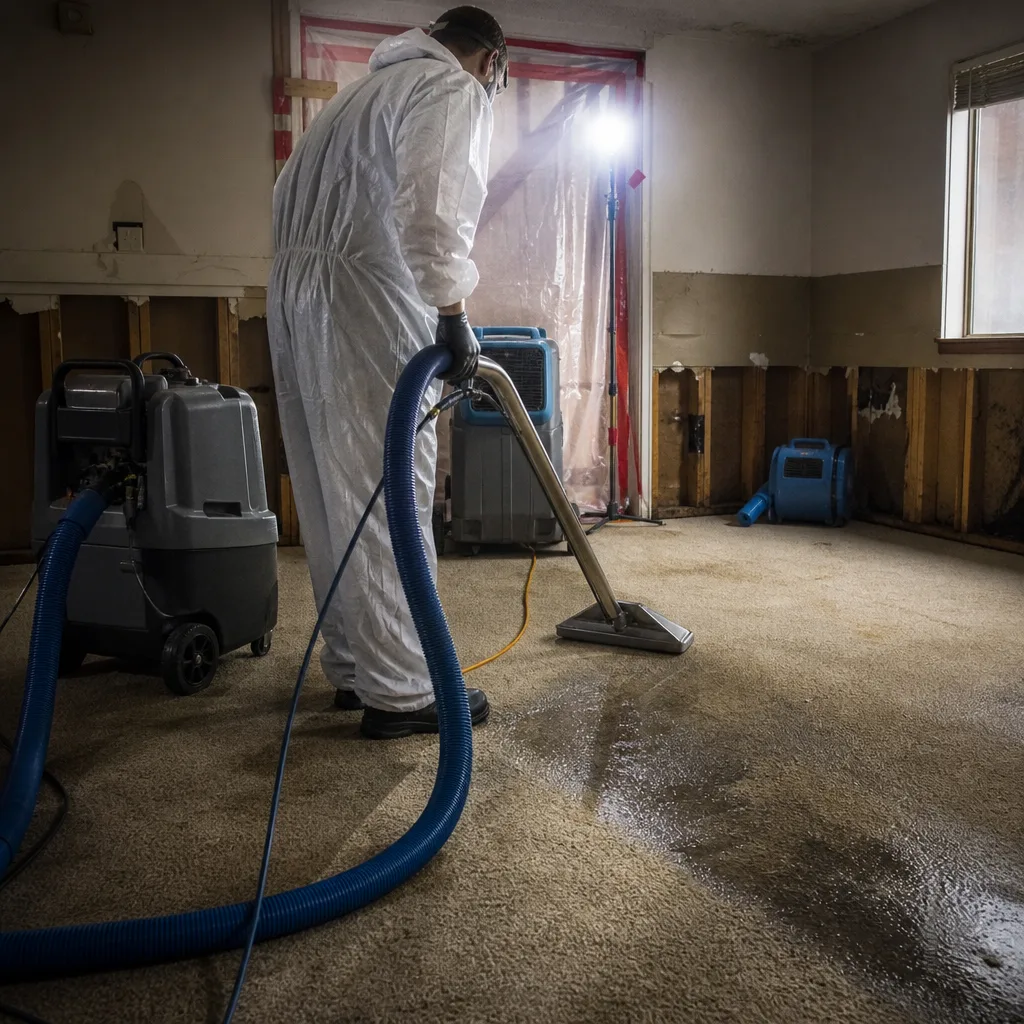
- 45-minute response commitment to Puyallup addresses, with crews staged from our Seattle coordination office and dispatched directly to River Road, South Hill, or downtown corridors.
- 24/7 live answer - a real person, never an automated system - on every call to (253) 487-0371, because mold doesn’t wait for business hours and neither do glacial-melt floods.
- IICRC-certified crews holding WRT (Water Damage Restoration Technician), AMRT (Applied Microbial Remediation Technician), and FSRT (Fire & Smoke Restoration Technician) credentials, with license numbers documented on every job file.
- Free visual inspection with moisture mapping, thermal imaging, and written findings - no charge, no obligation, no “call for a quote” runaround.
- Direct insurance billing with photo-documented drying logs and daily moisture readings that turn restoration invoices into payable claims, especially critical when lahar-zone underwriting reviews delay approval.
- One team from containment to reconstruction - no handoffs between mitigation contractors and rebuild crews, no gaps in documentation that cost homeowners their coverage.
BeforeAfterOur Mold Remediation Process
1. Inspection & Assessment
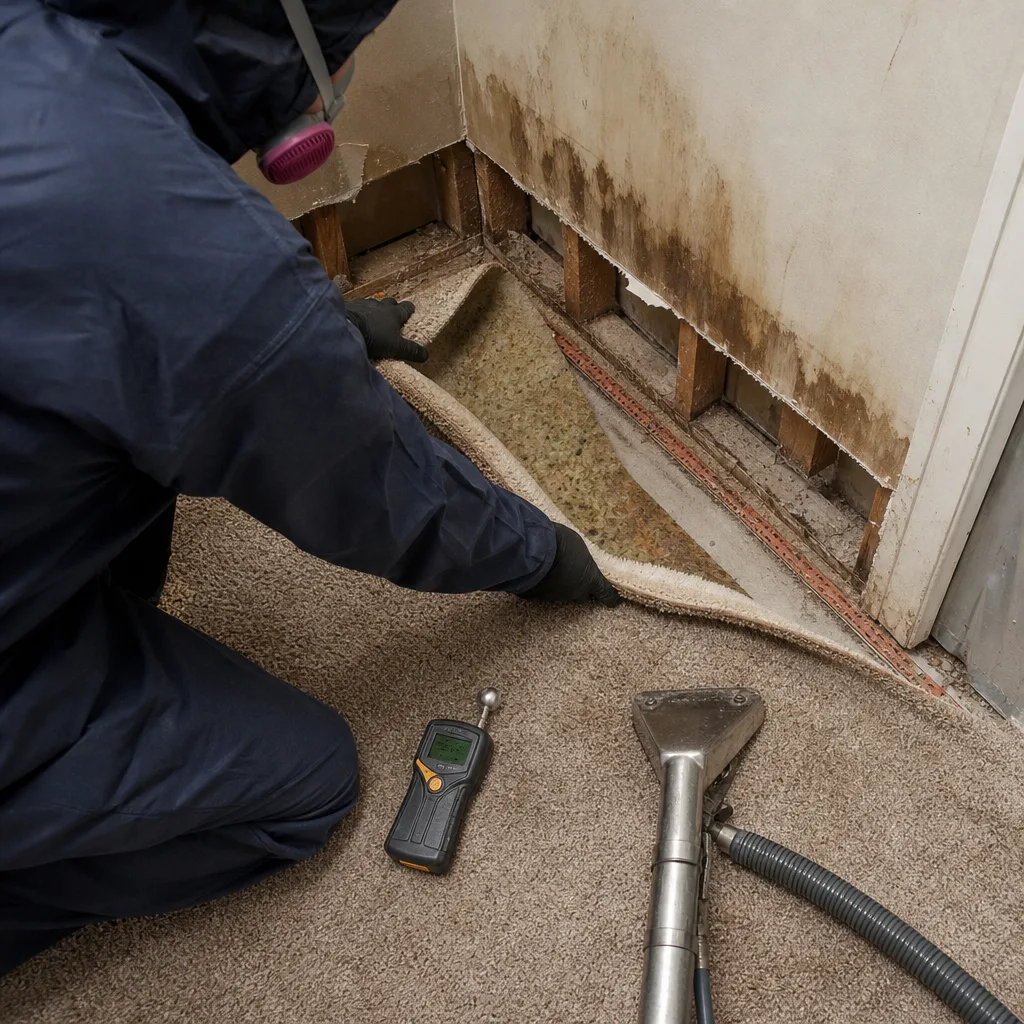
We arrive with thermal imaging cameras, pin and pinless moisture meters, and borescopes to inspect wall cavities without destructive testing. In Puyallup’s T1-11 homes, we pay particular attention to the rim joist and sill plate where the panel siding meets the foundation - a chronic failure point in the 1970s-90s stock. Every reading is logged, every photo timestamped, and a written scope with line-item pricing delivered before work begins.
2. Containment & Air Filtration
We erect polyethylene containment barriers sealed with zipper doors and maintain negative air pressure using HEPA air scrubbers - typically Phoenix Guardian units or Dri-Eaz HEPA 500s - exhausting filtered air outside the structure. This prevents cross-contamination to unaffected areas, critical when Puyallup’s tight crawl spaces force us to work adjacent to occupied living spaces.
3. Moisture Control & Structural Drying
Before mold removal, we eliminate the moisture source. Our crews deploy Dri-Eaz Revolution LGR dehumidifiers, Phoenix 200 MAX units, and targeted air movers to establish vapor pressure differential - the measurable force that pulls moisture from materials into the air, where the dehumidifier captures it. Daily psychrometric data (temperature, relative humidity, grains per pound) is logged to IICRC S520 standards.
4. Mold Removal & Antimicrobial Treatment
Non-porous materials are HEPA-vacuumed and treated with EPA-registered antimicrobial solutions. Porous materials with visible colonization - drywall, insulation, carpet pad, deteriorated T1-11 sheathing - are removed, bagged in 6-mil polyethylene, and disposed of per local waste regulations. We never paint over active mold; the Haven Standard prohibits it.
5. Crawl Space Treatment & Moisture Control
Puyallup’s crawl spaces demand specialized attention. We install vapor barriers (10-mil minimum, sealed at seams and piers), apply borate-based mold inhibitors to exposed framing, and recommend perimeter drainage or sump systems where glacial-outwash soils channel groundwater toward the foundation. This step prevents the spring recurrence pattern we see in homes off Shaw Road and around Bradley Lake Park.
6. Clearance Testing & Restoration
A third-party industrial hygienist collects air and surface samples to confirm spore counts at or below outdoor baseline levels. Only then do we release containment and begin reconstruction - drywall, flooring, trim - with the same crew that performed remediation, ensuring continuous documentation for your insurer.
Need Emergency Mold Remediation in Puyallup Now?
Crews minutes away, answering live 24 hours a day. The sooner we start, the less it costs.
Working With Your Insurance Company
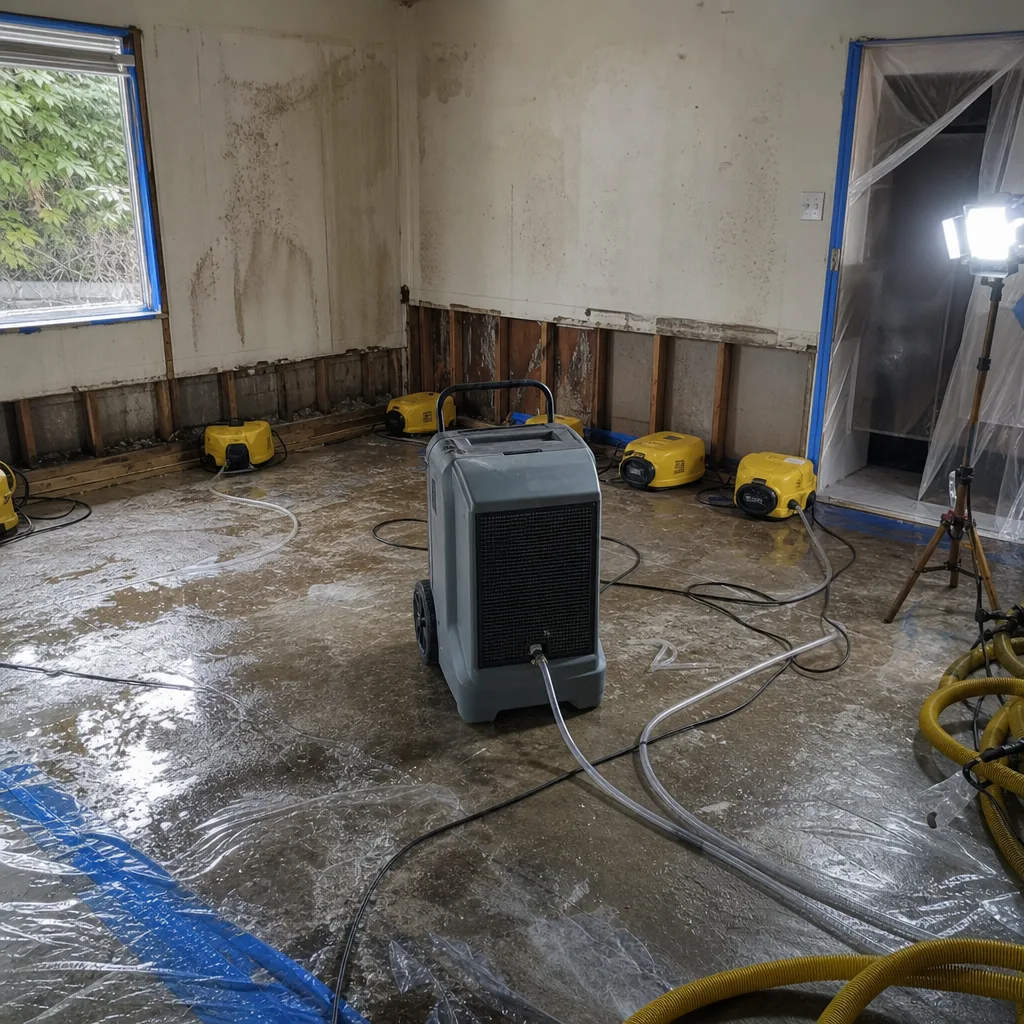
Mold claims in Puyallup carry a documentation burden that neighboring cities rarely face. When a property sits inside a USGS lahar inundation channel - common in the River Road corridor, lower downtown, and blocks near the Puyallup River - adjusters often trigger underwriting reviews that stall authorization for weeks. Our response is documentation from the first hour: timestamped photos, moisture mapping diagrams, material classifications, and daily drying logs that establish pre-loss condition and prove the mold resulted from a covered peril, not long-term maintenance neglect.
We write industry-standard estimates in Xactimate format, communicate directly with your adjuster, and provide the evidence that gets claims moving even when lahar-zone paperwork bogs them down. The photo record on every visit is standard, never an upsell.
What We Provide Your Insurer
- Thorough documentation of the loss, including cause-of-origin analysis
- Photos of all damage, room by room, with timestamp and moisture reading overlays
- Daily moisture readings and drying logs from Dri-Eaz and Phoenix equipment
- A detailed, line-item scope of work with material classifications by trade name
- Direct coordination with your carrier, including lahar-zone documentation when required
Built for Puyallup’s Loss Calendar
Puyallup’s mold season runs October through May, when 45 inches of annual rainfall concentrate into eight months of near-continuous soil saturation. October brings the first crawl-space condensation events as ground temperatures drop while indoor heating begins. November through January delivers the heaviest sustained rainfall, pushing groundwater through foundation cracks and overwhelming perimeter drains on glacial-outwash soils. February and March see late-season glacial-melt pulses from Mount Rainier - the Puyallup River’s headwaters - that spike water levels even during dry stretches, catching homeowners off guard with basement and crawl-space flooding outside normal storm windows.
April and May bring the false-dry period: surface soils warm, but crawl spaces remain cold and damp, creating the vapor-pressure differential that drives moisture into subflooring. Summer months see fewer active leaks but more calls for “mystery” mold - the result of winter colonization that only now produces visible sporulation. We schedule our Mold Remediation crews accordingly, with extra capacity for the March melt-pulse and October condensation surges.
Mold Remediation Across Puyallup’s Neighborhoods
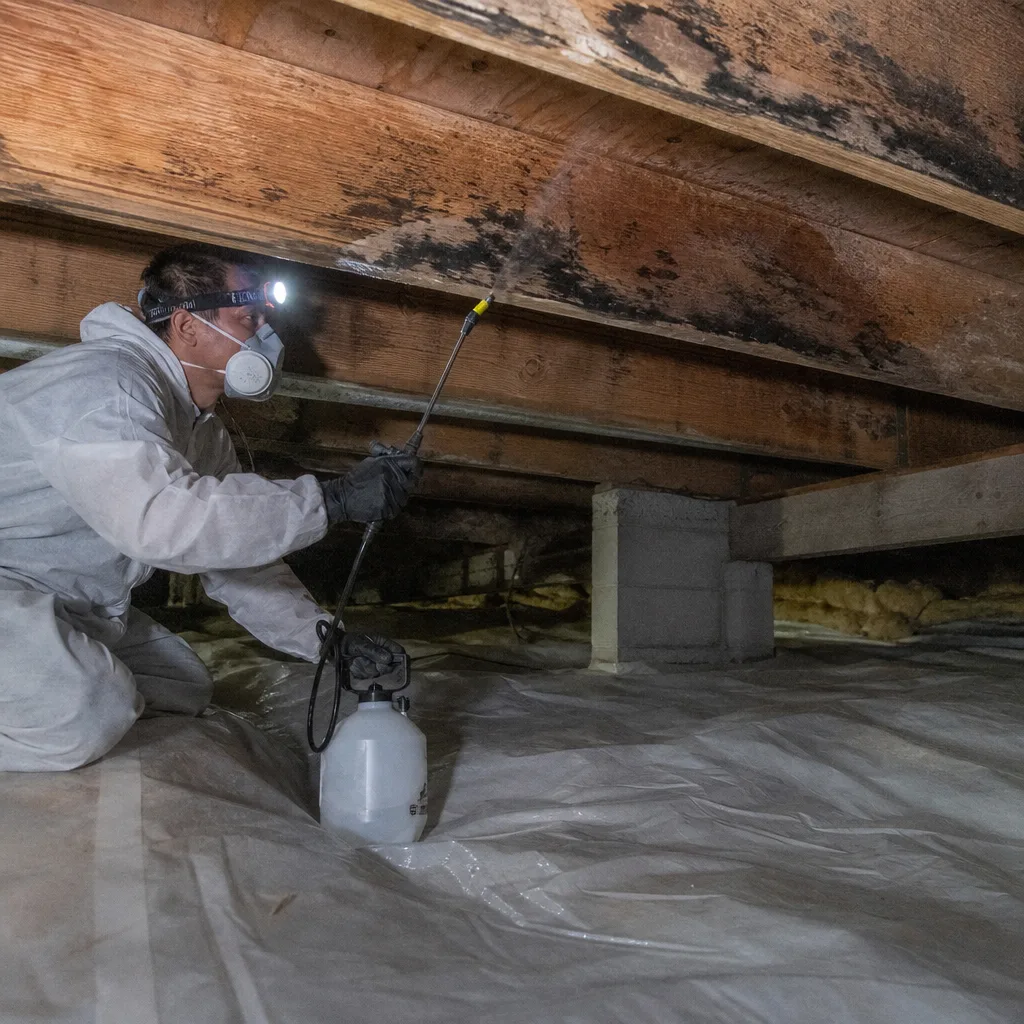
We got called to a 1970s T1-11-sided split-level off the River Road corridor after a late-season glacial-melt pulse pushed river water into the crawl space and soaked the rim joists. Our crew ran moisture mapping and structural drying with Dri-Eaz dehumidifiers and air movers, then contained and treated the colonized sheathing with antimicrobial treatment once readings stabilized. The job sat in underwriting for weeks while the adjuster sorted lahar-zone paperwork, but we kept drying logs current so the homeowner could prove pre-loss condition when the claim finally cleared.
Downtown Puyallup and the Hilltop neighborhood present the balloon-framing challenge: original 1900s Craftsman homes with no firestopping between studs, where mold wicks from a crawl-space leak to the attic ridge in a single wall cavity. Crews who dry only the visible floodwater leave colonized plaster keys and lathe that reactivate the following season. South Hill and Meridian corridors are dominated by that 1970s-90s T1-11 stock - tract homes built fast for Tacoma commuters, with minimal vapor barriers and OSB sheathing that fails catastrophically once moisture content exceeds 20 percent. Bradley Lake Park and Shaw Road bench subdivisions sit on glacial-outwash with unpredictable drainage; we’ve found mold in foundation stem walls where groundwater channels under the footings and wicks upward through the concrete.
Each neighborhood gets a different equipment mix and a different documentation emphasis. River Road jobs get lahar-zone flags in the file. Downtown Craftsman jobs get borescope mapping of balloon-framed cavities. South Hill T1-11 jobs get vapor-barrier recommendations in the written scope. Puyallup isn’t uniform, and neither is our response.
Specialized Mold Remediation Services We Offer in Puyallup
Mold Inspection & Testing
Our inspections combine visual assessment, moisture mapping, and air sampling where indicated. In Puyallup’s lahar-zone properties, we document pre-loss condition with particular care - insurers scrutinize these files for maintenance neglect claims. A typical inspection runs $250-$450; if you proceed with remediation, the inspection fee applies toward the work.
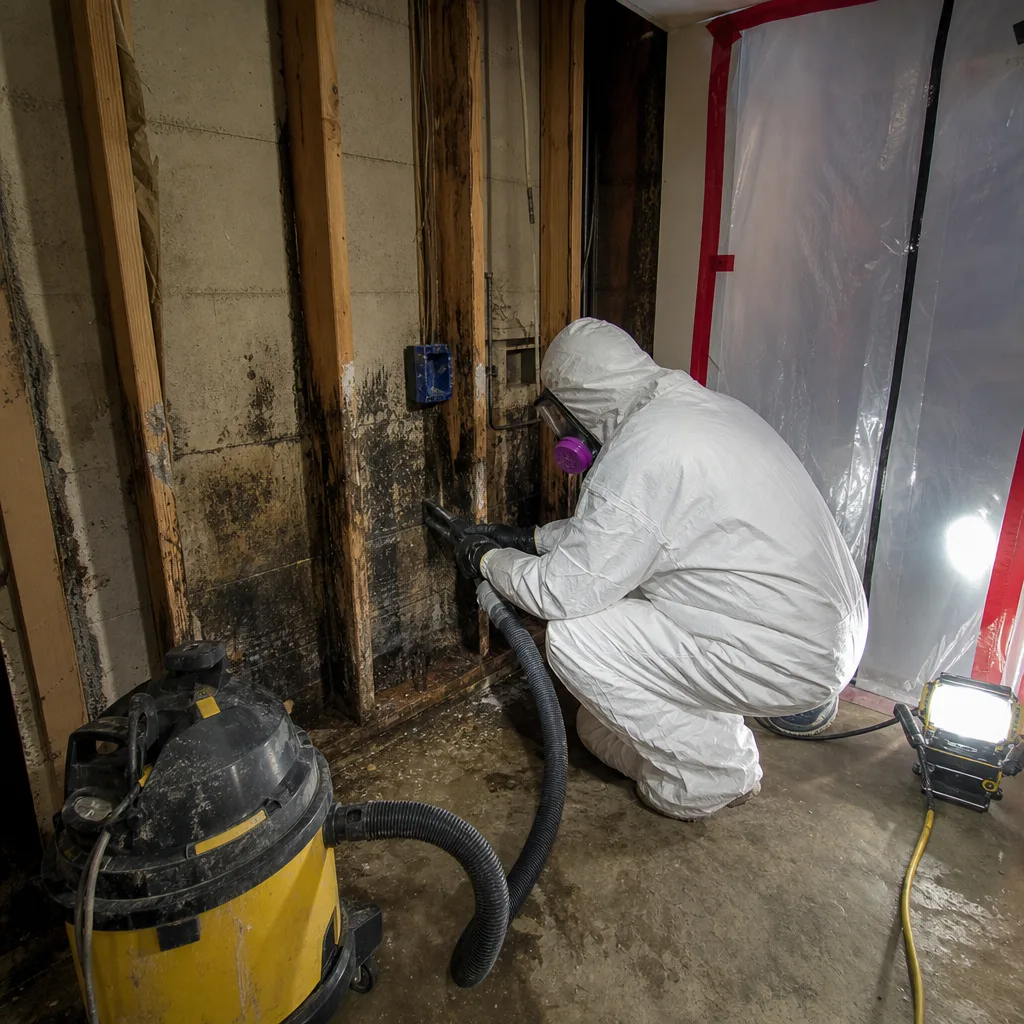
Mold Removal
We remove colonized materials according to IICRC S520 standards, never encapsulating active growth. For Puyallup’s T1-11 homes, this often means removing the bottom 4 feet of panel siding and sheathing to access rim joist saturation - a step many contractors skip, leaving the structural mold that returns the following spring.
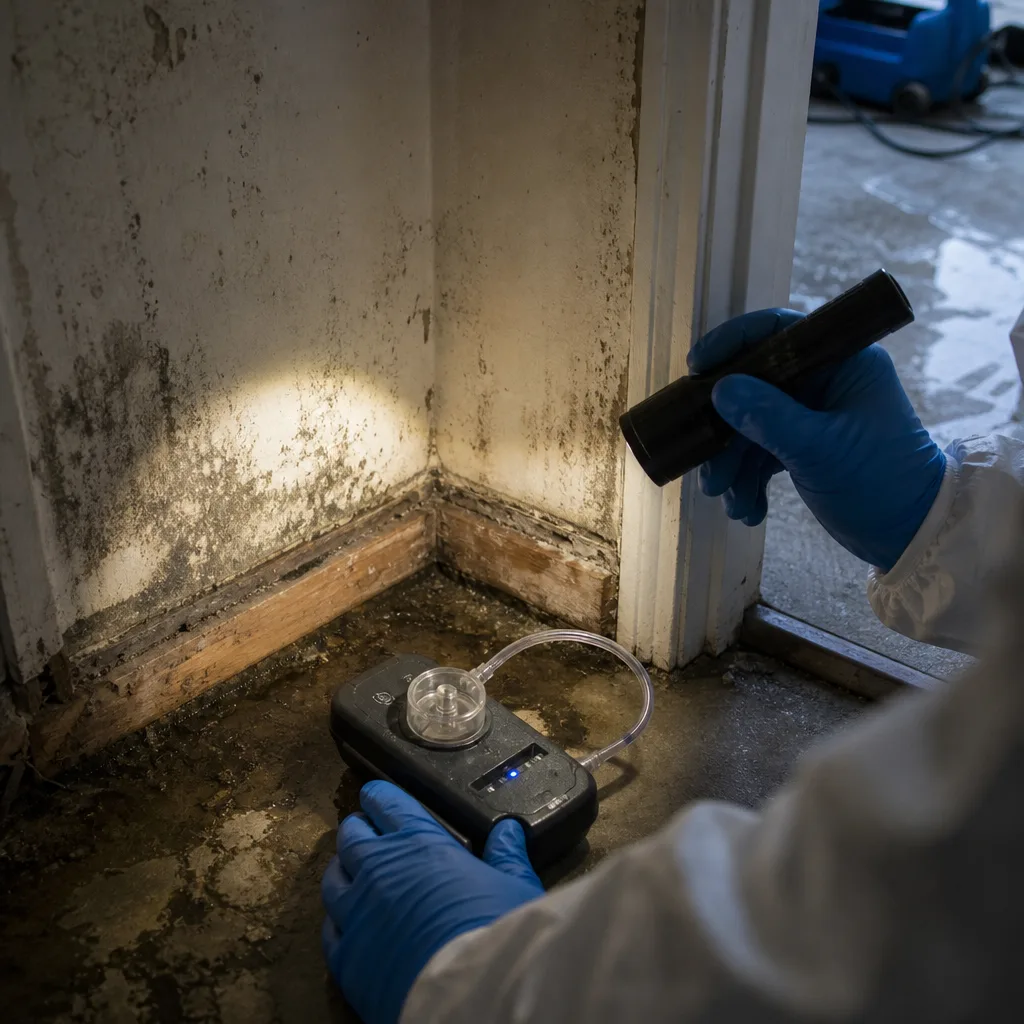
Black Mold Remediation
Toxigenic species require full containment, negative air pressure, and specialized PPE. We deploy Phoenix Guardian HEPA systems at 6 air changes per hour and require third-party clearance testing before containment release. In Puyallup’s tight crawl spaces, this means extending containment to include the entire substructure access.
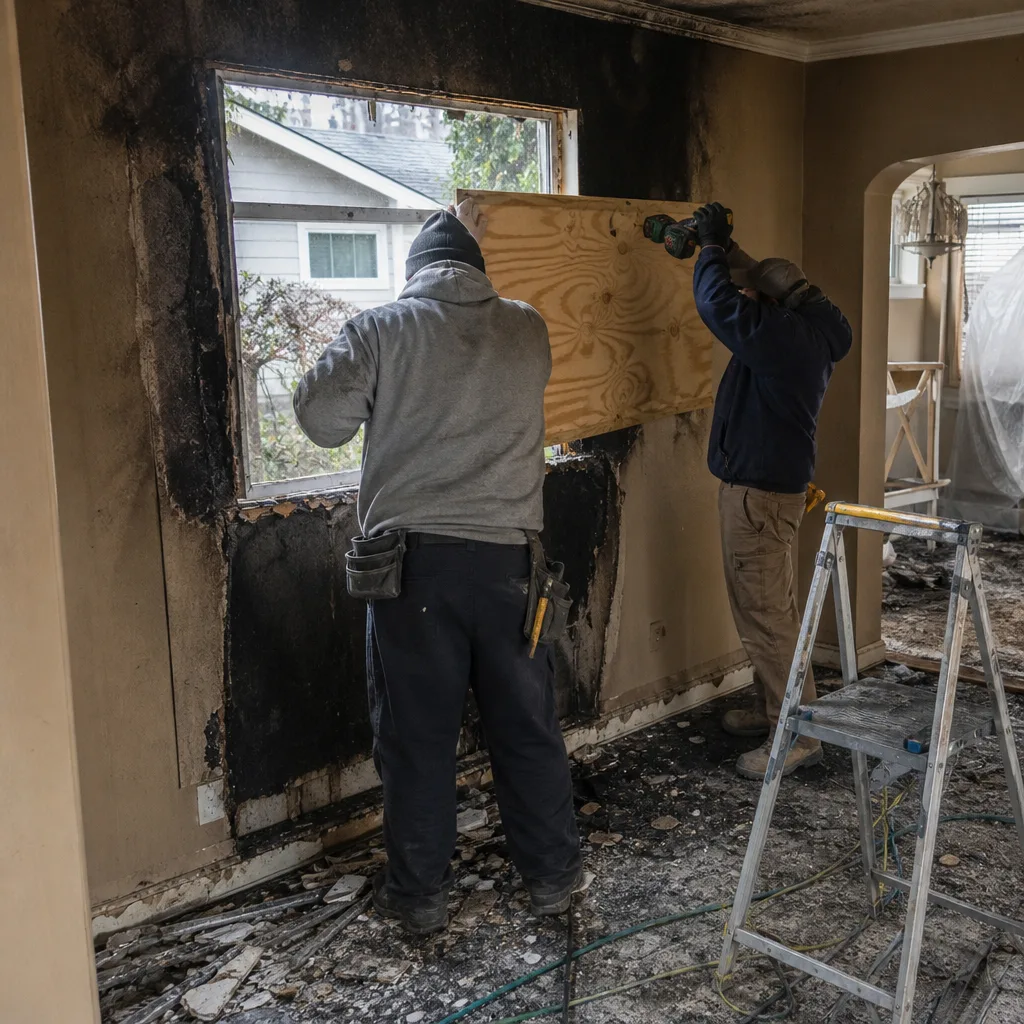
Air Quality Restoration
Even crawl-space mold affects indoor air through stack effect - the natural upward draw of air through a home’s envelope. We test indoor spore counts against outdoor baselines and deploy air scrubbers throughout the living space during remediation, not just in the contained zone.
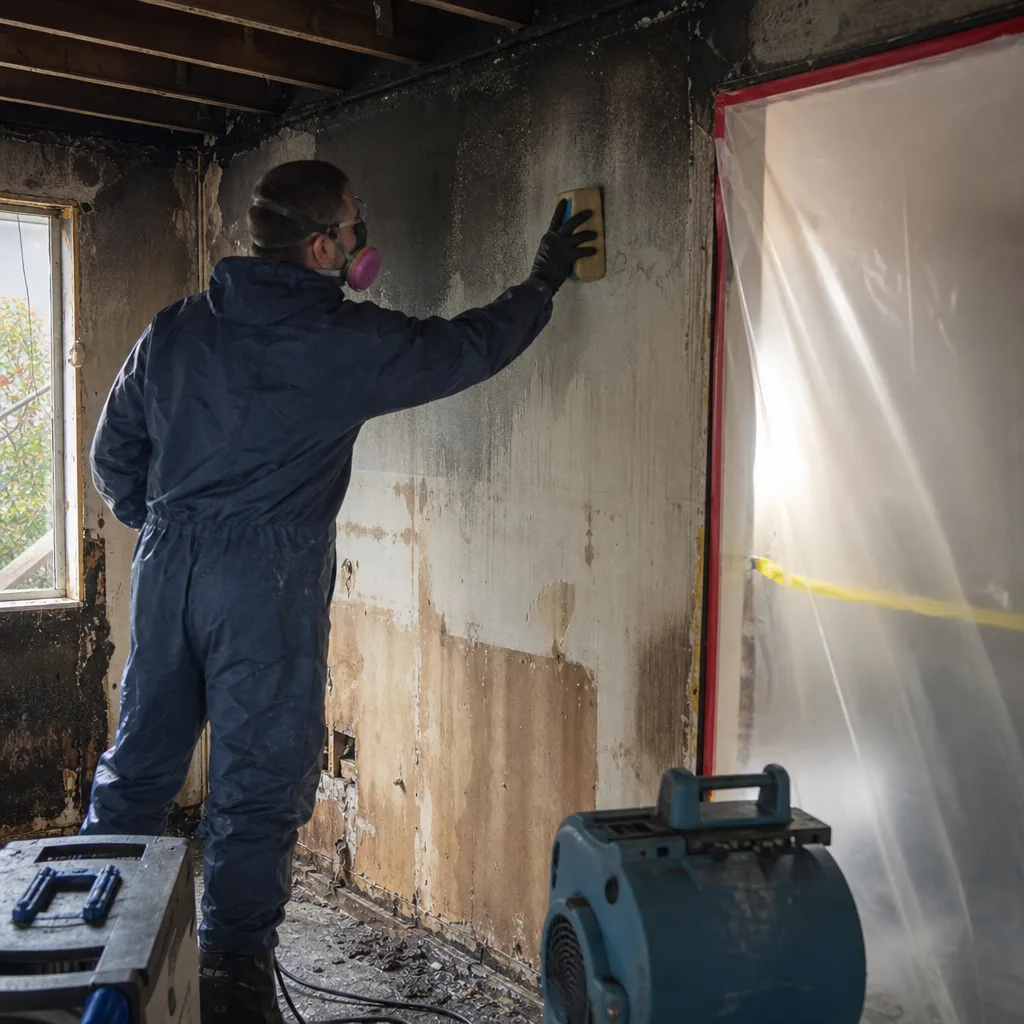
Crawl Space Treatment
Puyallup’s most requested specialty service. We install sealed vapor barriers, apply borate mold inhibitors, and design perimeter drainage for glacial-outwash soil conditions. Without this step, the October-May wet season guarantees recurrence in homes near the river or on bench soils.
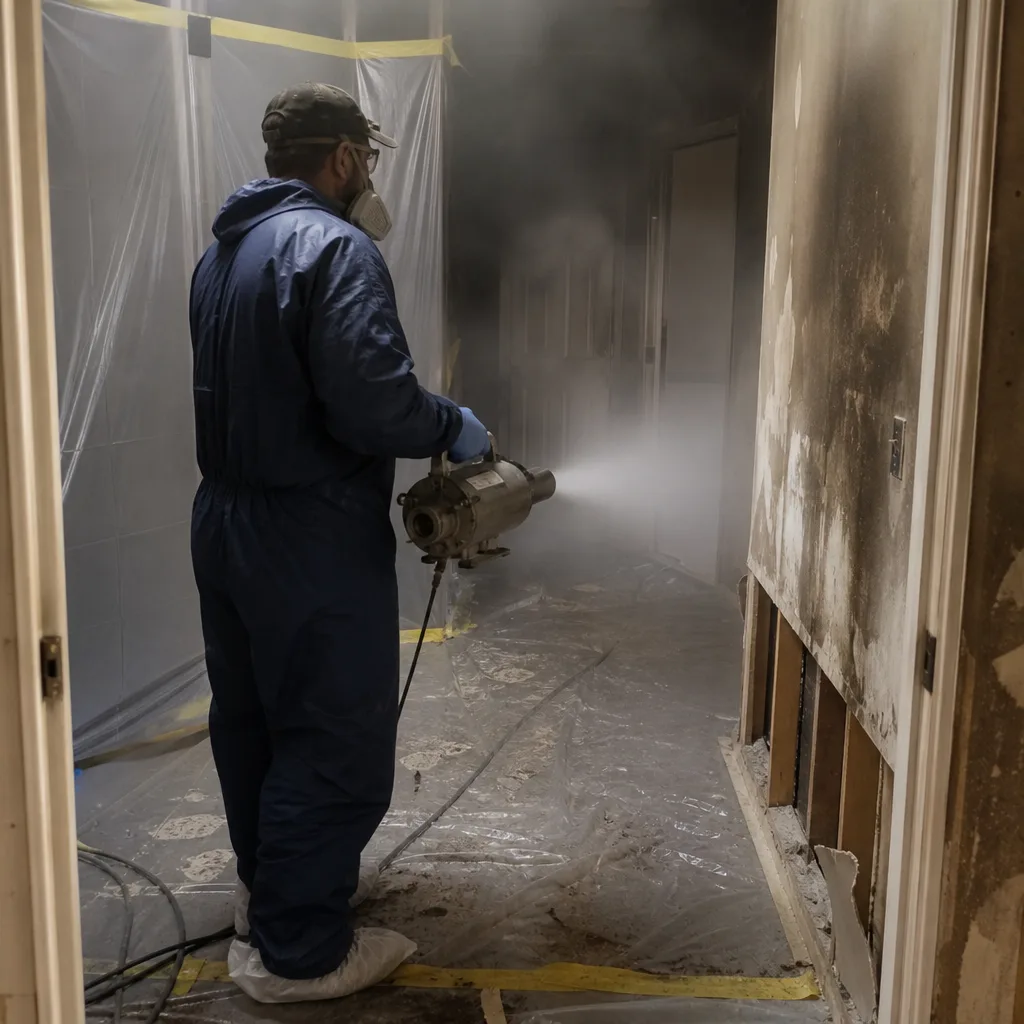
Moisture & Humidity Control
Long-term control means addressing the source, not just the symptom. For Puyallup properties, we specify dehumidification capacity based on crawl-space volume, soil type, and seasonal groundwater patterns - not generic square-footage charts. Equipment from Dri-Eaz and Phoenix is sized to actual psychrometric loads.
What happens when you call
- 1
A real person answersNo phone trees - you reach a local pro.
- 2
You get an upfront price rangeHonest numbers before anyone is dispatched.
- 3
A background-checked tech heads outLicensed & insured, dispatched right away.
- 4
You approve before work beginsNothing starts until you say go.
Mold Remediation Costs in Puyallup, WA
| Service | Typical Range in Puyallup |
|---|---|
| Mold inspection & moisture mapping | $250 - $450 |
| Localized surface remediation (Category 1) | $1,800 - $3,200 |
| Wall cavity / crawl space remediation (Category 2) | $3,500 - $6,500 |
| Full-structure black mold remediation (Category 3) | $6,500 - $15,000+ |
| Crawl space vapor barrier & treatment | $2,800 - $5,500 |
| Third-party clearance testing | $400 - $800 |
What moves the price: affected square footage, material type (T1-11 sheathing costs more to replace than drywall), accessibility (crawl spaces under 18 inches add labor), and whether lahar-zone documentation requirements extend the project timeline. Insurance typically covers mold remediation when it results from a covered water loss - burst pipe, storm intrusion, appliance failure - but denies claims for long-term maintenance neglect. We provide the documentation that proves the difference. Bring any competitor’s written estimate and we’ll review it free under our Second Opinion program.
We Also Serve Cities Near Puyallup
Our crews respond throughout the Puyallup River Valley and surrounding communities: Milton to the north along the river corridor, Tacoma to the northwest, Auburn to the northeast, and Federal Way to the north. Each carries its own soil conditions, building stock, and insurance considerations, but the same Haven Standard documentation applies on every job.
Serving Puyallup, WA - Our Local Coverage Area
We’re based in the Puyallup area and know this community well. Use the map below to see our service coverage - if you’re nearby, we can almost certainly help.
Puyallup Mold Remediation Questions, Answered
Does living in a Puyallup lahar inundation zone affect my mold remediation claim?
Yes, it can delay authorization while adjusters verify coverage and request elevation certificates or additional documentation.
Low-lying Puyallup properties in USGS-mapped lahar channels - common along River Road and lower downtown - trigger underwriting reviews that don’t occur on higher ground in Sumner or Edgewood. The delay is administrative, not a denial, but it means your restoration contractor must maintain impeccable documentation to prove the mold resulted from a covered sudden event rather than gradual maintenance neglect. We keep drying logs, moisture readings, and photo records current throughout the wait so your file is ready the moment approval comes through. Call (253) 487-0371 and we’ll review your property’s zone status during the free inspection.
Why does mold come back in my Puyallup crawl space every spring?
Because the moisture source was never eliminated, only the visible mold was treated.
Puyallup’s October-May wet season delivers 45 inches of rain onto glacial-outwash soils that channel groundwater toward foundations. Contractors who spray antimicrobial and leave - without installing vapor barriers, addressing perimeter drainage, or drying to IICRC S520 standards - guarantee recurrence. The crawl space hits 70-80 percent relative humidity every spring, and dormant spores reactivate. Our crawl space treatment includes sealed vapor barriers, borate inhibitors, and drainage recommendations specific to your soil type. Haven Standard, Clause 1: the written scope specifies exactly what prevents return, not just what gets removed today.
How fast does mold grow after a Puyallup River glacial-melt flood?
Mold colonization begins 24 to 48 hours after moisture intrusion, with visible sporulation in 72 hours to one week under Puyallup’s typical crawl-space conditions.
Late-season glacial-melt pulses - February through April, when Mount Rainier’s snowpack releases into the Puyallup River - often catch homeowners who’ve stopped monitoring basement and crawl-space moisture. The water is cold, so evaporation is slow, but the humidity is perfect for Aspergillus and Penicillium species. Speed matters for mitigation, but not for reconstruction: we contain and dry immediately, then wait for the written scope and insurance authorization before removing materials. Call (253) 487-0371 for immediate moisture mapping - estimates are free.
What is different about remediating mold in a 1970s T1-11-sided Puyallup home?
The siding itself is structural sheathing, so moisture penetration compromises both the exterior envelope and the wall’s structural integrity.
T1-11 panel siding - common in Puyallup’s 1970s-90s subdivisions off Meridian and South Hill - has no separate structural sheathing behind it. When moisture wicks through failed paint or caulk joints, it reaches the OSB substrate directly, causing swelling, delamination, and mold colonization that standard moisture meters miss because the exterior surface reads dry. Our crews use borescopes and invasive testing where indicated, and the written scope specifies T1-11 replacement by trade name rather than generic “siding repair.” This documentation difference often determines whether insurance covers the full repair or denies as “maintenance.”
Do I need air quality restoration if the mold was only in my crawl space?
Yes, because stack effect draws air from the crawl space into living spaces through gaps in subflooring, plumbing penetrations, and ductwork.
In Puyallup’s older housing stock - especially downtown Craftsman homes with balloon framing and unsealed floor cavities - the connection between crawl space and indoor air is direct. We measure indoor spore counts against outdoor baselines and deploy HEPA air scrubbers in living areas during remediation, not just in the crawl space containment. The Haven Standard requires this on every crawl space job; skipping it leaves occupants exposed to elevated spore counts even when the crawl space reads clean. Call (253) 487-0371 to discuss air quality testing as part of your inspection.
How fast can DryMark Restoration Auburn get to my Puyallup property?
Our response commitment is 45 minutes to Puyallup addresses, with crews staged from our Seattle coordination office.
Live dispatch answers at (253) 487-0371 24 hours a day, 7 days a week - no voicemail, no next-business-day callbacks while moisture keeps moving. For active water intrusion along the Puyallup River corridor, we prioritize arrival because the lahar-zone documentation burden means any delay in mitigation gets scrutinized by adjusters. The free visual inspection includes moisture mapping and a written scope; reconstruction is scheduled only after containment and drying are complete.
Will my insurance cover mold remediation in Puyallup?
Insurance covers mold remediation when it results from a sudden, covered water loss - burst pipe, storm intrusion, appliance failure - but typically denies gradual maintenance-related mold.
The documentation burden is heavier in Puyallup’s lahar-zone properties, where adjusters already scrutinize claims for flood-related exclusions. We provide timestamped photos, moisture mapping, material classifications, and daily drying logs that establish the sudden event and prove pre-loss condition. Direct adjuster communication is standard on every job. Bring any competitor’s written estimate and we’ll review it free under our Second Opinion program.
What should I do in the first 30 minutes after discovering mold in my Puyallup home?
Stop the moisture source if safely possible, avoid disturbing the colony (disturbance releases spores), and call (253) 487-0371 for immediate guidance.
Do not attempt DIY removal on extensive colonization - disturbed mold releases spores at concentrations that aggravate respiratory conditions and complicate professional remediation. If the area is small (under 10 square feet), isolated, and on a non-porous surface, you may contain it with plastic sheeting pending professional inspection. For anything involving wall cavities, crawl spaces, or HVAC systems, wait for our crew. We’ll arrive with containment materials, moisture meters, and the documentation protocols that protect your insurance claim. Estimates are free.
Written by Alicia Brennan, Owner at Back to Dry Restoration, serving Puyallup since 2011.
Mold Remediation in Nearby Areas