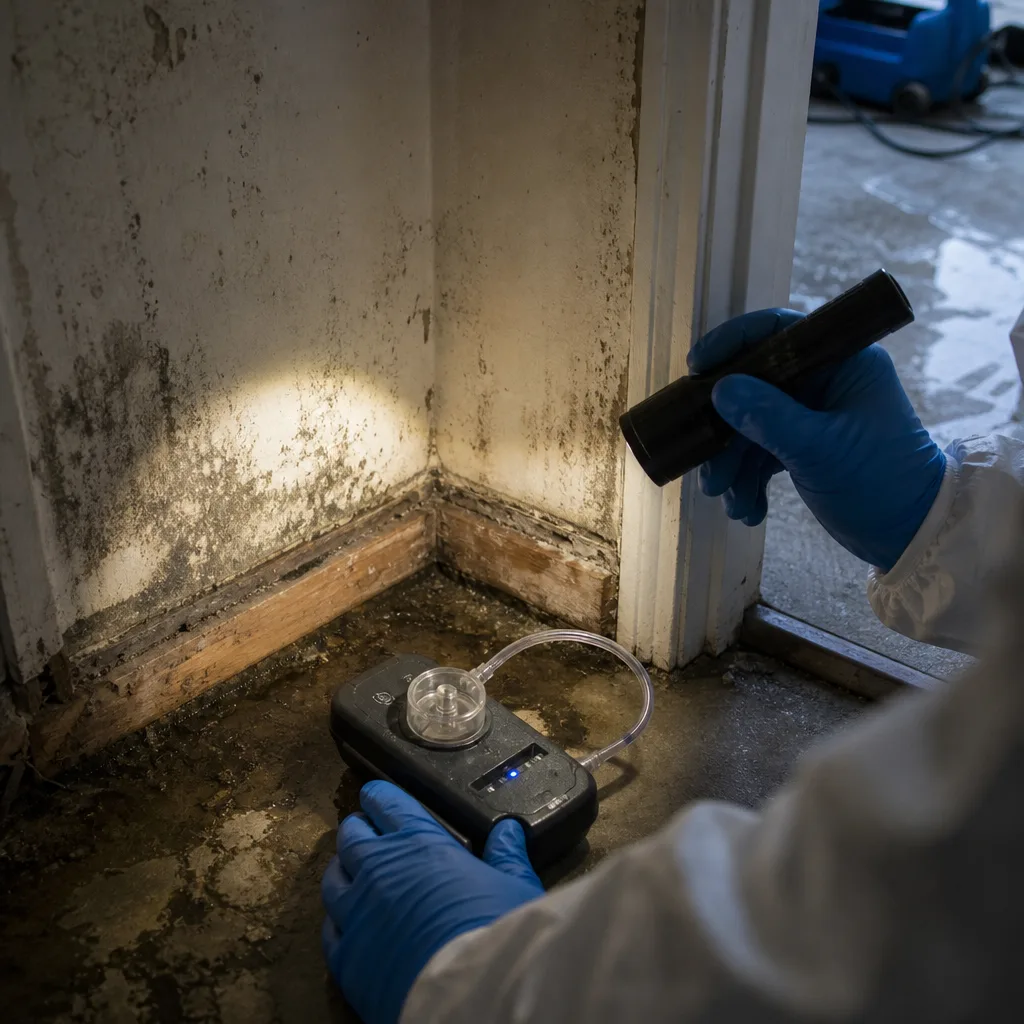
Free visual inspection and a written scope of work before any mitigation begins - photos, moisture readings, and drying logs go in your claim file
The scope we write is the scope we bill. Anything new gets shown to you, in writing, before we touch it.

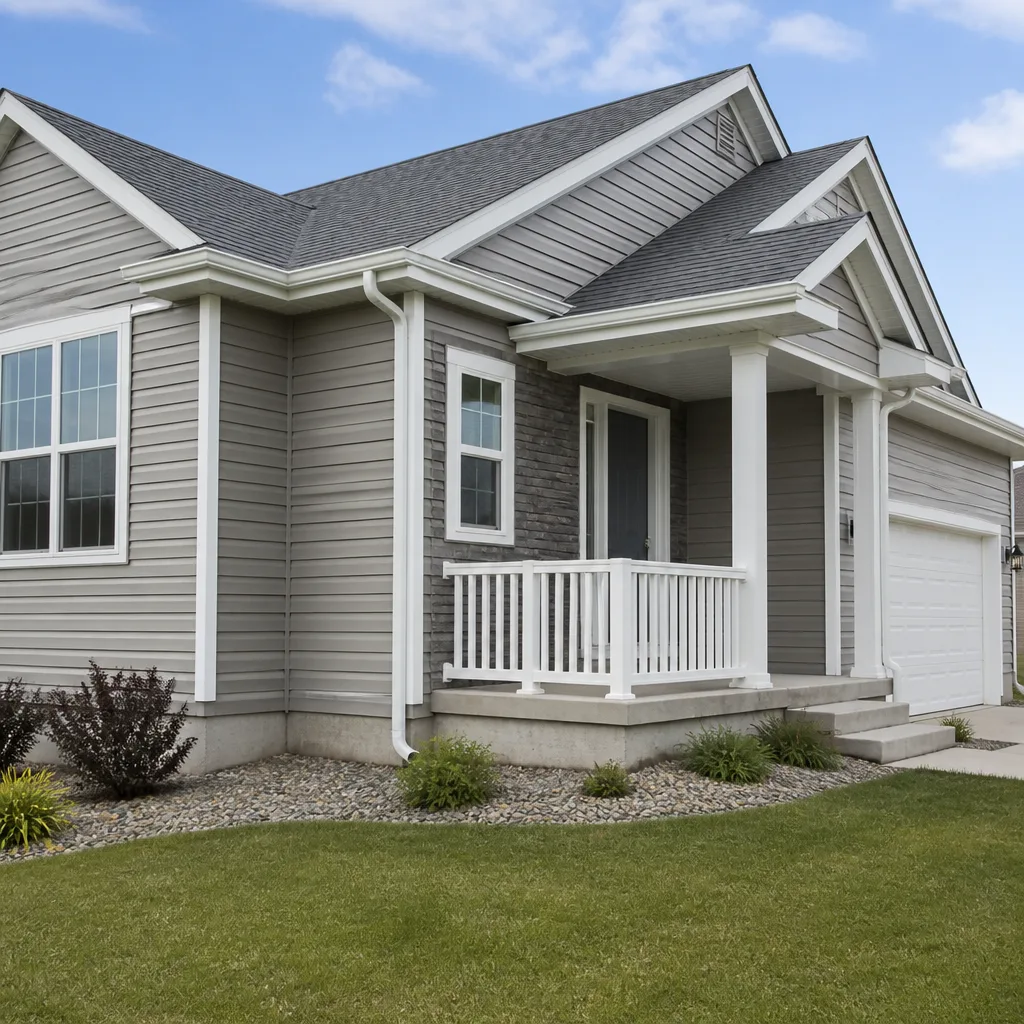
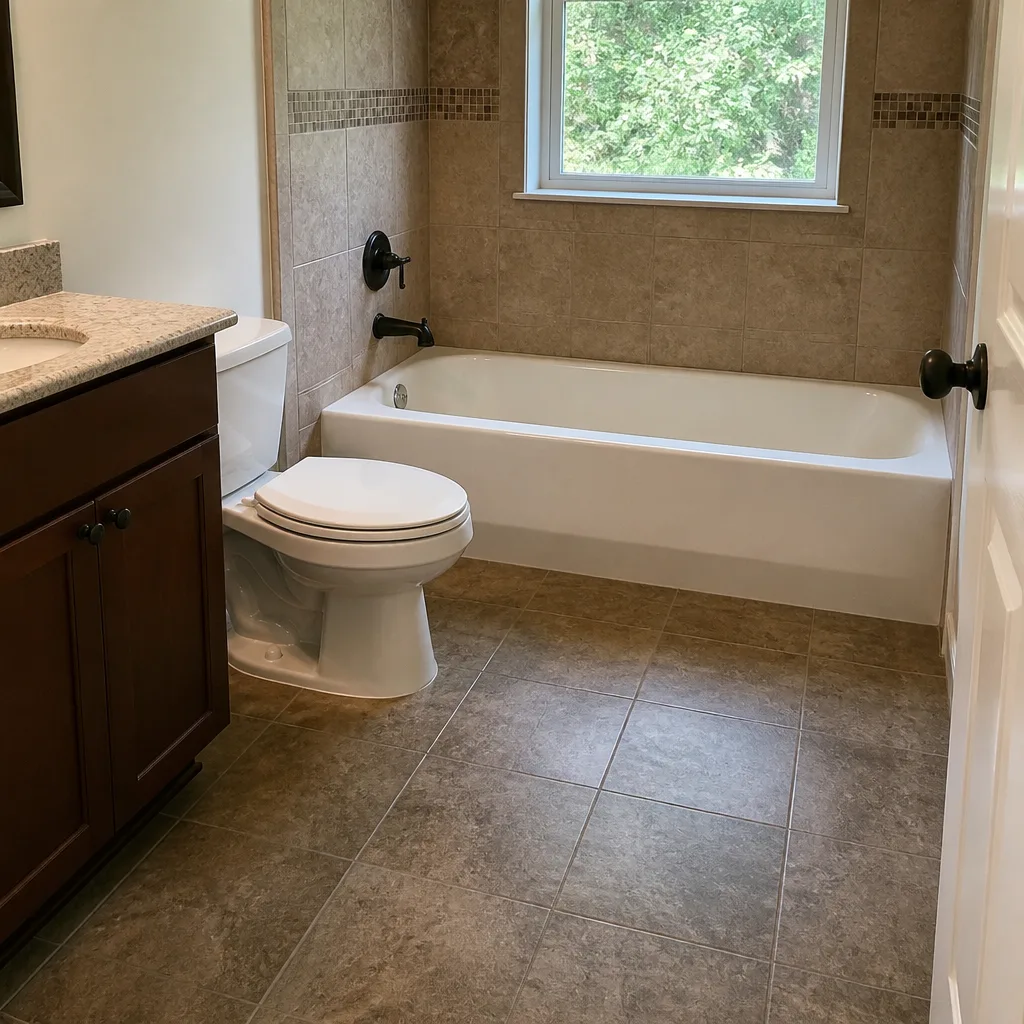
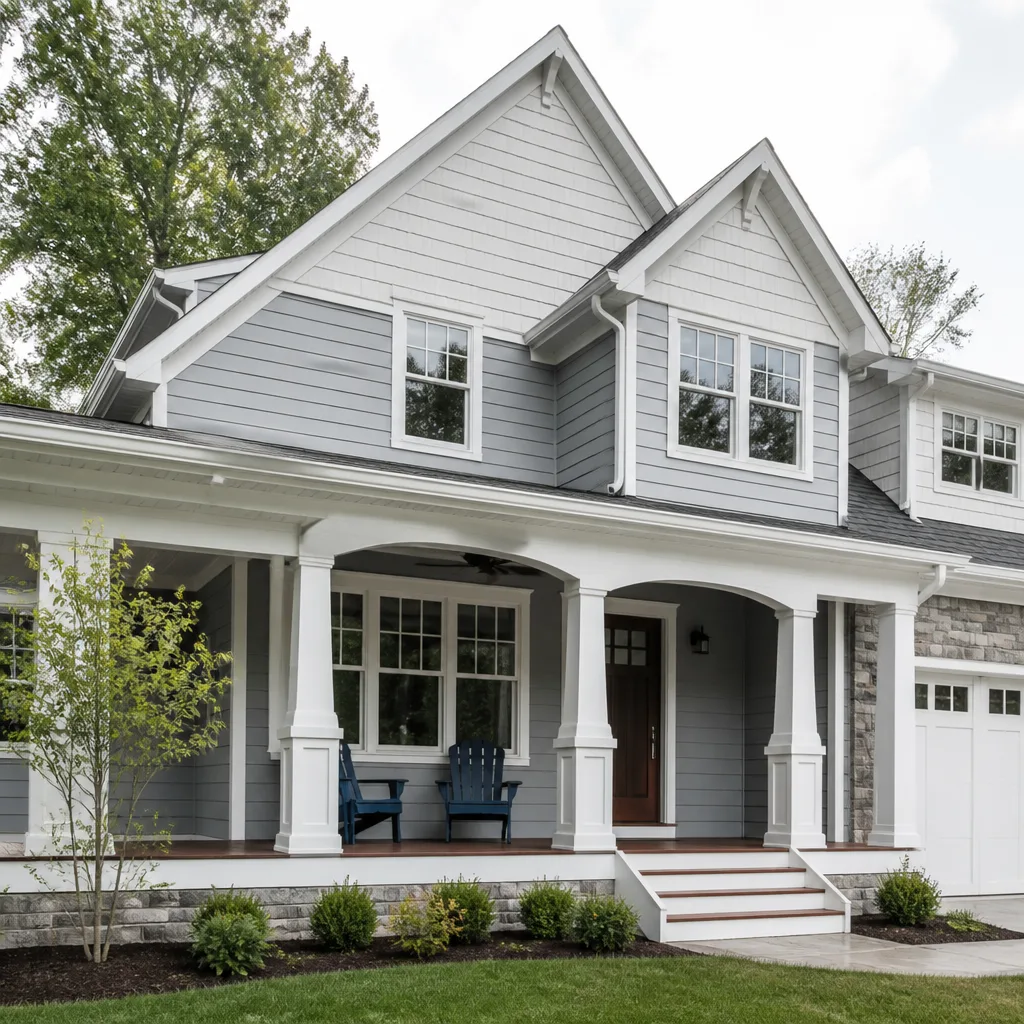
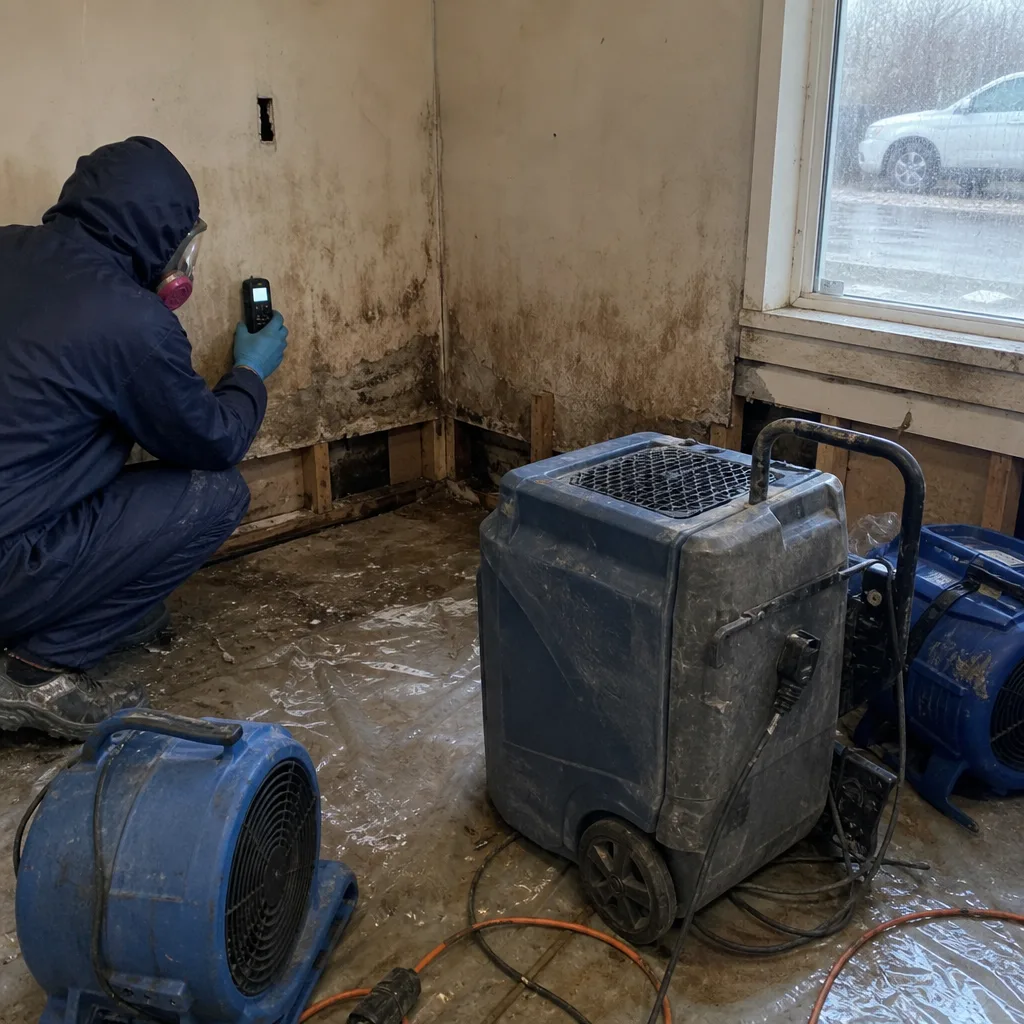 Before
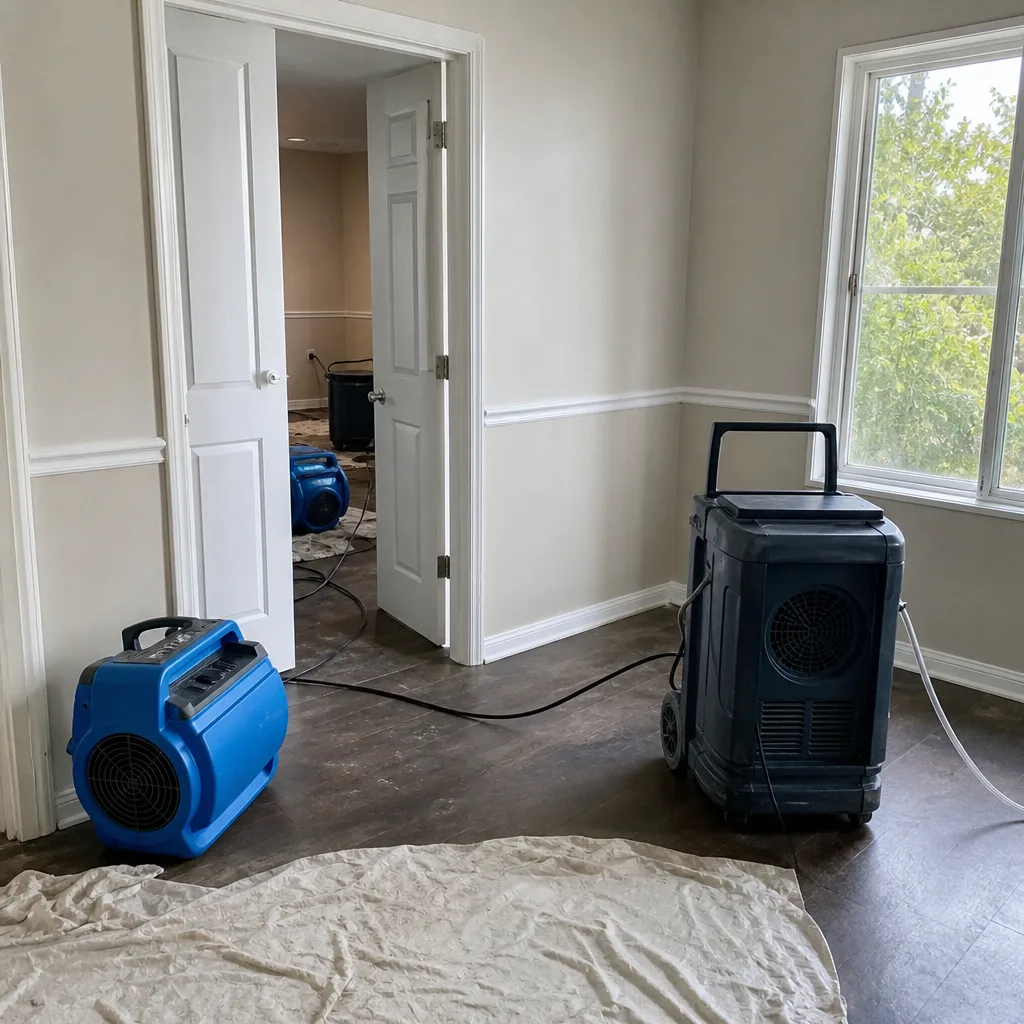 After
After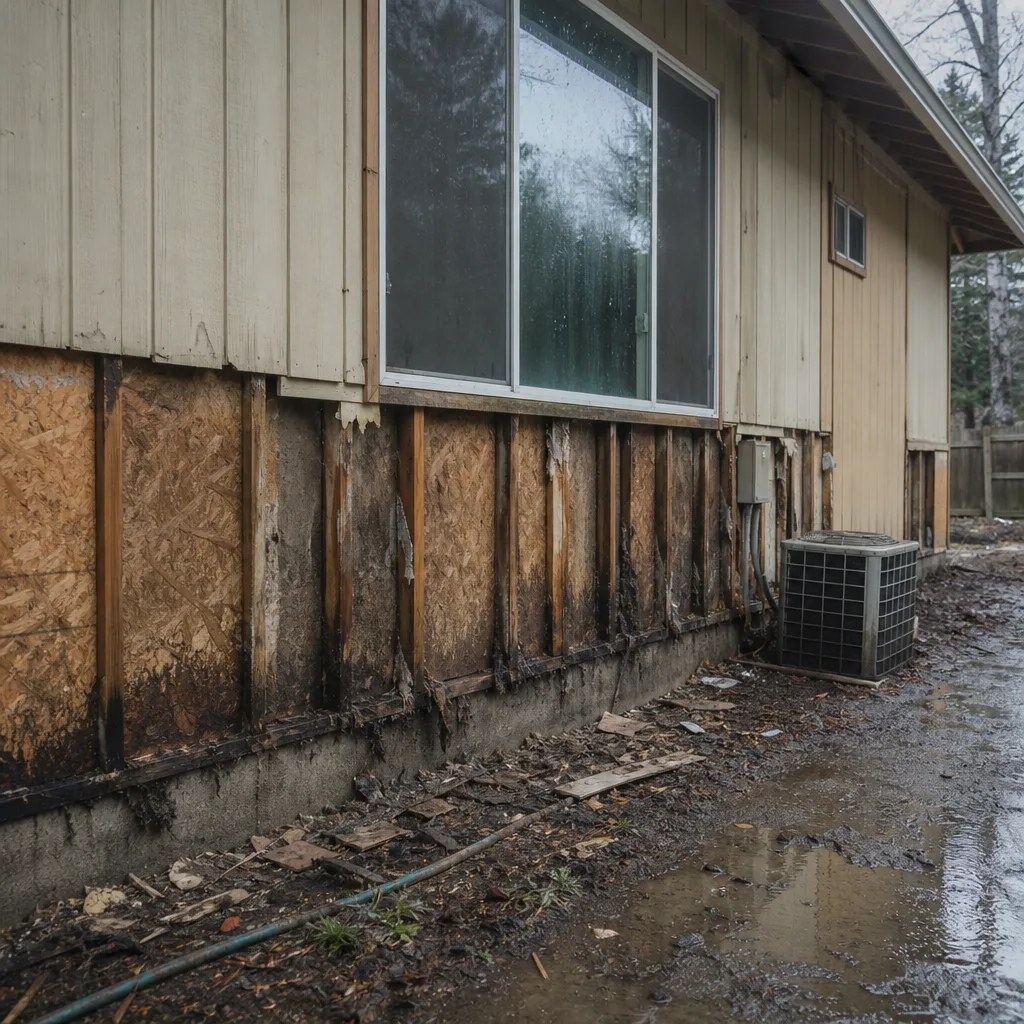 Before
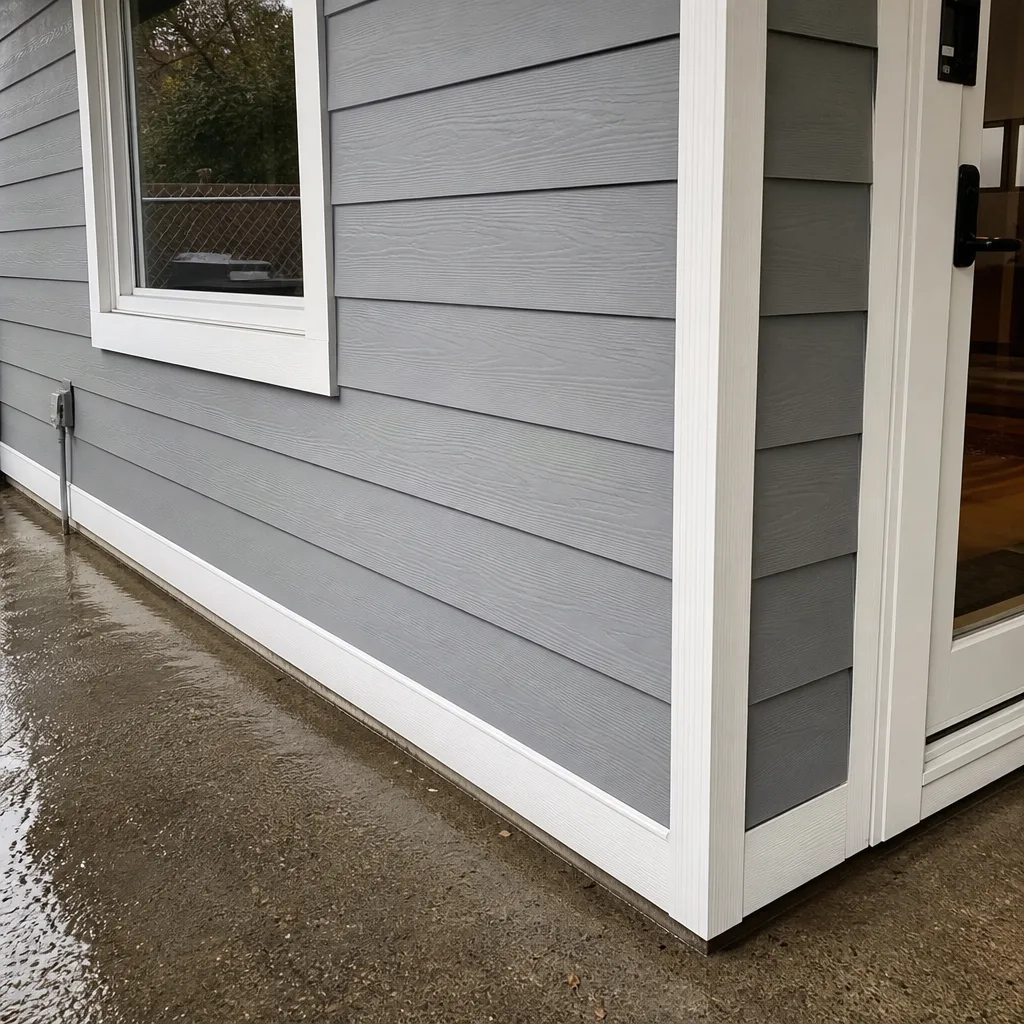 After
After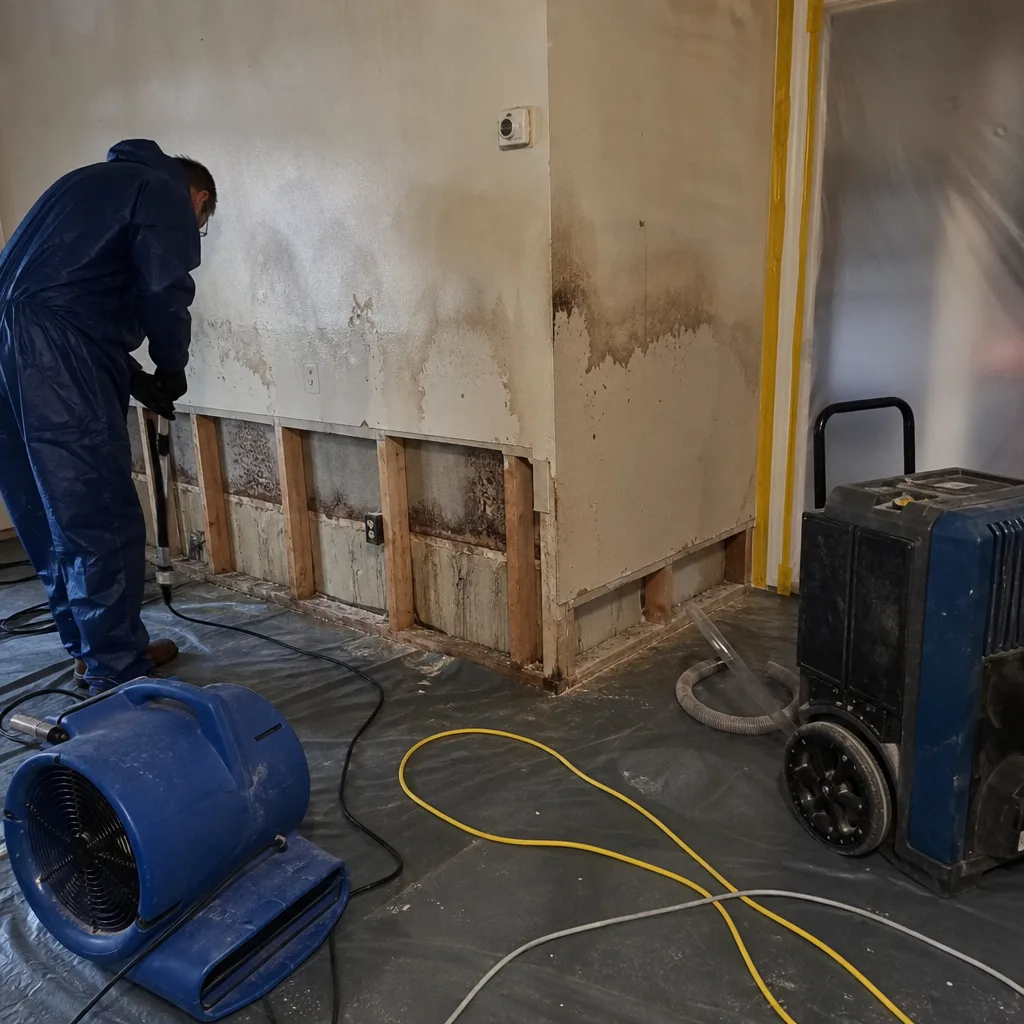 Before
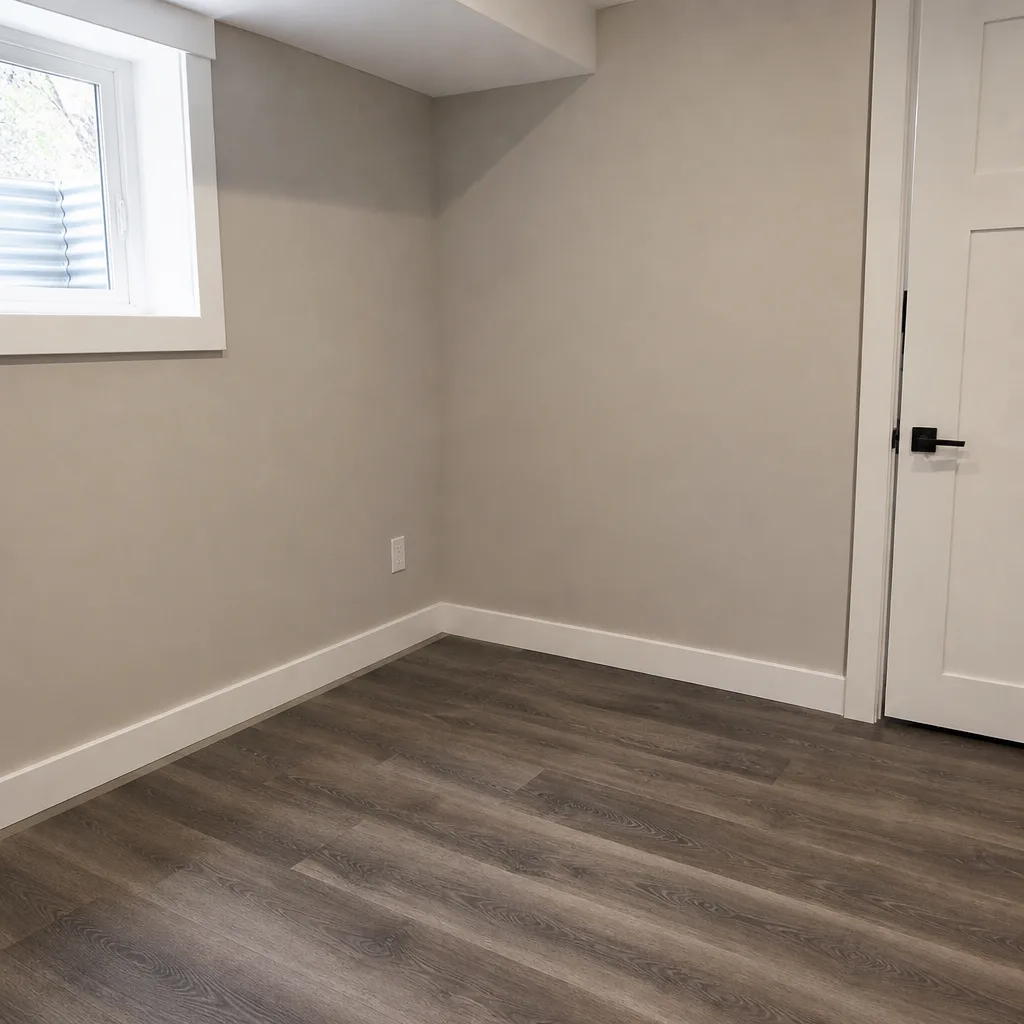 After
After24/7 Emergency Mold Remediation in Sumner
Mold remediation in Sumner typically costs $1,800-$4,500 for contained crawl space or basement work, and $4,500-$12,000+ for whole-home air quality restoration with structural repairs. Most jobs begin within 45 minutes of your call. Call (253) 487-0371 now - our phones are answered live, 24 hours a day, 7 days a week, by a real person who can dispatch a crew to your Sumner property immediately.
The first 48-72 hours after water intrusion are critical in Sumner. The Puyallup Valley’s trapped maritime moisture keeps crawl spaces and below-grade areas damp for months each year. Any delay means mold colonization spreads from the crawl space into floor joists, subflooring, and wall cavities. We provide a free visual inspection, document moisture readings with thermal imaging and hygrometers, and deliver a written scope with a firm price before any work begins - Haven Standard, Clause 1.
Understanding Mold Remediation Severity in Sumner Properties
Mold severity in Sumner is graded by affected square footage, material classification, and the water category that initiated growth. Category 1 water - clean supply line breaks - can often be remediated with containment, HEPA air scrubbing, and antimicrobial treatment if caught within 24-48 hours. Category 2 water, or gray water from appliances or sump failures, requires removal of porous materials and more aggressive sanitization. Category 3 water, including river flooding or sewage backup, demands full gutting of affected structural elements under negative-air containment with sealed disposal.
Sumner’s housing stock complicates every classification. The early-to-mid 20th century Craftsman bungalows in the residential core have shallow crawl spaces with dirt floors and aging foundations that sit close to the valley’s high water table. Historic commercial buildings along Main Street contain original plaster, balloon-frame construction, and legacy materials that slow structural drying and trap moisture in wall cavities. A Category 1 loss in a 1920s Sumner bungalow can escalate to Category 2 or 3 conditions in 72 hours if the crawl space isn’t properly addressed - the valley’s persistent ground dampness never lets materials dry on their own.
Why Sumner Property Owners Choose DryMark Restoration Auburn
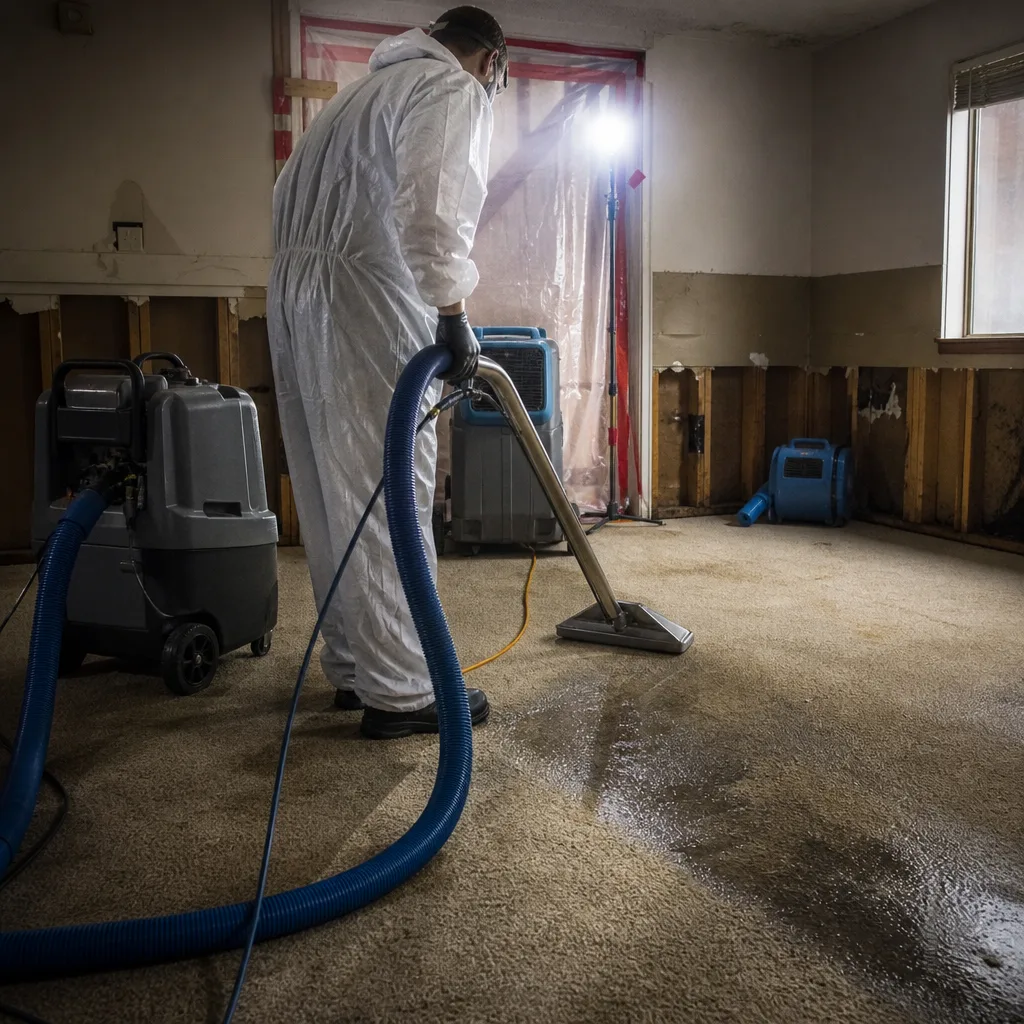
- 45-minute response commitment to Sumner properties - crews are staged for the Puyallup Valley corridor.
- 24/7 live answer by a real person, never an automated system or voicemail tree; your call is answered by someone who can dispatch immediately.
- IICRC-certified crews holding WRT (Water Damage Restoration Technician), AMRT (Applied Microbial Remediation Technician), and FSRT (Fire & Smoke Restoration Technician) certifications.
- Free visual inspection with documented moisture readings and thermal imaging - no charge to understand what you’re facing.
- Direct insurance billing with photo-documented estimates that adjusters recognize and pay without dispute.
- One team from mold inspection through reconstruction - no handoffs between subcontractors that lose continuity on your job file.
BeforeAfterOur Mold Remediation Process
1. Inspection & Assessment
We map moisture with thermal imaging, hygrometers, and penetrating probes, then classify the water category and document affected square footage. Every Sumner job is cross-referenced against Pierce County flood maps if the property has a history of river-driven losses.
2. Containment & Air Quality Control
We establish negative-air containment with 6-mil polyethylene barriers and run HEPA air scrubbers to prevent spore migration. In Sumner’s older balloon-frame homes, this step is non-negotiable - wall cavities connect floor to attic without fire blocking.
3. Drying & Dehumidification
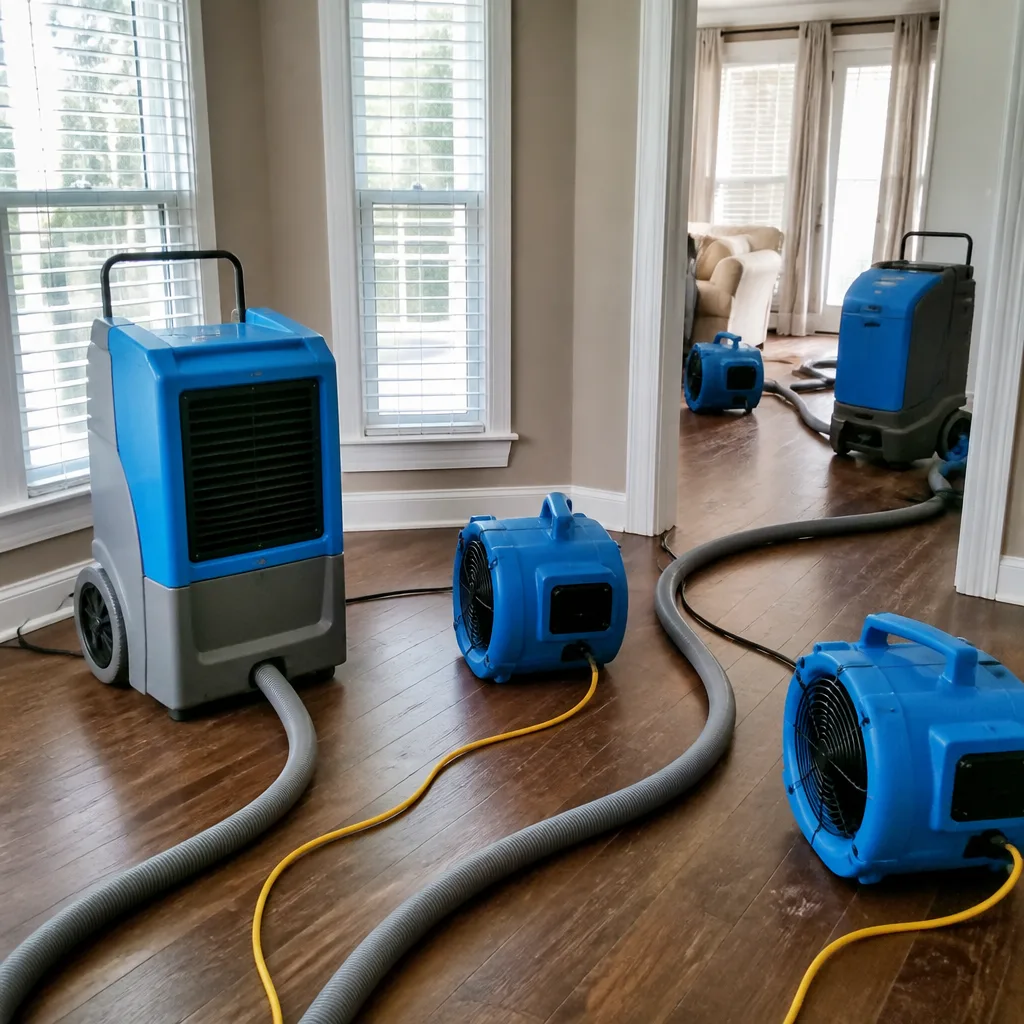
Our crews deploy Dri-Eaz and Phoenix dehumidifiers with Injectidry floor-drying mats to pull moisture from subfloors and joists. Psychrometric data - temperature, relative humidity, and vapor pressure differential - is logged daily to prove drying progress to your insurer.
4. Cleaning & Antimicrobial Treatment
Non-salvageable porous materials are removed and disposed of as regulated waste. Remaining structural elements receive EPA-registered antimicrobial treatment, with second application in areas where Sumner’s persistent ground moisture creates higher rebound risk.
5. Crawl Space Treatment & Moisture Control
Sumner crawl spaces get dedicated attention: soil vapor barriers, sealed vents where appropriate, and ongoing humidity monitoring. We address the valley’s trapped maritime moisture that makes crawl spaces a repeat mold source.
6. Repairs, Restoration & Clearance
Reconstruction is scoped in writing with a firm price before work begins. Post-remediation clearance testing confirms airborne spore counts have returned to acceptable levels, documented for your insurance file and our 365-Day Done Right Promise.
Need Emergency Mold Remediation in Sumner Now?
Crews minutes away, answering live 24 hours a day. The sooner we start, the less it costs.
Working With Your Insurance Company
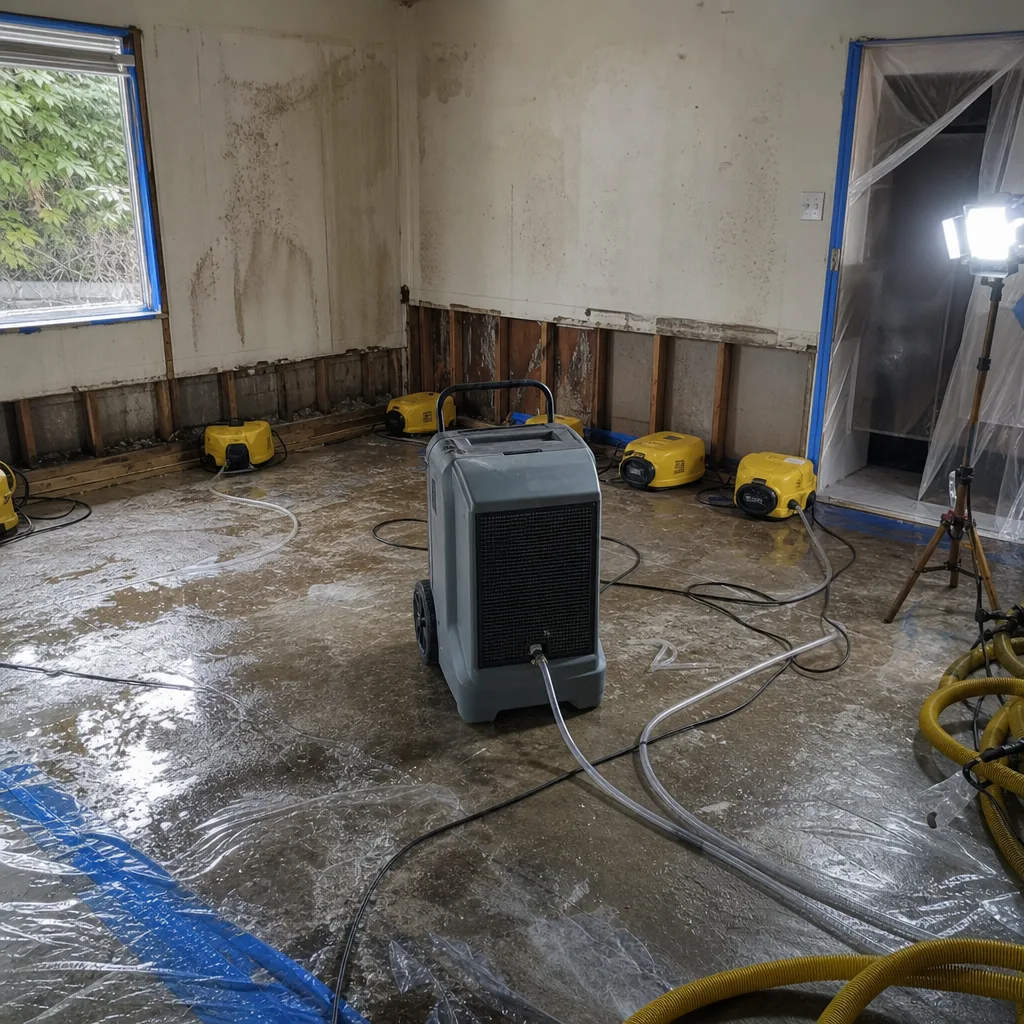
Insurance claims for mold damage succeed or fail on documentation. We begin photographing and logging moisture readings from the first hour on site. Our estimates are formatted to industry standards that adjusters recognize, with line-item scopes that separate structural drying from microbial remediation from reconstruction. We coordinate directly with your carrier, providing the room-by-room photo record and daily drying logs that turn restoration invoices into payable claims.
Sumner’s repeat flood-zone properties add complexity. When a home near the Puyallup River bend has prior flood claims, we document pre-existing conditions separately from new damage to protect your coverage. Our written scope distinguishes between current loss and long-term moisture issues, so your adjuster has clear boundaries for claim approval.
What We Provide Your Insurer
- Thorough documentation of the loss with timestamped photos
- Photos of all damage, room by room, including crawl space and structural cavities
- Moisture readings and daily drying logs with psychrometric data
- A detailed, line-item scope of work separating remediation from reconstruction
- Direct coordination with your carrier and adjuster
Built for Sumner’s Loss Calendar
January through March brings the deepest valley fog and sustained soil saturation. Plumbing losses in unconditioned crawl spaces during this period almost always require mold remediation because ambient humidity prevents natural drying. April and May see Puyallup River rise from snowmelt; properties in the FEMA flood zone experience groundwater intrusion through foundation cracks and dirt-floor crawl spaces.
June through September offers the only reliable drying window, but summer plumbing losses still escalate quickly in Sumner’s older homes with poor ventilation. October through December resets the moisture trap: marine layers settle into the valley for weeks at a time, and any water loss that sits through a weekend guarantees secondary mold damage. Our crews carry extra dehumidification capacity from October through April specifically for Sumner’s extended rainy season.
Mold Remediation Across Sumner’s Neighborhoods
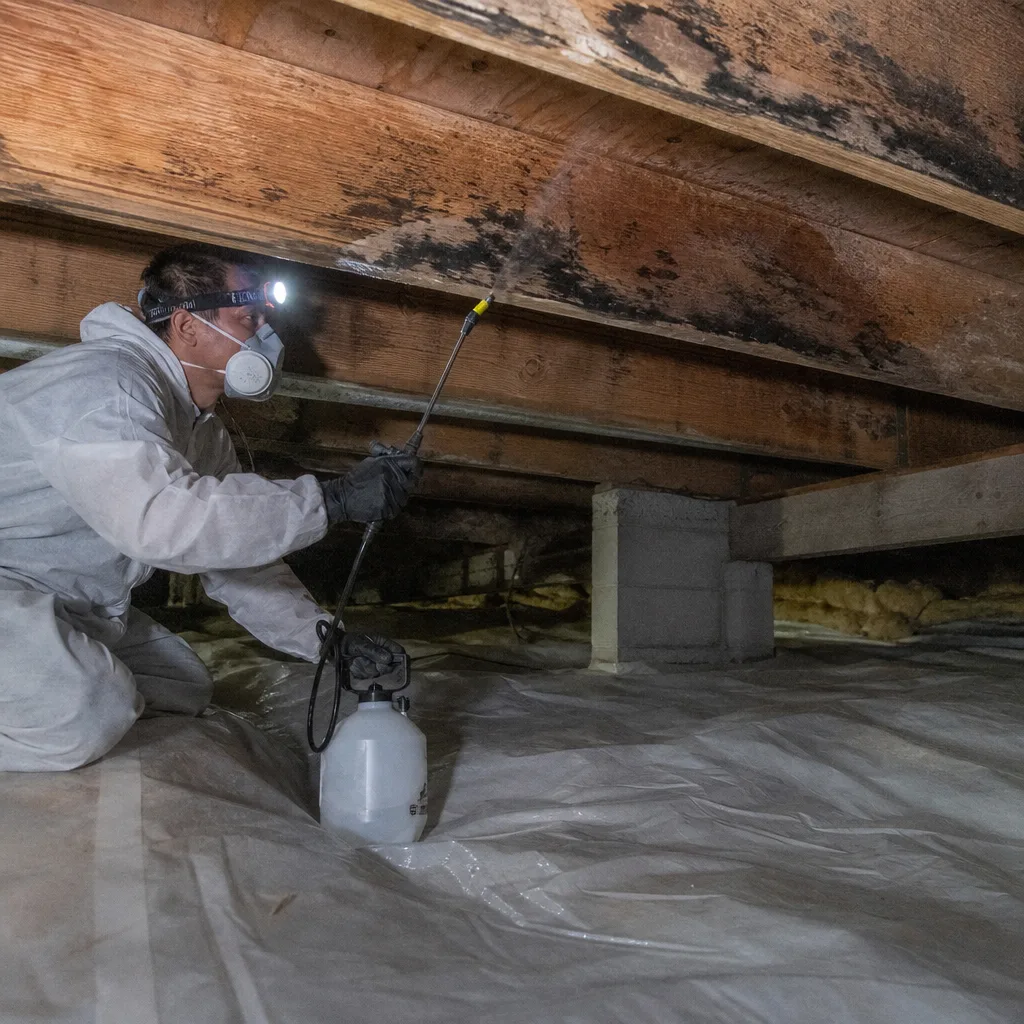
West-side streets near the Puyallup River bend - including areas approaching Ryan House Museum and the riverfront corridor - carry the highest repeat-loss exposure. Our Mold Remediation team has scoped multiple properties here with documented 2006 and 2009 flood claims, finding pre-existing microbial growth in floor joists that previous drying never fully resolved. We cross-reference every address against Pierce County flood maps before finalizing scope.
The residential core around Sumner’s historic downtown, with its concentration of 1920s-1940s Craftsman bungalows, presents shallow crawl spaces and aging foundations vulnerable to groundwater intrusion. Homes near Washington Street and the old railroad corridor often have legacy construction with no vapor barriers and minimal foundation drainage.
Newer developments toward the east and south, including areas near Sumner Middle School and the Bonney Lake boundary, typically have better foundation systems but still face the valley’s ambient moisture challenge. Even these properties require crawl space humidity control during extended rainy periods.
Historic commercial buildings along Main Street demand specialized containment for original plaster and balloon-frame wall cavities. Our crews have worked multiple properties here where standard drying approaches failed because wall assemblies couldn’t be accessed without damaging historic fabric. We scope tertiary drying - extended low-temperature dehumidification - for these structures rather than aggressive demolition.
Specialized Mold Remediation Services We Offer in Sumner
Mold Inspection & Testing
Our AMRT-certified technicians conduct visual inspection, moisture mapping, and air sampling to determine contamination extent. In Sumner, we specifically inspect crawl space perimeters and foundation penetrations where valley groundwater enters. Every inspection includes a written report with photo documentation and a firm remediation scope.
Mold Removal
Containment, negative-air pressure, HEPA filtration, and controlled demolition of non-salvageable materials. In Sumner’s older wood-frame homes, we pay particular attention to floor system assemblies where joists and subflooring have absorbed repeated moisture events.
Black Mold Remediation
Stachybotrys and other toxigenic species require enhanced containment with full-face respirator protocols and sealed waste disposal. We treat these cases with extended air scrubbing and post-remediation clearance testing that documents safe reoccupancy.
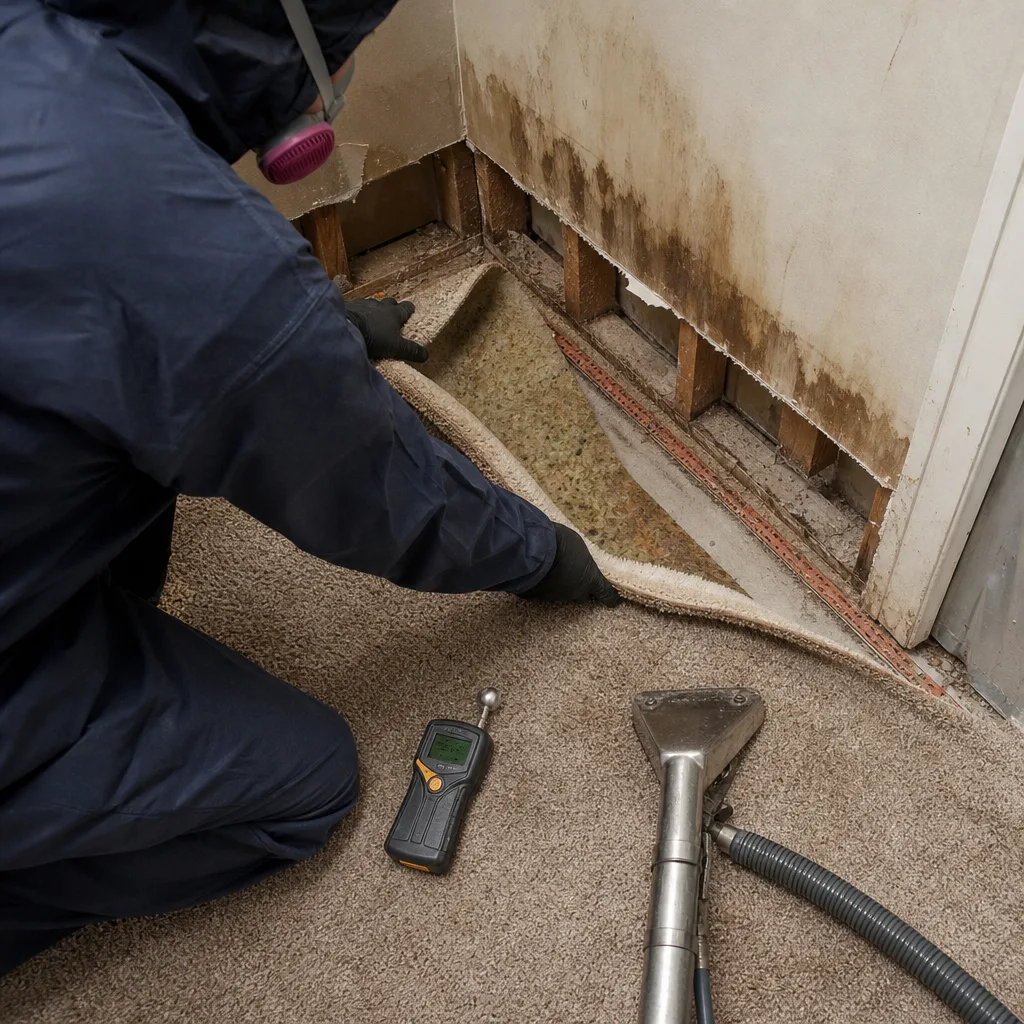
Air Quality Restoration
Whole-home HEPA filtration, duct cleaning where contamination has spread, and post-remediation air sampling. Critical for Sumner’s balloon-frame homes where wall cavities have connected mold growth to HVAC systems.
Crawl Space Treatment
Our most-called service in Sumner. We remove contaminated insulation and vapor barriers, treat structural wood with antimicrobial, install new ground cover, and recommend permanent humidity control solutions. The valley’s persistent dampness makes one-time treatment insufficient without ongoing moisture management.
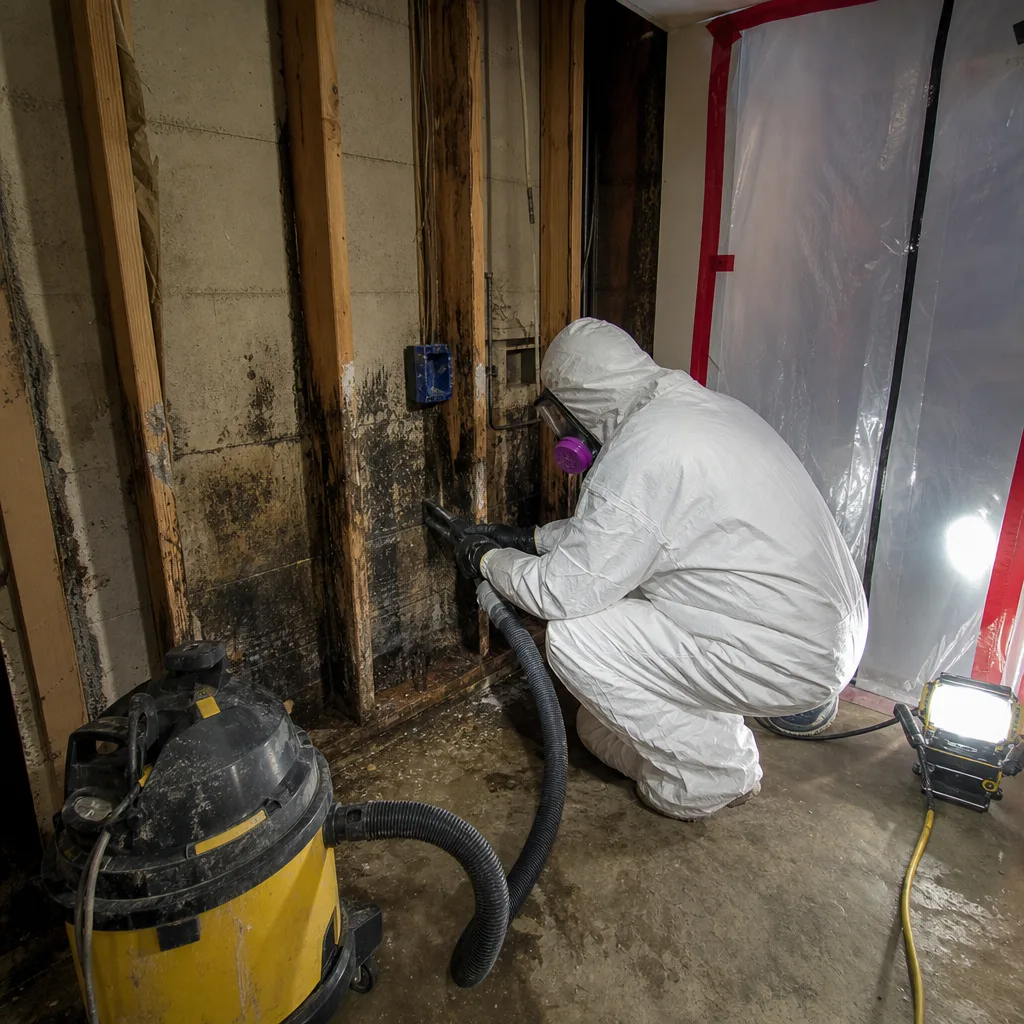
What happens when you call
- 1
A real person answersNo phone trees - you reach a local pro.
- 2
You get an upfront price rangeHonest numbers before anyone is dispatched.
- 3
A background-checked tech heads outLicensed & insured, dispatched right away.
- 4
You approve before work beginsNothing starts until you say go.
Mold Remediation Costs in Sumner, WA
A typical contained crawl space mold remediation in Sumner runs $1,800-$3,800, including containment setup, HEPA air scrubbing, removal of affected insulation and vapor barrier, antimicrobial treatment, and drying equipment. Whole-home air quality restoration with duct cleaning and multiple containment zones ranges $4,500-$8,500. Jobs requiring structural reconstruction of floor systems or extensive plaster repair in historic properties can reach $8,000-$15,000.
What moves the price: affected square footage, water category (Category 3 losses require more extensive removal), accessibility of crawl spaces and wall cavities, and whether pre-existing damage from prior floods must be addressed separately. Insurance typically covers mold remediation when it results from a covered water loss, but may exclude long-term moisture issues or maintenance-related growth. We provide a free visual inspection that produces a written, line-item scope with a firm price before any work begins - Haven Standard, Clause 1. Bring a competitor’s written estimate and we’ll review it at no charge.
We Also Serve Cities Near Sumner
Our crews respond throughout the Puyallup Valley corridor and surrounding communities. We regularly provide mold remediation in Sumner and neighboring Puyallup, Milton, Auburn, and Lakewood - each with distinct building stock and moisture challenges that our IICRC-certified technicians are trained to address.
Serving Sumner, WA - Our Local Coverage Area
We’re based in the Sumner area and know this community well. Use the map below to see our service coverage - if you’re nearby, we can almost certainly help.
Sumner Mold Remediation Questions, Answered
Why do Sumner homes near the Puyallup River need mold inspection after every flood or plumbing leak?
Because the same crawl spaces flood repeatedly. Pierce County flood maps show multiple west-side streets near the river bend with documented repeat claims from 2006, 2009, and subsequent events. Pre-existing microbial growth from prior high-water events often remains in floor joists and subflooring, so a new plumbing loss reactivates dormant colonies within 48-72 hours. We cross-reference every address against flood history before scoping. Call (253) 487-0371 for a free inspection.
Does the lahar corridor affect how you approach mold remediation in Sumner?
Not for routine jobs, but it shapes our emergency preparedness and documentation standards. Sumner’s location in the Mount Rainier lahar inundation corridor means restoration contractors here must maintain protocols for catastrophic valley-scale water events that upland cities simply don’t face. Our containment, antimicrobial treatment, and documentation systems are built to withstand the worst-case scenario, which makes routine crawl space remediation more reliable. Call (253) 487-0371 to discuss your property’s specific risk profile.
Why does mold grow so fast in Sumner crawl spaces during the rainy season?
The Puyallup Valley’s low-lying topography traps maritime moisture and fog from October through April, keeping crawl spaces persistently damp with ambient relative humidity above 70% for weeks at a time. Any water intrusion - plumbing loss, foundation seepage, or groundwater rise - adds to existing moisture load rather than evaporating into dry air. Mold colonization that might take 5-7 days in a drier climate can establish in 48 hours here. Call (253) 487-0371 for moisture mapping and a written drying plan.
How do you handle mold remediation in Sumner’s historic Main Street buildings?
With specialized containment and tertiary drying protocols. Original plaster, balloon-frame construction, and legacy materials can’t be aggressively demolished without destroying historic fabric. We use extended low-temperature dehumidification with Injectidry and Phoenix systems, negative-air containment with minimal intrusion, and antimicrobial treatments compatible with aged materials. Every step is photo-documented for property owner and insurer records. Call (253) 487-0371 for a scope tailored to your historic property.
What is the difference between Category 1, 2, and 3 water in a Sumner mold job?
Category 1 is clean water from supply lines - remediable with drying and surface treatment if caught quickly. Category 2 is gray water with chemical or biological contamination from appliances, sump failures, or foundation seepage - requires removal of porous materials and enhanced sanitization. Category 3 is black water from sewage backup, river flooding, or groundwater intrusion carrying pathogens - demands full gutting of affected structural elements under sealed containment with regulated disposal. In Sumner’s flood zone, Category 2 and 3 losses are common; treating them as Category 1 leaves contaminated materials in place and guarantees mold rebound. Call (253) 487-0371 for proper classification.
How fast can your crew actually get to my Sumner property?
We commit to 45 minutes for emergency calls in the Sumner area, with crews staged for the Puyallup Valley corridor. Our phones are answered live 24/7 by a real person who can dispatch immediately - no voicemail trees, no next-business-day callbacks while mold is still spreading. Call (253) 487-0371 now.
Will my insurance cover mold remediation, or is this out of pocket?
Insurance typically covers mold remediation when it results from a sudden, covered water loss - burst pipe, appliance failure, or storm damage. Long-term moisture issues, maintenance neglect, or groundwater intrusion without structural damage may be excluded. We document the loss origin with timestamped photos and moisture readings, then coordinate directly with your adjuster to establish coverage boundaries. Our written scope separates covered from non-covered work so you know exactly what insurance pays and what you handle. Call (253) 487-0371 and bring your policy number.
Can my family stay in the home during mold remediation?
For contained crawl space or basement work with proper containment and negative-air pressure, occupants often remain in the home with HVAC isolation. For whole-home air quality restoration, black mold remediation, or extensive demolition, temporary relocation is recommended until post-remediation clearance testing confirms safe spore counts. We specify reoccupancy status in every written scope before work begins - no surprises. Call (253) 487-0371 to discuss your specific situation.
On a west-side street near the river bend, we scoped a 1920s Craftsman bungalow with a shallow crawl space after a winter plumbing loss had sat for three days. Moisture mapping showed elevated readings in the floor joists and subfloor, and our techs set up containment with Dri-Eaz dehumidification and Injectidry mats, applied antimicrobial treatment, and pulled the affected insulation. Because the home had a documented 2009 flood claim, we cross-referenced the address against Pierce County’s Puyallup River flood maps before finalizing the scope of work.
Sumner’s position on the Puyallup River Valley floor inside a FEMA flood zone, combined with its location in the Mount Rainier lahar inundation corridor, means mold remediation here must be scoped around repeat river-driven crawl space losses that upland cities like Auburn and Bonney Lake never see. Pierce County flood maps show multiple west-side streets near the river bend with documented repeat flood claims, so the same crawl space often has pre-existing microbial growth from a prior high-water event. This geography doesn’t just increase risk - it changes the remediation protocol entirely, requiring flood-history research, more aggressive crawl space treatment, and documentation that distinguishes new damage from long-term moisture issues.
Ready for a written scope and firm price? Call (253) 487-0371. Our phones are answered live 24 hours a day. We serve Sumner and the full Puyallup Valley corridor with IICRC-certified crews, documented photo records on every visit, and the 365-Day Done Right Promise under The Haven Standard.
Written by Alicia Brennan, Owner at Back to Dry Restoration, serving Sumner since 2011.
Mold Remediation in Nearby Areas